
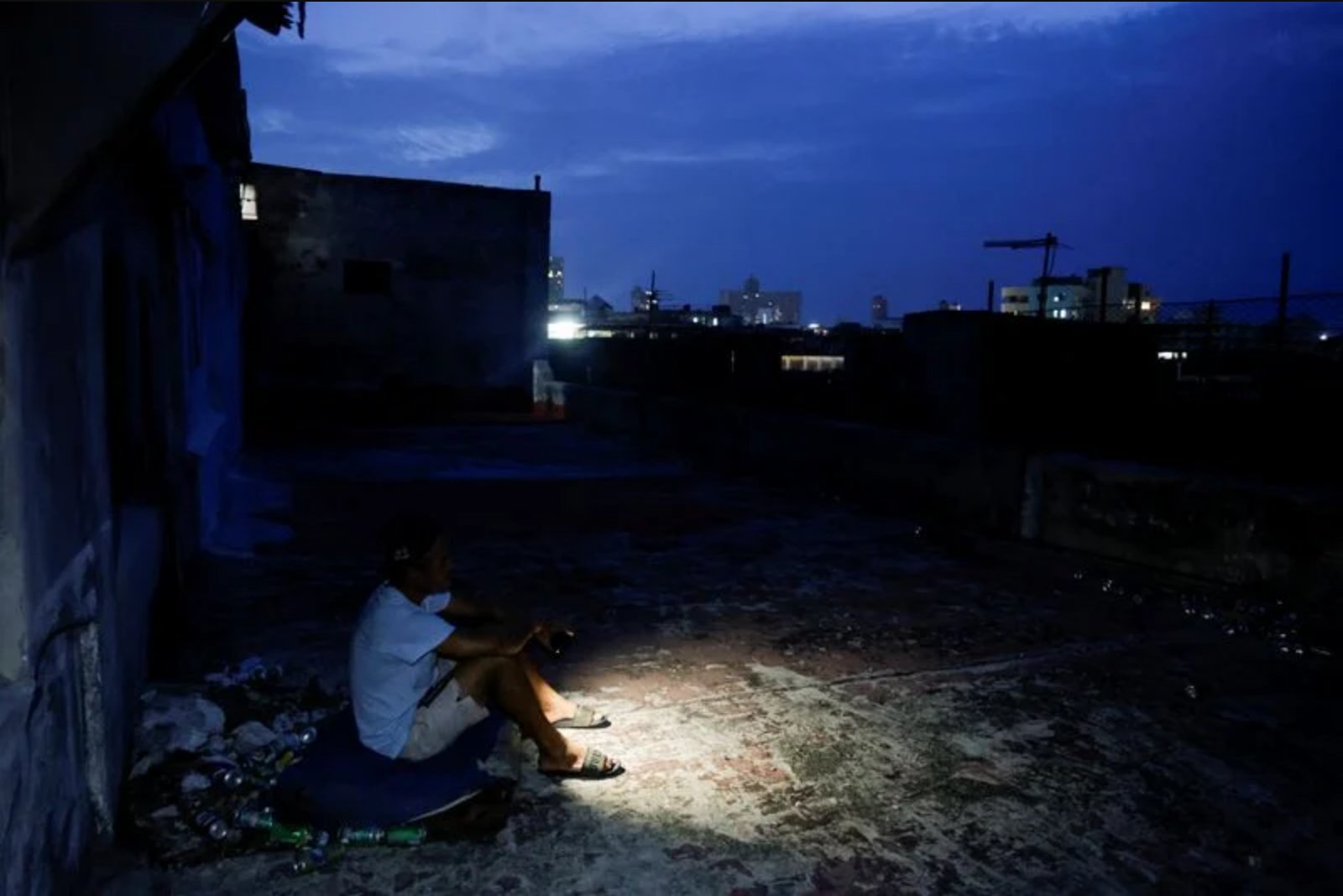
Frank Alfonso, 39, has grown used to sleeping on his building's roof to escape the stifling heat that accompanies Havana's frequent blackouts. But when a heavy rain arrived the same afternoon the island's electricity system gave way, even that temporary refuge was gone. The collapse of the national grid left Alfonso and his neighbors without power or the ordinarily small comforts it provided.
Alfonso lives in one of Havana's many 'solares' - old multi-family tenements that over the decades have been carved into cramped, individual living spaces. Residents say those structures now commonly endure protracted outages as the island struggles to produce electricity with increasingly limited fuel supplies amid a U.S.-imposed oil blockade.
"We didn’t even realize this time that the whole grid had collapsed, because we were already in a blackout," Alfonso said.
WITHOUT POWER, RESIDENTS GO DAYS WITHOUT WATER
Inside the same building late on a Friday night, 51-year-old Yunaisi Durruti sat in near-darkness, the glow from her cigarette tip the apartment's only point of light. Her most pressing issue was not the heat but water. Durruti has gone a week without running water because the pump that moves water from the ground-level cistern up to the second-floor storage tank requires electricity.
When power does return for a few hours each day, she said, the cistern is often still empty because of routine cuts to the water supply. Durruti, who once studied gastronomy in Havana and spent a decade working in the kitchen of a Melia-managed beach resort, no longer works in hospitality. She now holds a job as a security guard and relies on her parents' home in a neighborhood with less frequent outages to bathe, cook and launder clothes.
Her fridge remains empty by design: food would spoil when electricity vanishes. Melia said it was exiting Cuba after the U.S. tightened sanctions this spring.
Durruti pointed to longstanding neighborly support as a partial buffer against hardship. "Cuba’s strong culture of neighbors helping neighbors - a sense of solidarity forged over decades on the island - helps blunt the impact of the severe shortages," she said. But she also warned of limits. "Everyone can share a small bucket of water. But in this crisis, more than that is impossible."
A PROPHECY COME TRUE
The island's electrical network and other infrastructure have been declining for years, residents said. What once were occasional disruptions have lengthened into near-permanent interruptions in recent months as fuel for power generation has tightened under the effects of the oil blockade.
On a Saturday afternoon in the same tenement, 28-year-old Thalía Castillo cradled her three-month-old son, Thayler, while a small rechargeable fan tried to keep heat and mosquitoes at bay inside their first-floor apartment. Castillo and her husband, Lazaro Herrera, had electricity for longer than most neighbors after the grid failed because a portable power station had been sent to them by Castillo's grandmother in the United States.
That backup supply did not last. A frozen package of meat - another item made available to the family through U.S.-based relatives - was defrosting in the refrigerator. Castillo cleaned pools of blood seeping from the thawing package at regular intervals.
The Castillo-Herrera household carries visible markers of Afro-Cuban religious practice: small statues of Yoruba deities occupy the kitchen, and Herrera is a priest, known as a babalawo, within that tradition. The couple said community elders issue annual predictions each January. This year's admonition warned of convulsions and conflict. "Everything has come true, so far," Herrera said.
A MOMENT OF LIGHT
Shortly before 9 p.m. on Saturday, Alfonso hurried back to the tenement to find the building still without power. But a World Cup quarter-final match featuring Argentina was about to start, and residents had a plan. Since the tournament began, Alfonso and Herrera had arranged to mount a television on a rack outside and connect it to a generator located across the street.
By kickoff, several dozen residents from the building and nearby neighbors were assembled in the street around the screen. They stood under rainy skies, some shielding the view for others. An elderly woman from the second floor sat on a doorstep reproving youngsters who blocked her sightline. Cheers ripped through the small crowd when Argentina scored its first goal. Beyond that small circle of light and noise the rest of the neighborhood, reaching to Havana's seaside boulevard, remained in darkness.
The experience described by residents underscores how routine outages have become in parts of Havana as the island's power system strains under reduced fuel availability. For many, the immediate consequences include interrupted water supply, empty refrigeration and altered employment paths. For a city accustomed to tight living conditions, reliance on neighbor networks and ad hoc solutions - like portable generators and shared viewing of a football match - ease some discomforts but do not eliminate the underlying infrastructural failures.