
Brazil’s anticipated bumper coffee harvest - a Conab forecast of 66.7 million 60-kilogram bags combining arabica and canephora varieties - is under threat from an El Niño cycle that industry officials say could shave as much as a fifth off output.
Celirio Inacio da Silva, executive director of the Brazilian Coffee Industry Association (Abic), warned producers and traders that deteriorating conditions tied to El Niño could substantially pare back this year’s expected haul. "We are now talking about a crop loss of 15% to 20%, which in a normal year would be within expectations. But in the current scenario, that is very bad news," he said.
Despite that cautionary projection, Silva and other sector participants point to technological improvements that have fortified many growers against climate variability. "We’ve made significant advances and today we’re able to plant and harvest more efficiently," Silva said, noting that recent investments have helped farms become more climate-resistant.
How El Niño threatens production
Specialists stress that El Niño is likely to disrupt the coffee plant’s biological calendar, with a particular risk to the flowering window in the second half of 2026. Excessive heat and irregular rainfall at that stage can cause uneven or failed flowering, producing both lower yields and quality issues.
Wellis Caixeta, coffee purchasing manager at Minas Gerais-based cooperative Expocacer, described the consequences for harvesting and bean quality: "Irregular ripening creates quality problems and makes harvesting more challenging." Expocacer estimates unusual rainfall patterns in southeastern Brazil over the past month contributed to delays and dropped cherries; rainfall exceeding 50 millimeters in arabica-growing areas about 40 days ago delayed harvests and caused a substantial number of coffee cherries to fall to the ground, damaging bean quality.
Recent El Niño effects and productivity trends
The 2023/24 El Niño event, together with heatwaves and irregular rains, reduced Brazil’s 2024 coffee crop from an initial government estimate of 58.8 million 60-kg bags to 54.2 million bags. Even with arabica benefiting from a positive biennial cycle, overall output grew by only 0.2%, while conilon (a form of canephora) productivity fell 5.9%.
In the state of Espirito Santo - Brazil’s largest producer of canephora coffees - farmers have experienced more erratic weather this year, with longer gaps between rainfall events and shorter, more intense downpours, according to Luiz Carlos Bastianello, president of Cooabriel, the country’s largest canephora cooperative. Growers there are watching the season nervously, concerned that El Niño could extend dry stretches and extreme heat through January 2027 and interfere with bean filling.
Bastianello highlighted the physiological sensitivity of canephora to heat: "Heat is the biggest risk for severe crop loss. Above 27 degrees Celsius (80.6°F), Canephora slows its metabolism, and at 35°C (95°F) it stops altogether. The damage is often greater than from the lack of water itself," he added. The cooperative expects conilon production in Espirito Santo to fall about 15% this year, a decline that is tied to the variety’s natural biennial cycle rather than El Niño alone.
Regional variation and mitigation approaches
Not all producing regions are seeing the same patterns. Northern states such as Rondonia have experienced temperatures and rainfall closer to seasonal norms, and local growers there are projecting an above-average, potentially record, output. Farmers in Rondonia expect around 3 million 60-kg bags, above the Conab estimate of 2.77 million bags for the state.
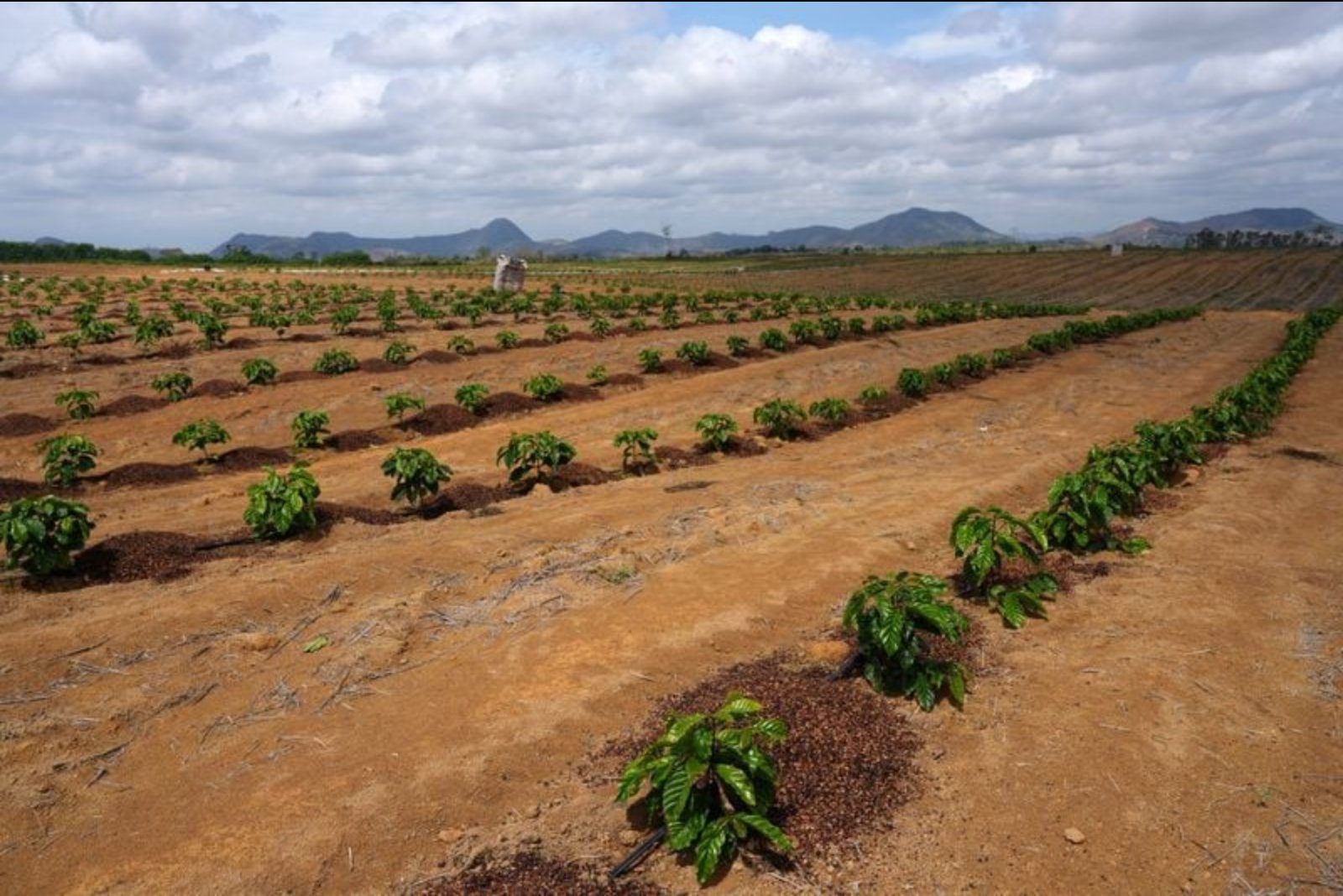
Robusta-producing areas like Rondonia may be less exposed to some of El Niño’s heat and drought impacts because many robusta plantations are irrigated and some even employ water-based cooling systems. "Coffee is highly sensitive to temperature fluctuations, but virtually all robusta plantations are irrigated, and some also use water-based cooling systems. Many arabica farms, by contrast, still lack irrigation," said Juan Travain, president of the state coffee association Caferon.
Across Brazil, producers have been rapidly expanding irrigation infrastructure in recent years and allocating capital to technologies intended to reduce dependence on increasingly erratic rainfall. Those investments are part of why industry participants say current crops are better prepared than during earlier El Niño episodes.
Outlook and uncertainties
While the sector has strengthened its ability to manage climate-related risk, officials emphasize uncertainty remains high. Abic’s 15% to 20% potential loss estimate reflects that uncertainty, and cooperative leaders say it is too early to definitively quantify how El Niño will shape yields into 2027. For now, agronomic timing - notably flowering and bean filling - and localized rainfall and temperature extremes will determine how sharply national production changes relative to Conab’s 66.7 million-bag forecast.