
Summary
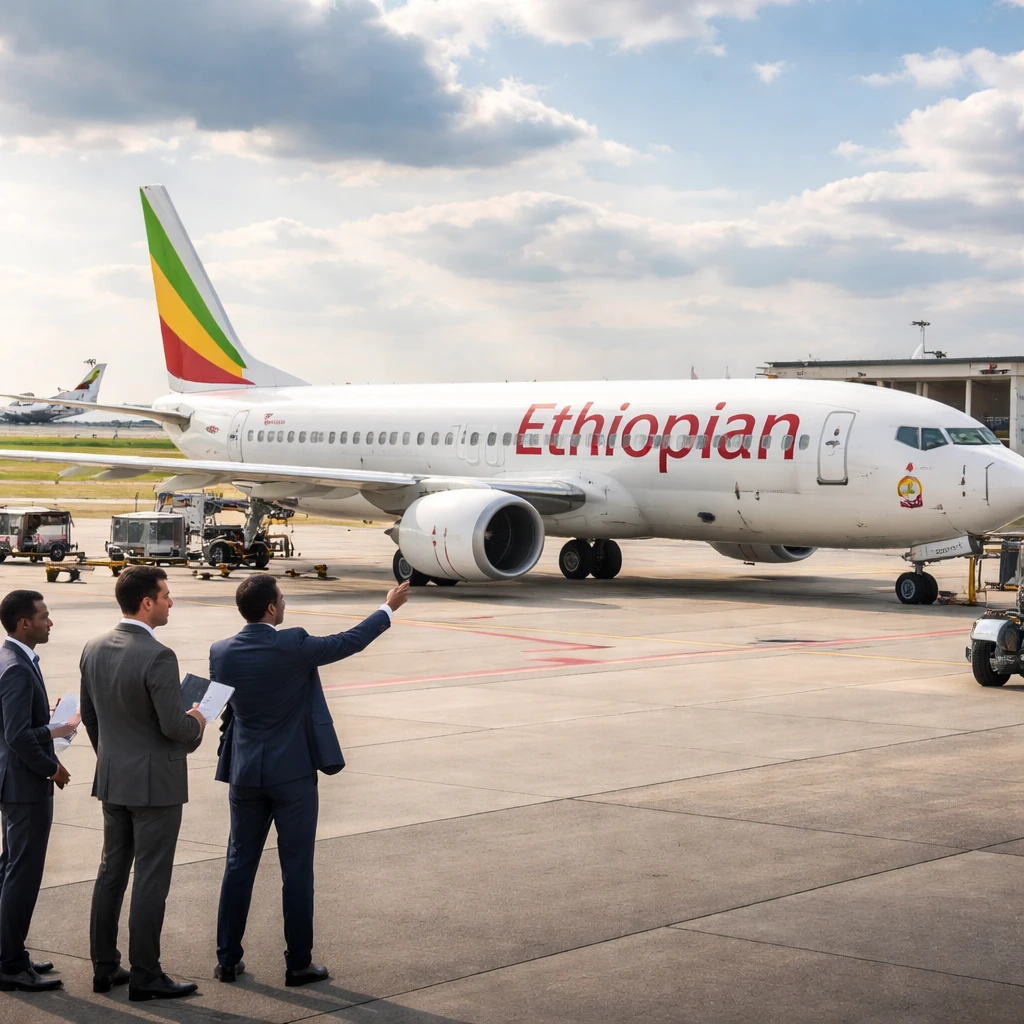
Ethiopian Airlines Group is completing final assessments on a major narrowbody procurement that could reach 50 aircraft, alongside plans for additional freighter capacity. The carrier is evaluating offers and technical proposals as it moves to modernize and expand operations across Africa.
Key points
- Ethiopian is considering an initial purchase of 25 single-aisle jets with options for 10 more, and separately reviewing up to 16 freighters including eight purchase rights.
- The airline is examining the smallest Boeing 737 Max model, Embraer regional jets and the Airbus A220 as candidates for the single-aisle requirement.
- Decisions are expected in the weeks ahead and could be timed for an announcement at the Farnborough Air Show; the program supports the carrier's goal to keep its fleet average age at no more than eight years.
Full story
Ethiopian Airlines Group is close to settling a large aircraft procurement as it implements a fleet renewal program intended to support growth across its African network. Chief Commercial Officer Lemma Yadecha said the airline is working through a "final evaluation" of both technical and financial aspects and anticipates making a decision "in weeks to come." Yadecha made the comments in an interview following the carrier's first flight to Mauritius.
The narrowbody element under review is for 25 single-aisle jets with options for 10 additional aircraft. Ethiopian is assessing three distinct families for that requirement: the smallest variant of the Boeing 737 Max family, regional jet models from Embraer, and Airbus' A220. Separately, the carrier is nearing a decision on up to 16 freighter aircraft, which would include eight purchase rights.
The timing of the carrier's choice could align with this year's Farnborough Air Show, which begins next week, offering a platform for a public announcement if Ethiopian proceeds on that schedule. Yadecha emphasized the carrier's objective to maintain an average fleet age of no more than eight years and indicated that quickly placing orders is important because delivery slots are becoming more limited in the years ahead.
Ethiopian's current fleet totals approximately 170 jets. The composition is largely Boeing equipment - more than 100 aircraft across the 737, 777 and 787 families - alongside 26 Airbus A350s and several dozen turboprops. The airline also has over 60 jets on order from Boeing. A contract with either Airbus or Embraer for the single-aisle requirement would broaden that manufacturer's relationship with a carrier historically dominated by Boeing types.
Risks and uncertainties
- Timing uncertainty - The carrier is still conducting its final technical and financial evaluations and has not yet made a binding commitment; the decision is expected in the weeks ahead.
- Delivery constraints - Ethiopian highlighted increasingly limited delivery slots in coming years, creating execution risk for any order that must be placed promptly.
- Manufacturer selection implications - A deal with Airbus or Embraer would change manufacturer dynamics for a carrier whose fleet is primarily Boeing, but the carrier has not announced a preferred supplier.