
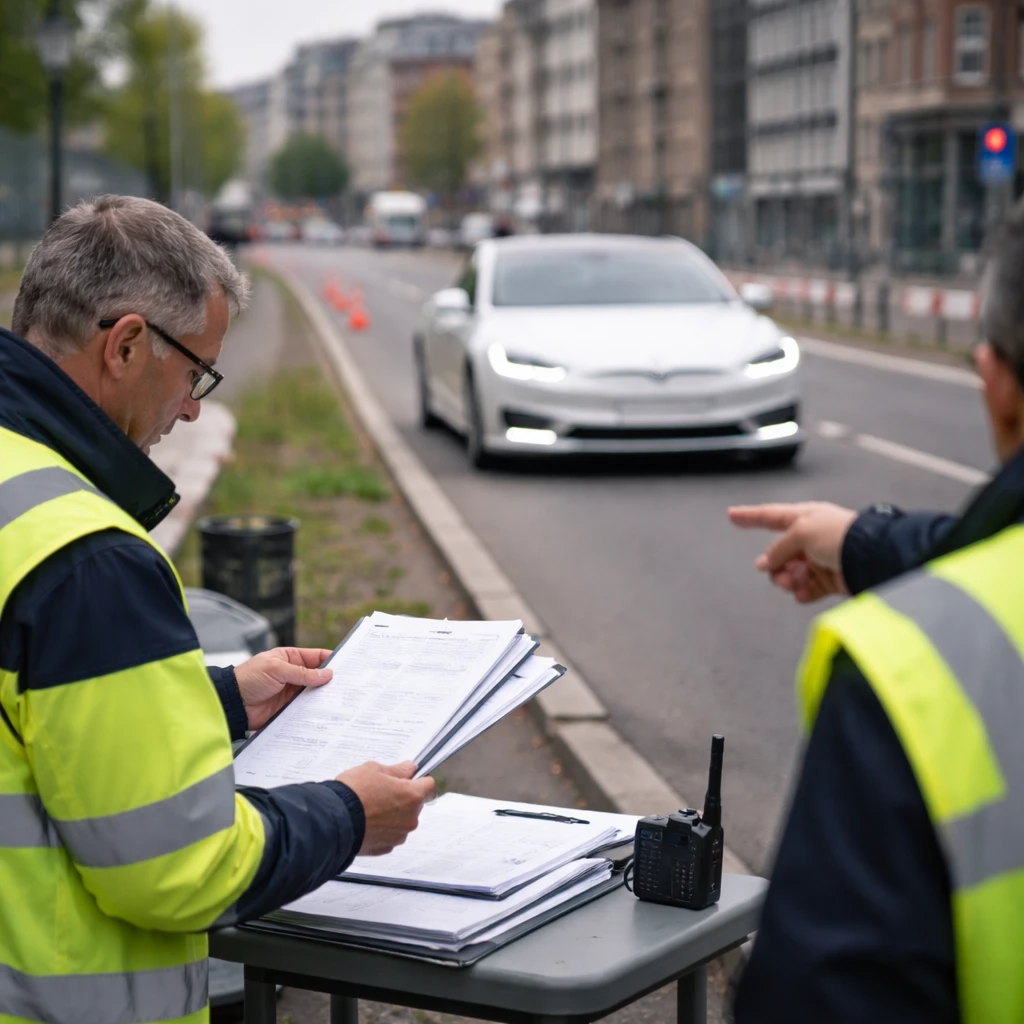
Four months after the Netherlands granted approval for Tesla's Full Self-Driving system, the Dutch vehicle regulator RDW is resisting calls to publish the underlying safety assessment that led to that decision. RDW says making the details public would expose Tesla's commercial secrets, a position that mirrors requests the automaker itself made to the regulator during the review process.
The dispute over disclosure centers on internal documentation and testing results RDW reviewed while judging FSD. Reuters obtained email correspondence showing Tesla pressed RDW starting in late 2024 to treat much of the material as confidential. RDW has not released the documents or explained, in detail, how it measured or reached conclusions about the system's performance.
Tesla has described FSD approval as a crucial step to increase sales in Europe as it seeks to recover market share it has lost in recent years while facing strong competition from Chinese electric-vehicle makers. European regulators generally require automakers to secure approval before offering driver-assistance systems such as FSD on public roads, a stance that has in the past been more conservative than that of U.S. authorities.
Company commentary on FSD has included public statements by Tesla's chief executive that the system, which still requires a human driver to remain attentive, will soon reach full autonomy. At the same time, investigative reporting in May concluded that Tesla's own, self-published safety statistics for FSD were significantly overstated and that the company was not near deploying true self-driving technology at scale. In June, reporting further indicated Tesla supplied inflated U.S.-based safety figures to several European regulators, including RDW, during its approval push.
RDW has rejected the suggestion that it relied on Tesla's published statistics, saying it undertook its own "extensive testing" on both closed tracks and public roads across a range of conditions. However, the agency has not disclosed the methodology, metrics, or raw results it used to substantiate public statements that appeared in April and June asserting FSD is "safer than other driver assistance systems" and "at least as safe as other driver assistance systems," respectively. The agency offered no underlying data to support those characterizations.
Vehicle-safety law experts in Europe say the regulator's refusal to publish details goes too far and risks leaving drivers and the public without crucial evidence about how the system performs in real-world conditions. Oliver Carsten, a transportation-safety professor at the University of Leeds who has participated in shaping automated-driving regulations in Europe, said he could see no reason why the testing details could not be made public.
Frank Mutze, policy and project manager at the European Transport Safety Council, said the current posture forces the public to accept regulators' conclusions on trust alone, adding that such faith "isn't good enough for us." RDW declined to reveal how it evaluated safety testing or to release its testing documents, pointing to an "obligation to protect manufacturer-specific information." The agency did not explain how publication of testing details or the regulator's performance conclusions might disclose commercially sensitive material.
In the correspondence obtained by Reuters, Tesla repeatedly asked RDW to ensure that certain items would "never" be released and sought mechanisms to keep them "withheld from public disclosure." In one April 2025 exchange, a Tesla representative said additional information could not be supplied to RDW until confidentiality concerns were clarified.
RDW told Tesla that, under public-records rules, manufacturers could request exemptions from disclosure and that such requests should not pose a problem. Separately, the regulator has told Reuters it has not simply withheld information at Tesla's behest, asserting that it independently decides how to safeguard what it regards as trade secrets.
Tesla has a documented history of attempting to limit public access to material it provides to regulators. In the United States, the company seeks redactions of basic details from federal safety filings about crashes involving its driver-assistance features. Several European authorities that have received some of the RDW-provided data have followed similar confidentiality practices.
Regulators in six European countries, including Germany, Norway and Denmark, informed Reuters they could not release data on FSD testing or performance because of trade-secret concerns. Norway's Public Roads Administration said the material it reviewed from the Netherlands "is not the same as what Tesla publishes on its website," a reference to the inflated safety figures scrutinized by earlier reporting.
According to emails reviewed by Reuters, the Norwegian agency told drivers that Tesla's public safety claims portray vehicles as safer than the testing data now circulating among European regulators would indicate. That gap between Tesla's public statistics and the material shared among regulators has heightened scrutiny of the approval process.
Safety specialists noted that confidentiality worries are especially troublesome in light of Tesla's unusual regulatory approach. Rather than seeking clearance only for highway-only, hands-free automated driving systems, Tesla is pursuing a special exemption from existing EU motor-vehicle rules that currently restrict hands-free operation to highways and preclude the technology's use on more congested urban roads.
Some national authorities have signaled explicit reservations. France's transportation minister said the country would not endorse FSD in its present form, citing concerns about speeding and insufficient technology to ensure drivers remain attentive. Finland's Transport and Communications Agency offered a more mixed assessment, noting that FSD "has been observed to often make safer decisions than a human driver" while also expressing worries about performance on steep or winding roads and whether drivers could reliably retake control if the system made sudden errors.
RDW is now pressing for EU-wide approval. That process requires affirmative votes from representatives of 55% of member states representing 65% of the bloc's population - a threshold that could be put to a vote as soon as October. Until regulators publish more detailed testing methods and results or make clear why such disclosure is impossible, debate over transparency and public safety is likely to continue as the EU weighs whether to grant the broader authorization Tesla seeks.
Summary
Netherlands' RDW has approved Tesla's FSD and is seeking EU endorsement but refuses to disclose how it evaluated safety, citing the need to protect Tesla's commercial secrets. Tesla requested confidentiality during the review and has previously publicized FSD safety data that independent reporting found overstated. Other European regulators have also withheld testing data, and several national authorities have flagged concerns about FSD's readiness for broader use.
Key points
- RDW approved Tesla's FSD and is advocating for EU acceptance while declining to publish its safety evaluation - impact on automotive and regulatory sectors.
- Tesla actively sought confidentiality for documents submitted during the review; other European regulators also cited trade-secret concerns when declining to release testing data - impact on consumer safety oversight and data transparency.
- National authorities including France and Finland have expressed safety reservations; RDW says it performed "extensive testing" but has not shared methods or data - impact on automotive, transport safety, and policy decision-making.
Risks and uncertainties
- Limited public disclosure of testing methodology and results raises uncertainty about FSD's real-world safety performance - risk to road-safety regulators and consumers.
- Potential vote at EU level in October on whether to grant broader approval creates regulatory uncertainty for automakers and the EV market in Europe - risk to automotive manufacturers and market competition.
- Differences between Tesla's public safety claims and the testing information circulating among regulators may erode public trust and complicate oversight - risk to regulatory credibility and consumer confidence.