
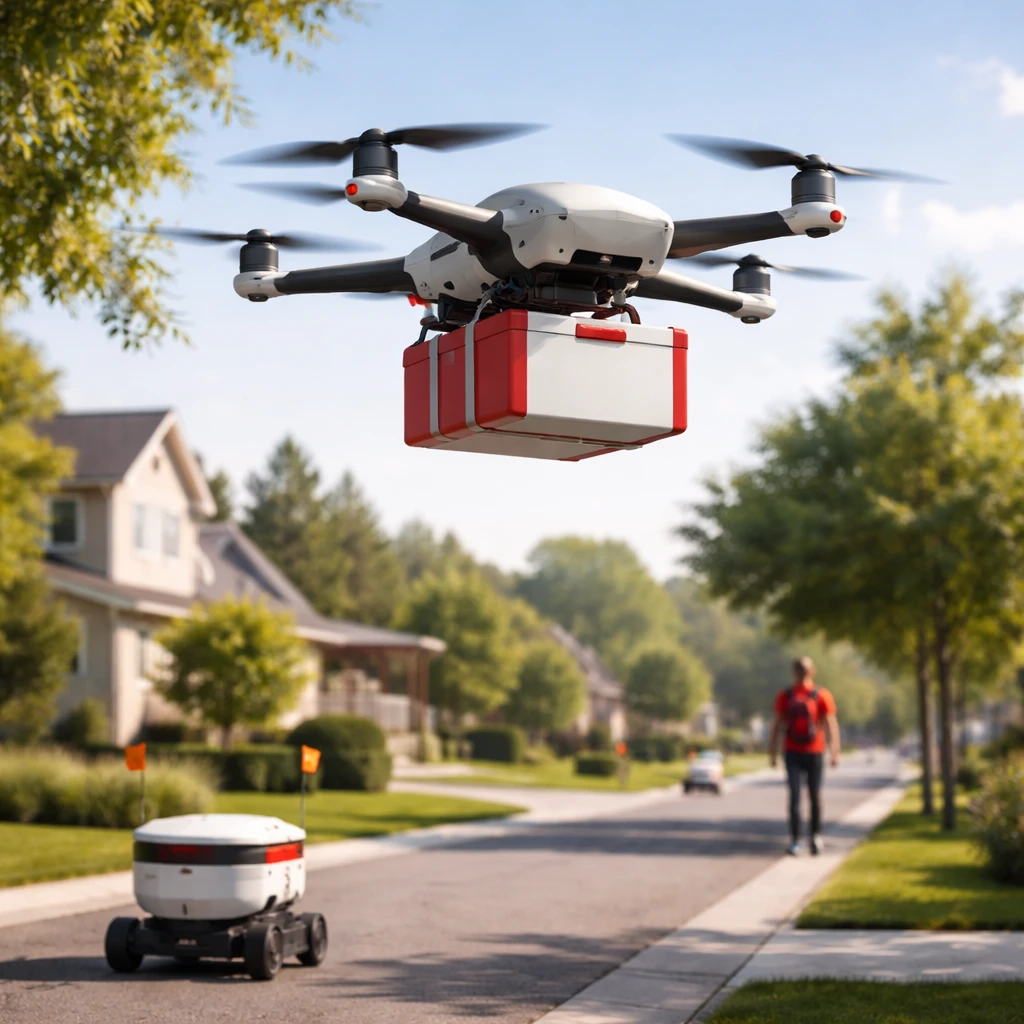
DoorDash on Wednesday announced the launch of DoorDash Air, its internal drone-delivery program, after securing certification from the U.S. Federal Aviation Administration to operate commercial drone deliveries domestically. The certification clears a regulatory hurdle for the company as it seeks to expand its logistics capabilities and add autonomous aerial delivery to its fulfillment options.
The program was created by DoorDash Labs, the company’s robotics and autonomy group, and DoorDash said the capability will be folded into its consumer-facing delivery application at a future point, according to reporting that accompanied the announcement. DoorDash also said it is building its own aircraft and the broader drone infrastructure that would support such operations, while not providing a specific timeline for when commercial deployments might begin.
DoorDash Air positions the company among a growing set of businesses operating drone-delivery services. The company’s entry into in-house drone operations joins the ranks of other commercial drone operators such as Amazon’s Prime Air, Alphabet-owned Wing, and Zipline, all of which have expanded commercial flight activity in recent years.
At the same time as launching DoorDash Air, the company indicated it will continue collaborating with current external drone-delivery partners, including Wing and Flytrex, while it scales up internal capabilities. That approach allows drones to be one additional option within DoorDash’s existing delivery mix rather than an immediate replacement for its other modes of fulfillment.
DoorDash already operates a multi-modal delivery network that combines human couriers, sidewalk robots branded as Dot, and autonomous delivery partners. With DoorDash Air, drones will add another fulfillment channel to that network, enabling aerial delivery alongside these ground-based methods.
Key facts in the announcement are limited: DoorDash has FAA certification in hand for commercial drone operations in the U.S.; DoorDash Labs developed the program; the company plans to construct its own aircraft and infrastructure; it did not announce a commercial deployment timeline; and it will continue work with existing drone partners as it builds its own capabilities.
This launch reflects a strategic push toward greater automation in last-mile logistics while preserving partnerships with third-party drone operators during the development of in-house systems.