
AiMOGA Robotics, the robotics unit born under Chery Automobile, is moving toward a potential initial public offering as it seeks funding for research and expansion, according to comments made by the business head on the sidelines of the World Robot Conference in Beijing.
Zhang Guibing, who leads the unit and serves as president of Chery International, said the company is taking preparatory steps and is in talks with several possible IPO locations. He framed a listing as a way to secure capital for technology investment while also improving governance, transparency and operational standards. Zhang declined to provide specifics on the timing or venue of any flotation.
AiMOGA’s push to list comes amid a surge of investor interest in Chinese robotics. High-profile market moves in the sector have included a strong debut for a leading humanoid maker in Shanghai and other startups indicating they are considering public offerings. In that environment, AiMOGA is planning a sharp ramp-up in unit deliveries next year as it seeks to scale and compete with global robotics firms.
The company, incubated by Chery in January 2025, has so far shipped more than 3,000 robots worldwide, with about 2,000 units sent overseas. AiMOGA now operates in more than 60 countries and regions and has set an internal target of delivering 10,000 robots globally next year. Zhang said the company ultimately aims to rank among the world’s top robotics firms.
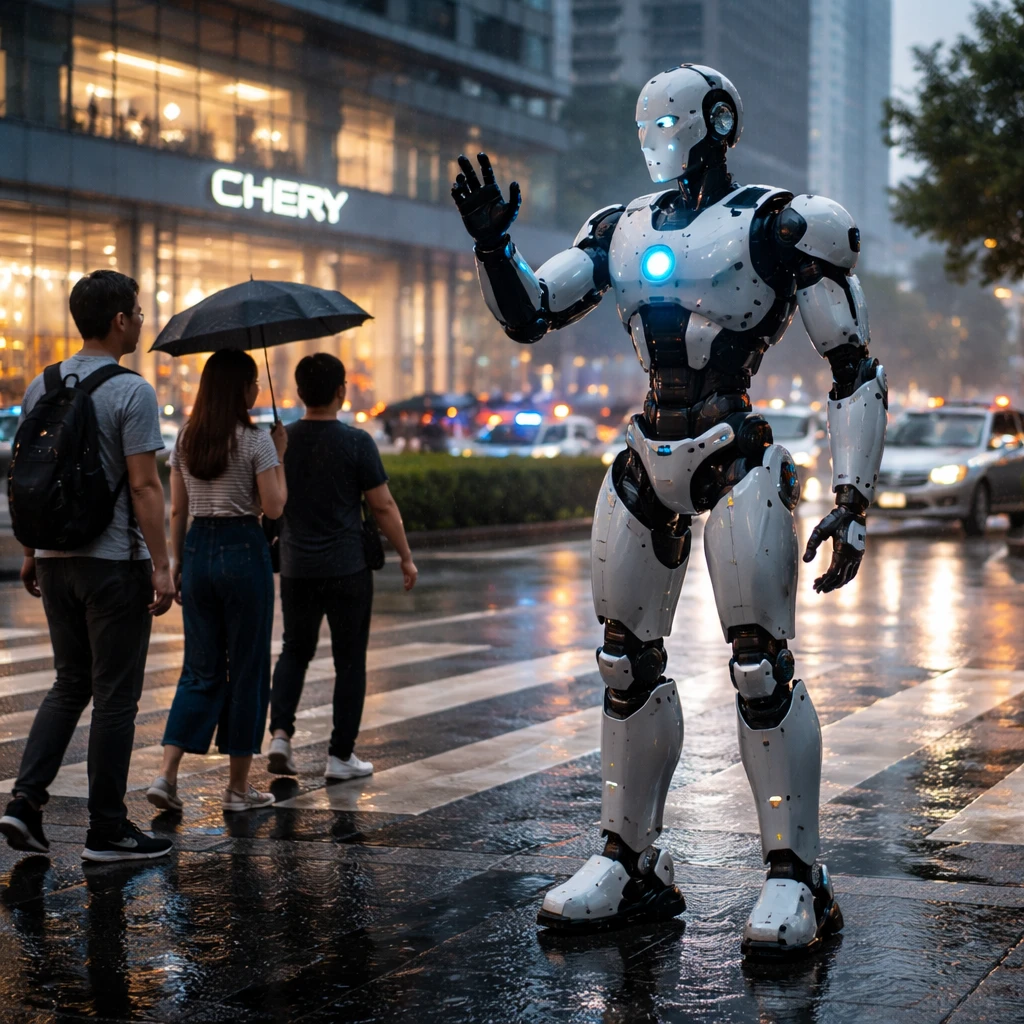
Earlier this year AiMOGA introduced bipedal humanoid police robots. Management reported that 110 of those police units are already deployed across multiple Chinese cities, where they are being used in roles such as traffic management, crowd guidance and public-safety awareness campaigns.
Zhang described traffic control as a particularly promising use case. He said traffic police often work in difficult conditions - exposed to extreme weather, air pollution from vehicle emissions and an elevated risk of accidents - and that robots could help mitigate labour shortages in such roles. He also noted the need for such automation could be greater outside China, in regions like the Middle East and Southeast Asia where high temperatures and heavy rainfall make outdoor policing duties more arduous.
AiMOGA began commercial deployments in Chery dealerships with a bipedal humanoid robot and has been broadening its product mix into public-service applications. The company’s early overseas expansion is being led by service robots and companion robots, according to Zhang.
On competition and industry structure, Zhang likened China’s robotics market to the electric vehicle sector a few years ago: many players have emerged quickly and competition is intense. He expects consolidation to strengthen the industry’s technology base over time but cautioned that cost competition is likely to remain fierce.
AiMOGA’s management also addressed geographic strategy. While the company aims to serve global markets, Zhang emphasized that any entry into particular countries would require adapting to local regulation and customer needs. When asked about a possible U.S. presence, he reiterated the company’s global ambitions but said expansion into the United States would depend on timing and regulatory adaptation; he also noted that Chery has been considering entering the U.S. market at a suitable time, a position Zhang stated in May.
Chery itself has previously used separate listings for subsidiaries and affiliates: an auto parts supplier affiliated with Chery listed on the Shanghai exchange in 2018, while a robotics and automation firm with links to Chery went public on Shanghai’s STAR Market in 2020. Those prior listings illustrate a pattern of spin-outs and public offerings connected with the group, a framework Zhang invoked when discussing AiMOGA’s potential path.
As the business targets fast delivery growth and international sales, management is positioning an IPO as both a funding mechanism and a governance milestone. Zhang said that an offering could help underwrite future technology investments while raising operational standards across the business.
AiMOGA’s stated commercial priorities combine scaled manufacturing, targeted public-service deployments and selective overseas expansion, with a focus on markets where environmental conditions increase the appeal of robot-assisted policing and outdoor services. Management projects a steep increase in unit volumes next year, but Zhang also highlighted that the sector will face intense cost competition even as technological consolidation proceeds.
The company’s move to consider a public listing arrives as several other robotics startups are evaluating or executing market entries, underscoring growing investor appetite for robotic service applications beyond factory automation.