
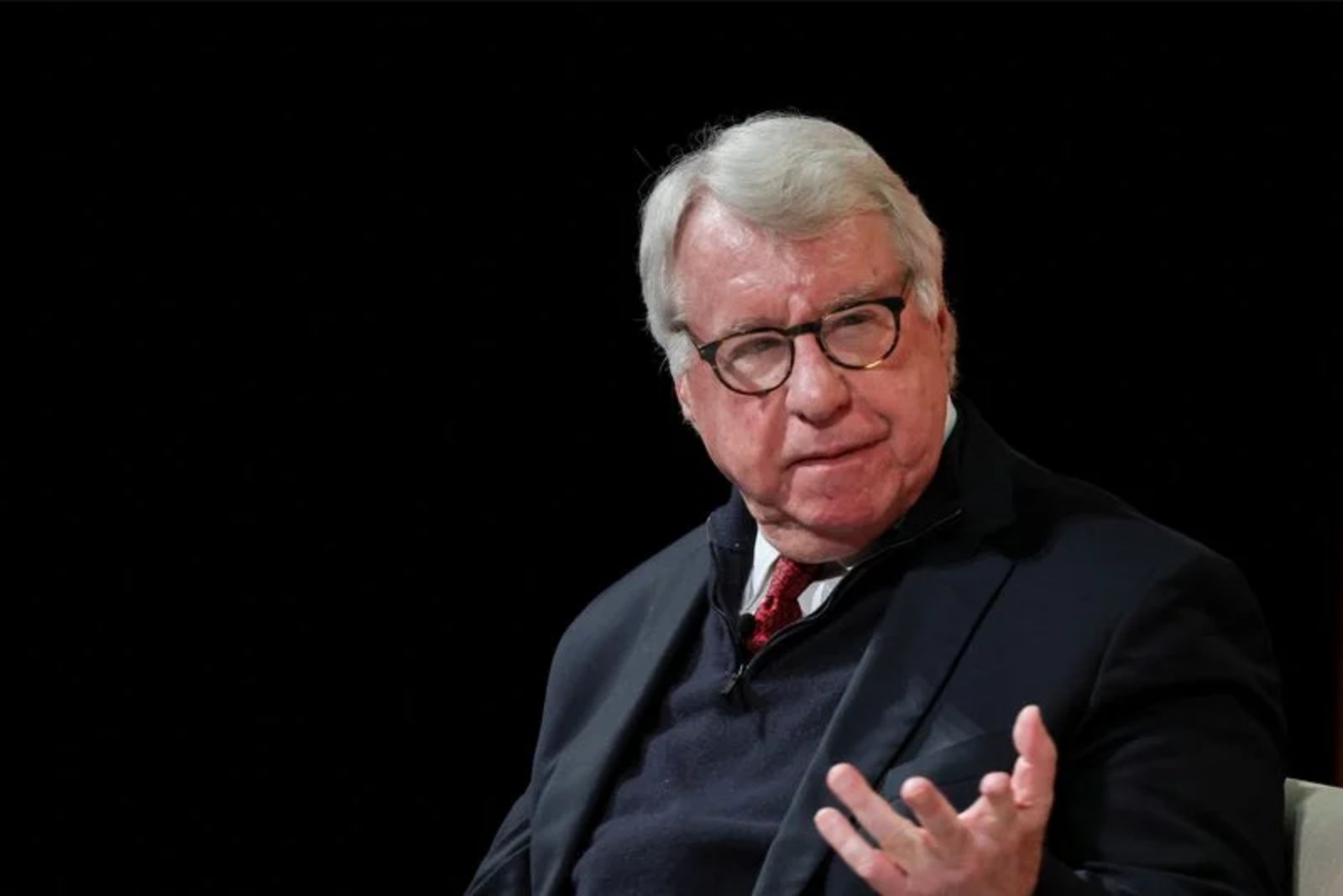
Prominent short seller Jim Chanos used a New York conference appearance to challenge the market rationale behind SpaceX's planned initial public offering, saying the Elon Musk-led space company’s proposed price tag is driven more by aspiration than by financial reality.
SpaceX is scheduled to begin trading in New York on Friday after an offering that aims to raise $75 billion at a valuation of $1.75 trillion. That would make it the largest IPO in history - nearly three times the size of the 2019 Saudi Aramco listing, according to the figures cited around the offering.
Speaking at the iConnections conference in New York on Wednesday, Chanos said he could not justify a $1.75 trillion valuation for the company using reasonable assumptions for the next five years. "The company is not worth, in my opinion, $1.75 trillion based on any reasonable assumptions over the next five years," he said.
Chanos argued the headline valuation can be dressed up by appealing narratives - from Mars colonies to extensive space-based infrastructure - but that such stories do not substitute for near-term revenue and profit metrics. "We really can build whatever stories we want - colonies on Mars, factory tunnels, data centers in space - to justify the valuation. In bull markets, you put a premium on promises and in bear markets, you put a discount on reality," he said.
Market observers have flagged the $1.75 trillion target and governance issues as reasons some investors view the company as a potential short. Still, several short sellers have been reluctant to take that step immediately after recent rallies by trillion-dollar technology companies, which have produced large losses for bearish positions.
Chanos drew an explicit distinction between SpaceX and Tesla when the conversation turned to shorting other Elon Musk-linked companies. While short positions against Tesla have generally been costly, he called SpaceX "a different animal." On paper, short sellers of Tesla have incurred substantial losses: S3 Partners estimates such bets, including directional shorts and index hedges tied to Tesla’s S&P 500 inclusion, have lost $27 billion since June 2021. Over the last 10 years, Tesla shares have risen by more than 2,500%.
Despite that track record, Chanos noted SpaceX is trading at a far higher multiple relative to sales than Tesla. He said the space company is being valued at 90 times its sales, compared with a 14-times sales multiple for Tesla.
Beyond his critique of SpaceX's valuation, Chanos questioned the investment case for the data center sector more broadly, describing the business as a poor generator of returns. He characterized data center operations as producing low-single-digit returns on capital, and has held a bearish view on such operators since 2022.
Chanos laid out the rationale behind his negative view of data center firms: many buy advanced chips from suppliers like Nvidia and lease the resulting capacity to hyperscalers, which exposes operators to heavy depreciation costs and limited ability to pass through higher prices. In his assessment, these companies operate more like REITs or equipment leasing businesses than high-growth technology firms, making them price-takers rather than pricing powerhouses.
Because of that dynamic, Chanos argued, data center operators should not command valuation multiples above those for semiconductor manufacturers that control hardware supply. He therefore questioned the premium some investors place on these businesses.
Chanos is a well-known American investment manager and founder of Kynikos Associates. A renowned short seller, he is best known for accurately predicting, and profiting from, the collapse of Enron in 2001.
Summary - Jim Chanos warned that SpaceX's planned $1.75 trillion IPO valuation is unsupported by short-term fundamentals and driven by optimistic narratives. He contrasted SpaceX's 90-times-sales multiple with Tesla's 14-times multiple, noted the expensive history of shorting Tesla, and reiterated his bearishness on data center economics given low returns and depreciation risks.
Key points
- SpaceX aims to raise $75 billion at a $1.75 trillion valuation in what would be the largest IPO on record - nearly three times the size of the 2019 Saudi Aramco listing.
- Chanos said the $1.75 trillion valuation cannot be justified on reasonable five-year assumptions and warned that investor enthusiasm may rest on speculative stories rather than fundamentals.
- He criticized data center operators as low-return, high-depreciation businesses and said they behave more like REITs or equipment lessors than high-growth tech firms.
Risks and uncertainties
- Valuation risk - The targeted $1.75 trillion price tag for SpaceX may not be supported by measurable near-term financial outcomes, posing a valuation risk for investors and affecting equity market sentiment.
- Short-selling risk - Despite analytical arguments for short positions, short sellers face significant timing and market risk, as past rallies among trillion-dollar tech names have produced heavy losses for bearish bets; this impacts hedge strategies and market participants considering shorts.
- Sector risk - Chanos' view that data center economics produce low-single-digit returns highlights potential sector-level vulnerabilities for investors in data center operators and related hardware suppliers.