
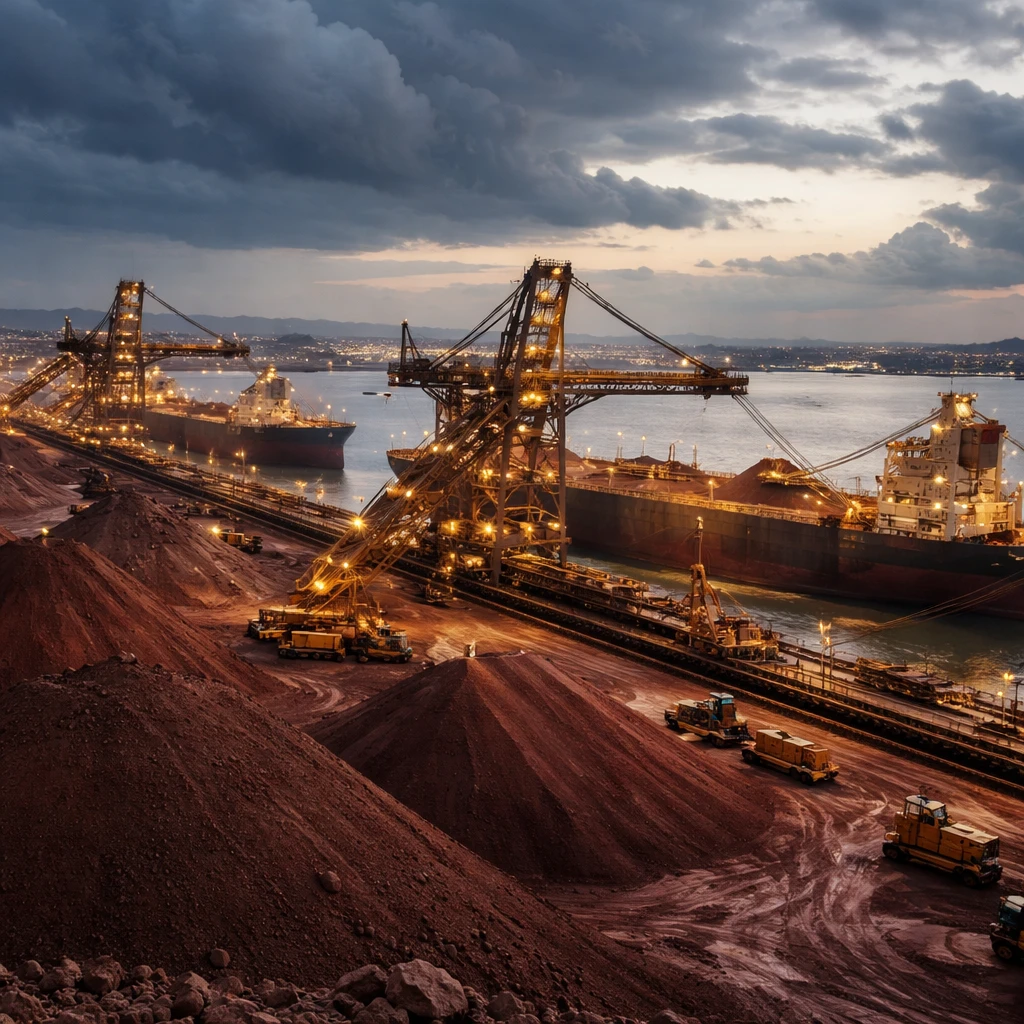
BHP Group reported a notable rebound in iron ore volumes in the three months to June 30 as operations recovered from weather-related interruptions in the prior quarter, while copper production rose only modestly despite stronger realised prices.
On a 100% basis, West Australian iron ore production increased 7% from the March quarter to 74.8 million metric tons. That quarterly rise followed a period in which the company had briefly halted operations at Port Hedland due to Cyclone Zelia. Iron ore output for the 12 months to June 30 reached a record 291.2 million metric tons - consistent with the company’s guidance range of 284-296 million metric tons - although it was 3% lower than the prior year.
BHP set fiscal 2027 iron ore production guidance at 286-298 million metric tons. Average realised prices for the commodity were reported at $83.58 per metric ton for the quarter, a sequential decline of 2% but an increase of 5% compared with the same period a year earlier.
The company faces an additional near-term operational risk at Port Hedland after talks with a major union failed to reach agreement. Hundreds of workers are due to strike on Thursday, a development that could disrupt flows through Port Hedland, the world’s largest iron ore loading port and a critical export hub for BHP’s operations.
Copper production increased 3% quarter-on-quarter to 491.9 thousand metric tons, yet it was down 5% from the year-ago quarter, reflecting interruptions in Chilean operations and in South Australia. Over the 12 months to June 30, copper output declined 3% to 1.95 million metric tons, which nevertheless sat within BHP’s guidance of 1.9-2.0 million metric tons for that period.
For fiscal 2027, BHP projected copper production of 1.65-1.80 mt, noting an unexpected operational snag in its South Australia operations as a contributing factor to the lower guidance midpoint. Despite the weaker volumes, average realised prices for copper strengthened markedly - $6.53 per pound in the quarter, up 11% sequentially and up 47% from a year earlier.
The company attributed the sharp rise in copper prices to tight global supplies and market expectations of rapidly growing demand for the metal tied to artificial intelligence-related buildouts.
Context and implications
The quarterly figures show that BHP has recovered iron ore volumes lost to weather-related disruptions but still faces labour and operational risks that could affect near-term production. Copper volumes remain under pressure from regional disruptions even as elevated prices support revenue per unit.