
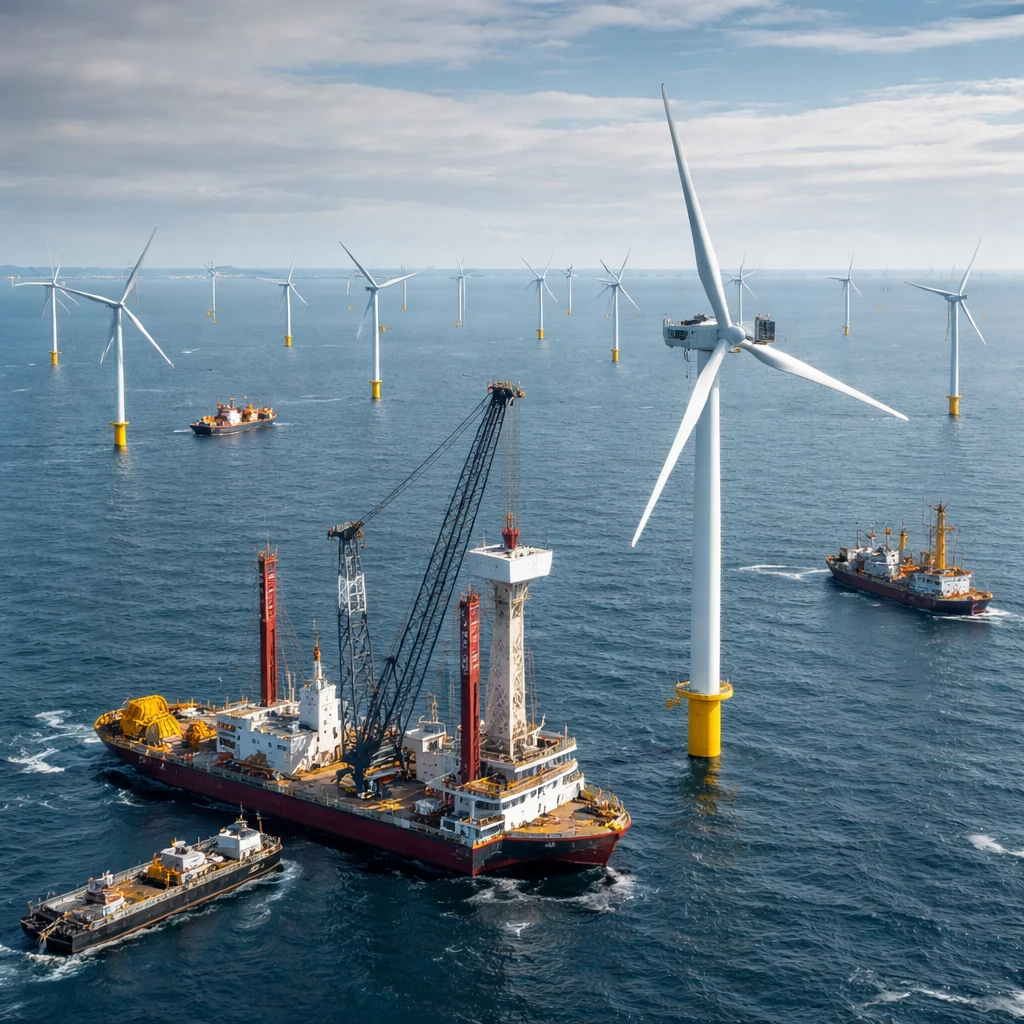
Bernstein analysts describe the United Kingdom’s AR8 offshore wind auction as the most reliable large-scale opportunity currently on offer in Europe, estimating the event could allocate between 8 and 10 gigawatts of capacity. The firm singled out RWE and SSE as the most likely direct beneficiaries of AR8, and said turbine maker Vestas could pick up meaningful contracts as projects move to procurement.
While more than 22 gigawatts of projects could theoretically enter AR8, Bernstein judged that about 10 gigawatts are genuinely ready to be tendered once permitting status and favourable project locations are taken into account. The UK government’s stated procurement target for AR8 ranges from 8 to 15 gigawatts, but key auction design elements - including overall budget, price caps and reference prices - had not been disclosed at the time of the firm’s analysis.
Across Europe, the analysts observed a move away from pure subsidy-free auction formats toward structures that share risk between bidders and purchasers. In Denmark, a re-run tender for 1.8 gigawatts will use a capability-based two-sided contract for difference that specifically addresses curtailment risk. The Netherlands is reverting to subsidized mechanisms through SDE++ and is planning future two-sided contracts for difference, while France has adopted 25-year capability contracts for difference.
Bernstein expects the upcoming Danish 1.8 gigawatt auction and the Dutch 2 gigawatt auction to draw intense competition. The firm listed major offshore developers likely to participate, including Orsted, RWE, Vattenfall and Eneco, and said there could also be entrants such as SSE and Ocean Winds alongside infrastructure investors and pension funds. At the same time, Bernstein forecasts diminished participation from oil majors, attributing that trend to those companies refocusing on oil and gas activity.
Execution and permitting obstacles continue to limit progress in some national markets. Belgium is experiencing delays for a 700 megawatt auction. In France, a planned 10 gigawatt auction faces extended permitting timelines that imply roughly 8 to 10 years until projects reach commissioning. In Germany, any potential re-tendering of about 16.5 gigawatts would require existing auction winners - named by the firm to include TotalEnergies, BP and EnBW - to return sites and for the government to implement a two-sided contract for difference framework, a sequence Bernstein says is likely to take at least several years.
Overall, Bernstein’s view places the UK AR8 process at the centre of near-term large-scale offshore wind activity in Europe, with a limited set of developers and suppliers best positioned to capture opportunities as auction designs and permitting realities crystallize.