
President Donald Trump announced on Monday that the federal government has deposited the initial $1,000 contribution into in excess of 500,000 so-called "Trump Accounts," accounts established to give newborn U.S. citizens an initial stake in the stock market and a pathway to accumulate wealth over time.
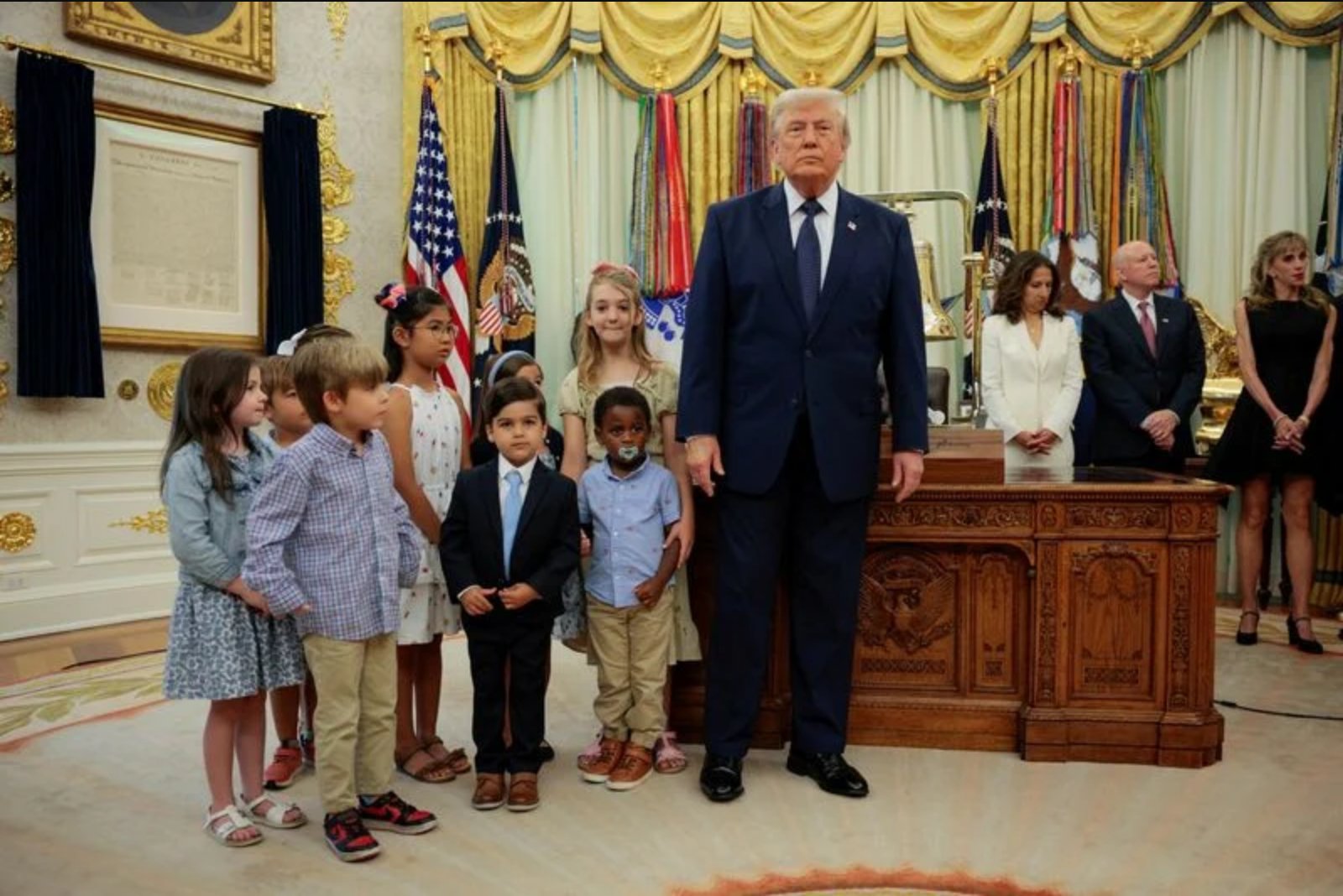
The president marked the rollout by participating in a bell-ringing event held in the Oval Office, where senior leaders from the New York Stock Exchange and Nasdaq joined administration officials. Present at the event were Nasdaq CEO Adena Friedman and President Nelson Griggs, Intercontinental Exchange CEO Jeffrey Sprecher, and Lynn Martin, president of NYSE Group.
Officials described the accounts as a new savings vehicle for children born between 2025 and 2028. The structure of the accounts places an automatic investment of contributions into a low-cost index fund intended for long-term growth. Account holders gain full control at age 18, at which point they can elect to withdraw the funds or maintain the investment. Any gains realized will be taxed when withdrawn.
Supporters contend the program promotes financial literacy and encourages long-term investing behaviors by providing an initial asset to children who otherwise might begin life without inherited wealth. During the launch, Republican Senator Ted Cruz of Texas, who participated in the event, stated: "Trump Accounts are about making every child and every American a capitalist. Every one of our kids is now going to be an owner of the biggest producers in our country."
Administration officials also cautioned against early withdrawal, particularly in the context of a strong market, advising that resisting short-term withdrawals would be in the long-term interest of account holders.
Several U.S. companies have pledged additional support to the program, offering employer matches or other seed funding. Among the named participants are Visa, Dell, and Comcast. Chipmaker Micron has committed $250 million to back Trump Accounts.
The program arrives amid heightened voter concern over rising living costs as the country approaches the November midterm elections. Critics of the initiative have argued that families with constrained disposable incomes may find it difficult to make additional contributions and therefore may not capture the full intended benefit of the accounts.
Proponents describe the accounts as an adjunct to existing tax-advantaged college savings plans and retirement vehicles, providing a separate mechanism aimed specifically at early-life accumulation through indexed investments. The administration emphasized the accounts as a means to give children financial assets from birth, while acknowledging debates about accessibility and the limits of participation for lower-income families.