
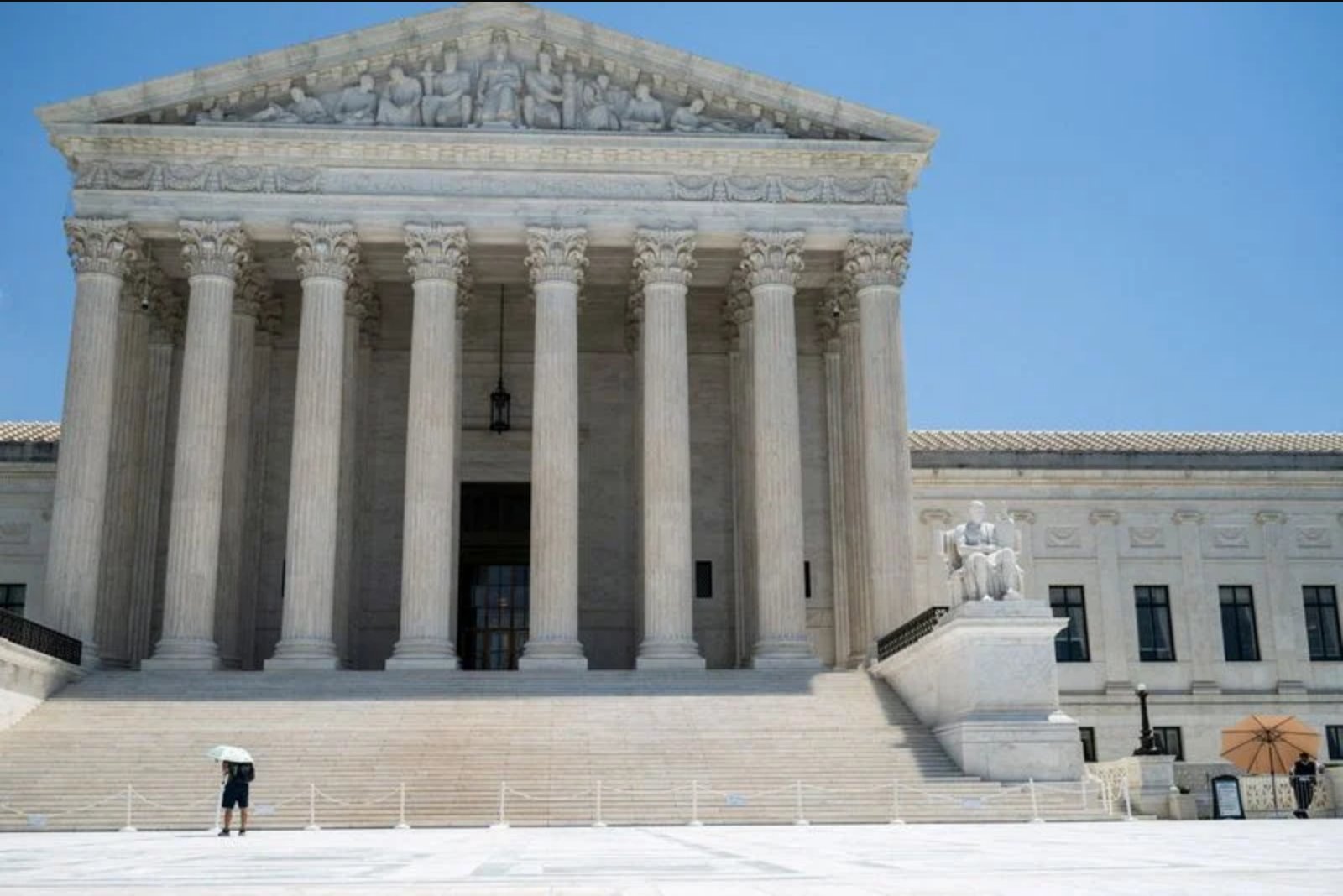
The U.S. Supreme Court's recent decision to remove limits on coordinated expenditures between individual campaigns and national political committees has immediately altered the fundraising landscape for competitive Senate races.
One high-profile example is Georgia Senator Jon Ossoff, who has raised more than $81 million this cycle and is sitting on nearly $33 million in campaign cash - roughly $30 million more than his Republican opponent for November, Representative Mike Collins. Under the new legal framework, however, that monetary advantage may no longer carry the same weight.
The ruling permits national party organizations, including the Republican National Committee and the Democratic National Committee, to coordinate spending with campaigns without any statutory cap. That means national committees can now deploy unlimited funds from large donors in direct coordination with individual campaigns in ways that were previously constrained by coordination limits.
Party officials have long pointed out that, while national committees were previously able to spend money on behalf of candidates, the inability to coordinate messaging, strategy, and timing with campaigns sharply limited how effective that spending could be. With those constraints removed, party-directed dollars can be more precisely targeted and timed to amplify a candidate's outreach.
Political fundraising patterns suggest this legal change could have asymmetric effects. Republican national committees typically raise a larger share of contributions from big, corporate donors, whereas Democratic candidates have tended to rely more heavily on smaller individual donations. Because national committees can accept much larger contributions than individual campaigns - contributors may provide tens of thousands of dollars to national committees while direct contributions to campaigns remain capped at $7,000 per election cycle - the ruling opens a path for swift infusion of coordinated funds into races where the party apparatus sees opportunity or need.
Democratic candidates nonetheless began the cycle with substantial cash advantages in several key states: a $16 million edge in North Carolina, $9 million in Ohio and $8 million in Texas. Those balances could be offset if Republican national funding is redirected to shore up underperforming fundraisers, including challengers such as Mike Collins in Georgia and Texas Republican Senate nominee Attorney General Ken Paxton.
Legal and regulatory specifics that governed campaign finance until the ruling helped shape how parties and campaigns planned their media buys. Previously, coordinated expenditures for Senate contests were limited on a sliding scale that ranged from about $130,000 to $4 million, depending on a state's voting-age population. With those caps removed, the fiscal calculus for advertising and other paid outreach shifts markedly.
The current cash positions of the parties underscore the potential impact. As of June, Republican committees entered the month with more cash than their Democratic counterparts, including a reported $110 million gap between the Republican National Committee and the Democratic National Committee. The DNC also reportedly carries about $18 million in debt. Those imbalances mean that national Republican fundraising advantages could be rapidly converted into coordinated spending in battleground states.
The Senate balance of power raises the stakes. Republicans currently hold a 53-47 majority. For Democrats to flip control in November they would need a net gain of four seats. Democrats are defending seats in states President Donald Trump won, such as Georgia and Michigan, while also targeting Republican-held seats in North Carolina, Maine, Ohio and Alaska. They have additionally signaled interest in more Republican-leaning contests in Iowa and Texas.
Polling released in recent days shows several tight matchups. A set of New York Times/Siena polls found Democrats leading in North Carolina and within the margin of error in Maine, Texas, Alaska, Iowa and Ohio. Fox News polling showed Senator Ossoff ahead by 13 percentage points in Georgia and placed Iowa's Senate race within the margin of error. Fundraising data cited in those surveys indicates that Democratic candidates are out-raising Republicans in every listed state except Alaska and Iowa.
Not all elements of coordination are settled. A central point of contention is whether national committees will be able to purchase broadcast and cable advertising at the more favorable rates that candidates are afforded under Federal Communications Commission rules. Those rules were designed to prevent candidates from being charged "unfairly high advertising rates during the ends of a campaign or rates that differ from their opponents." If party buys are treated the same as candidate buys, the cost efficiency of coordinated spending would increase substantially.
The Senate Republicans' campaign arm has already asserted that it is no longer required to produce and distribute advertisements independently, and that coordinated buys will yield significant savings. It has estimated broadcast and cable buys could be three to 13 times cheaper than the rates paid by outside groups. Democrats dispute that outlook, pointing to a past Supreme Court filing by Solicitor General D. John Sauer which stated that current rules require broadcasters to charge low rates for candidate spending, but not for party spending - whether coordinated or independent.
The Federal Communications Commission did not provide a response to requests for comment about how broadcasters would treat party-coordinated buys under the new legal environment.
The Supreme Court's majority opinion, written by Justice Brett Kavanaugh, framed the decision as leveling the playing field between parties. In dissent, Justice Elena Kagan argued that the majority effectively bypassed Congress, rewriting contribution rules and enabling "a party to serve as an alternative checking account for a campaign." Legal advocates on both sides have weighed in publicly. Lawyers who represented Democratic groups in the case said they disagreed with the outcome but acknowledged that both parties would likely be able to provide unlimited support to their candidates going forward.
For campaigns and political strategists, the implications are immediate and practical: national committees now have a wider array of tools to target resources, tailor messaging, and potentially drive down the unit cost of paid media - provided those buys receive the same rate treatment as candidate advertising. For candidates who had relied on a cash cushion to outspend opponents locally, such as Senator Ossoff in Georgia, the value of that cushion may be diminished if national committee dollars are deployed aggressively in those same markets.
Summary
The Supreme Court eliminated caps on coordinated spending between national party committees and individual campaigns, allowing unlimited donor funds to be deployed in concert with candidates. The change may reduce Democratic cash advantages in key Senate contests, potentially benefiting Republicans who raise more from large donors through national committees. Uncertainty remains about whether party buys will receive the same low broadcast and cable rates afforded to candidates.