
Overview
BP has reached an agreement to transfer its stake in the Bay du Nord offshore oil project in Canadian waters to project partner Equinor, the companies announced on Monday. The energy groups did not reveal the financial terms of the transaction.
Change of ownership and project timetable
Upon completion of the sale, Equinor will hold 100% ownership of the Bay du Nord development after acquiring BP's 37.2% interest. The Norwegian energy company said it plans to advance the project toward a final investment decision - or FID - in early 2027. Equinor has signalled a target of first oil in 2031.
Project scale and technical approach
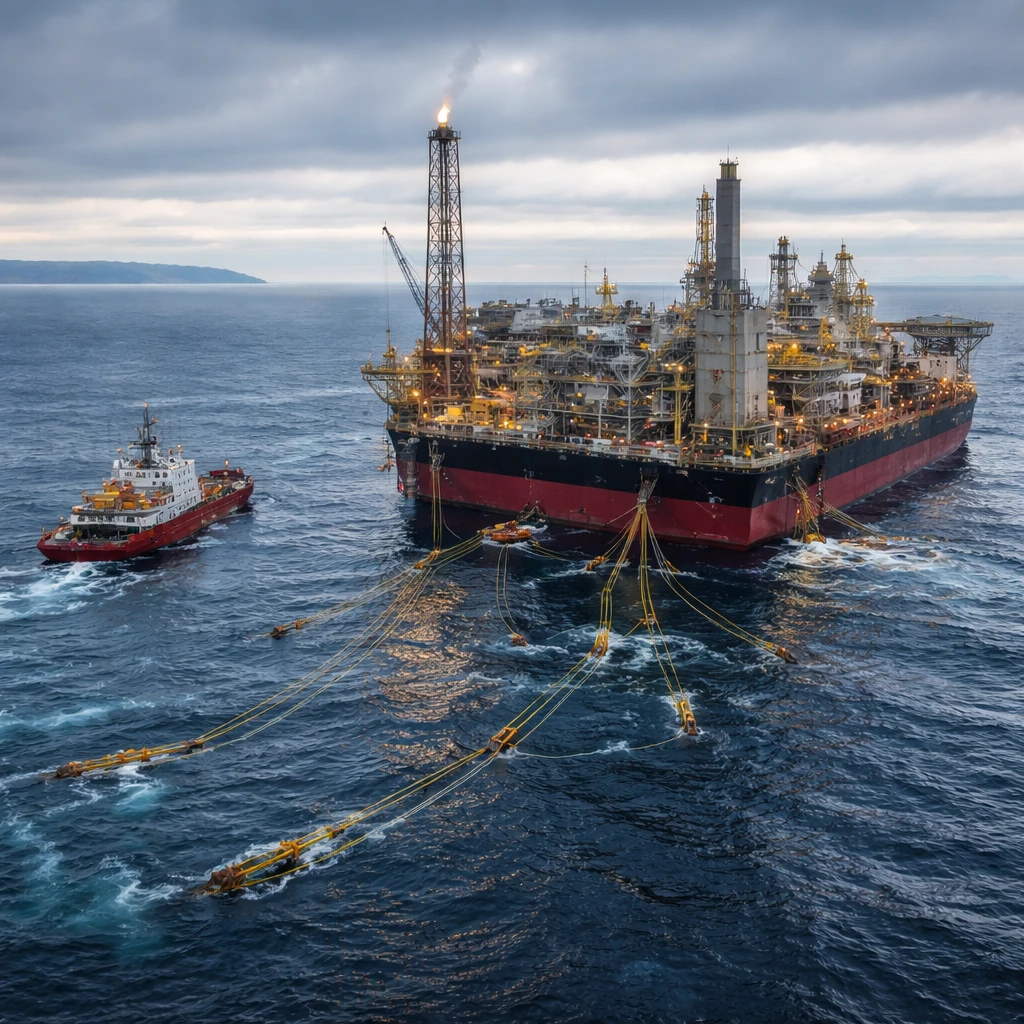
Bay du Nord sits in the Flemish Pass Basin roughly 500 kilometres east of St. John's, Newfoundland and Labrador. The development's initial phase is expected to access more than 400 million barrels of oil and is designed around a floating production, storage and offloading vessel - commonly known as an FPSO - with subsea tiebacks to field infrastructure.
Capital profile and BP's strategic rationale
Equinor has estimated required investment for the project at about C$14 billion. BP framed the sale as part of a wider programme to reshape its asset base to improve profitability, lower debt levels and concentrate capital on oil and gas projects that it deems to offer higher returns. Despite selling its Bay du Nord stake, BP will retain full ownership of two exploration offshore licences in the province of Newfoundland and Labrador.
Implications and immediate facts
The transaction will transfer operator control and full development risk for Bay du Nord to Equinor as the Norwegian firm advances toward the FID timeline. The companies have confined public comment to the sale and the intended schedule; no purchase price or additional commercial details were disclosed.
Key points
- BP agreed to sell its 37.2% stake in Bay du Nord to Equinor; financial terms were not disclosed.
- Equinor will become sole owner and is targeting a final investment decision in early 2027 and first oil in 2031, with estimated required investment of about C$14 billion.
- BP will retain 100% ownership of two offshore exploration licences in Newfoundland and Labrador; the sale is presented as part of BP's portfolio reshaping for profitability and debt reduction.
Risks and uncertainties
- Timing risk - the planned FID in early 2027 is a target rather than a completed decision, so the project's progression remains uncertain until that milestone is reached; this impacts oil and gas capital spending plans.
- Capital commitment risk - the project carries an estimated required investment of about C$14 billion for its development phase, exposing equity owners and project financiers to sizeable capex requirements.
- Project execution risk - the development depends on delivery of a floating production, storage and offloading vessel and subsea tiebacks, and any challenges to those elements could affect the schedule to first oil in 2031.
Sectors affected
- Oil and gas - development ownership, capital allocation and long-term production profiles are directly affected.
- Energy capital markets - the deal and project finance needs could influence investor assessment of both companies' portfolios and spending plans.
- Regional industry - offshore activity in Newfoundland and Labrador is central to the project's location and exploration licences.
Bottom line
The transaction moves full Bay du Nord ownership to Equinor and aligns with BP's stated strategy of refocusing capital toward higher-return oil and gas assets while lowering debt. Key milestones remain the FID in early 2027 and the targeted 2031 first oil date, with a significant capital envelope - about C$14 billion - anticipated for development.