
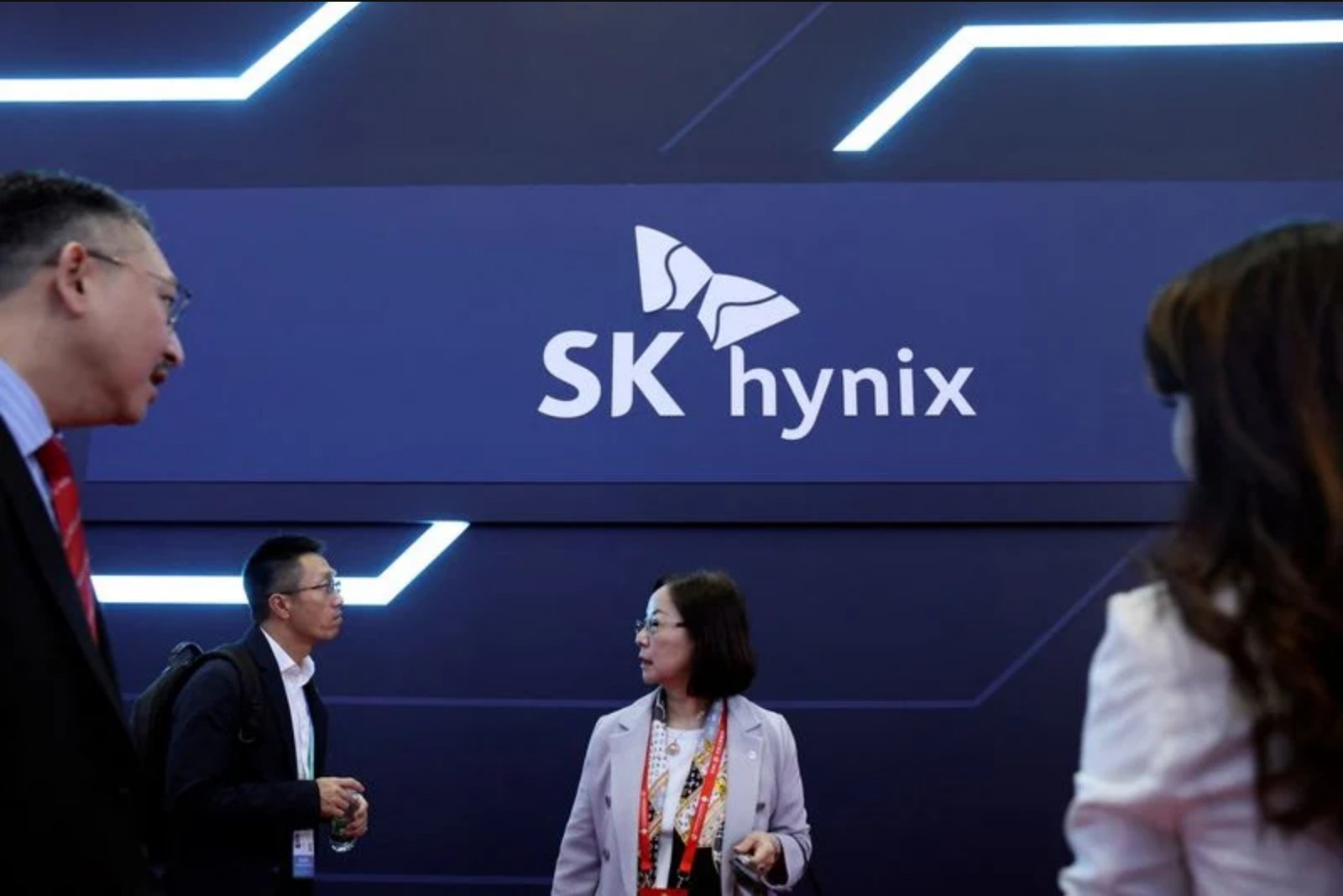
SK Hynix on Monday launched a U.S. share sale designed to raise 43 trillion won ($28.07 billion) through American depositary receipts listed on Nasdaq, and disclosed indications of interest for up to $7 billion from major institutional investors. The Korean memory-chip maker said Baillie Gifford Overseas, funds managed by Coatue Management and Situational Awareness Partners have each separately indicated interest in purchasing up to a combined $7 billion of ADRs.
Under the planned issuance, SK Hynix will offer 17.79 million new shares via ADRs, with 10 ADRs representing one common share. A regulatory filing on Monday gave a reference price of 242,500 won per ADR, based on SK Hynix’s July 3 closing price in Seoul. The company said proceeds will be used to expand wafer fabrication capacity in South Korea and to acquire chipmaking equipment, including an extreme ultraviolet scanner manufactured by ASML.
The final listing price in New York is expected to be set on Thursday, with trading due to begin on Friday, according to the filings. Management plans to conduct a global roadshow for investors this week.
Market context and investor reaction
SK Hynix’s filing comes as chipmakers across Asia tap robust global demand for semiconductors used in artificial intelligence systems. On the same theme, Taiwan’s Unimicron Technology is pursuing about $1.4 billion through international depositary shares.
Despite the planned U.S. offering, SK Hynix’s ordinary shares fell 3.4% on Monday to 2,343,000 won, though the stock remains up roughly 260% year-to-date. South Korea’s KOSPI index declined about 0.5% on the day. The broader memory sector has shown heightened volatility recently amid questions over the durability of AI-driven spending trends.
Commentators cited the listing as a structural step to increase accessibility for U.S. investors. "We are in the midst of a memory super cycle, with all three major suppliers - Samsung, SK Hynix, and Micron - riding the AI driven demand wave," said Di Zhou, portfolio manager at Thornburg Investment Management, which holds SK Hynix ordinary shares. Zhou added that an ADR listing should broaden the firm’s investor base and could help narrow its valuation differential with U.S. rival Micron.
Albert Yong, a managing partner at Petra Capital Management, said the listing was positive given its potential to attract a wider range of investors even while market swings remain pronounced.
Strategic implications for SK Hynix and South Korea
On the policy side, South Korea last week announced a large industrial strategy focused on semiconductors and artificial intelligence, including a 700 trillion won (note: the correct figure in filings is described as a $576 billion program in the original text) chip investment initiative in the country’s southwest to broaden the benefits of the sector’s expansion. SK Hynix and Samsung Electronics are named anchors for the program, according to government statements. President Lee Jae Myung on Monday urged officials to expedite work on the announced chip and AI projects and cautioned that delays in permits, land acquisition, and utilities could impede the nation’s ambitions in advanced industries.
Market participants flagged the listing as more than a liquidity event. "This is more than a liquidity event," Dave Mazza, CEO of Roundhill Investments, said. He highlighted that SK Hynix has been difficult for many U.S. institutions to own directly, and that the ADRs therefore open a channel for previously inaccessible investors. Steve Sosnick, chief strategist at Interactive Brokers, said the listing will particularly benefit individuals and smaller institutions by reducing an accessibility discount, though he noted the move is less transformative for very large investors.
Size and ranking of the deal
At approximately $28.07 billion, the planned U.S. sale would rank among the largest share offers globally. The company noted the transaction is expected to be the second-largest share sale after an $85.7 billion offering by SpaceX last month, and to top the $25.6 billion IPO by Saudi Aramco in 2019 and Alibaba’s offering in 2014, according to the regulatory disclosures.
Investor caution and memory cycle outlook
Despite strong interest and the fundraising’s size, some investors cautioned that memory "inflation" could weigh on end-market spending for AI infrastructure, smartphones and personal computers. Sundeep Gantori, Standard Chartered’s chief investment officer of equities, said better access through an ADR listing is valuable but stressed the importance of cycle timing: "We believe memory cycle is beyond the early phase and now in the mid-cycle stage."
SK Hynix is an important supplier of high-bandwidth memory used by AI system builders, including customers such as Nvidia and Google. Analysts expect the ADR listing to lead to SK Hynix’s inclusion in the Philadelphia Semiconductor Index, which could increase passive investment flows into the stock.
HSBC last month signalled it would lift its valuation of SK Hynix by applying a 20% premium to a prior price-to-book multiple of 2.8 times, implying a multiple of 3.4 times, citing more shareholder-friendly actions and improved investor access.
What remains to be set
Key technical elements of the U.S. offering remain to be finalized later in the week, including the definitive price and the commencement of trading. The company’s roadshow should provide additional color to global investors, while the use of proceeds is explicitly tied to capacity expansion and purchases of advanced manufacturing tools.
Currency conversion in the filings used the rate $1 = 1,531.7600 won.