
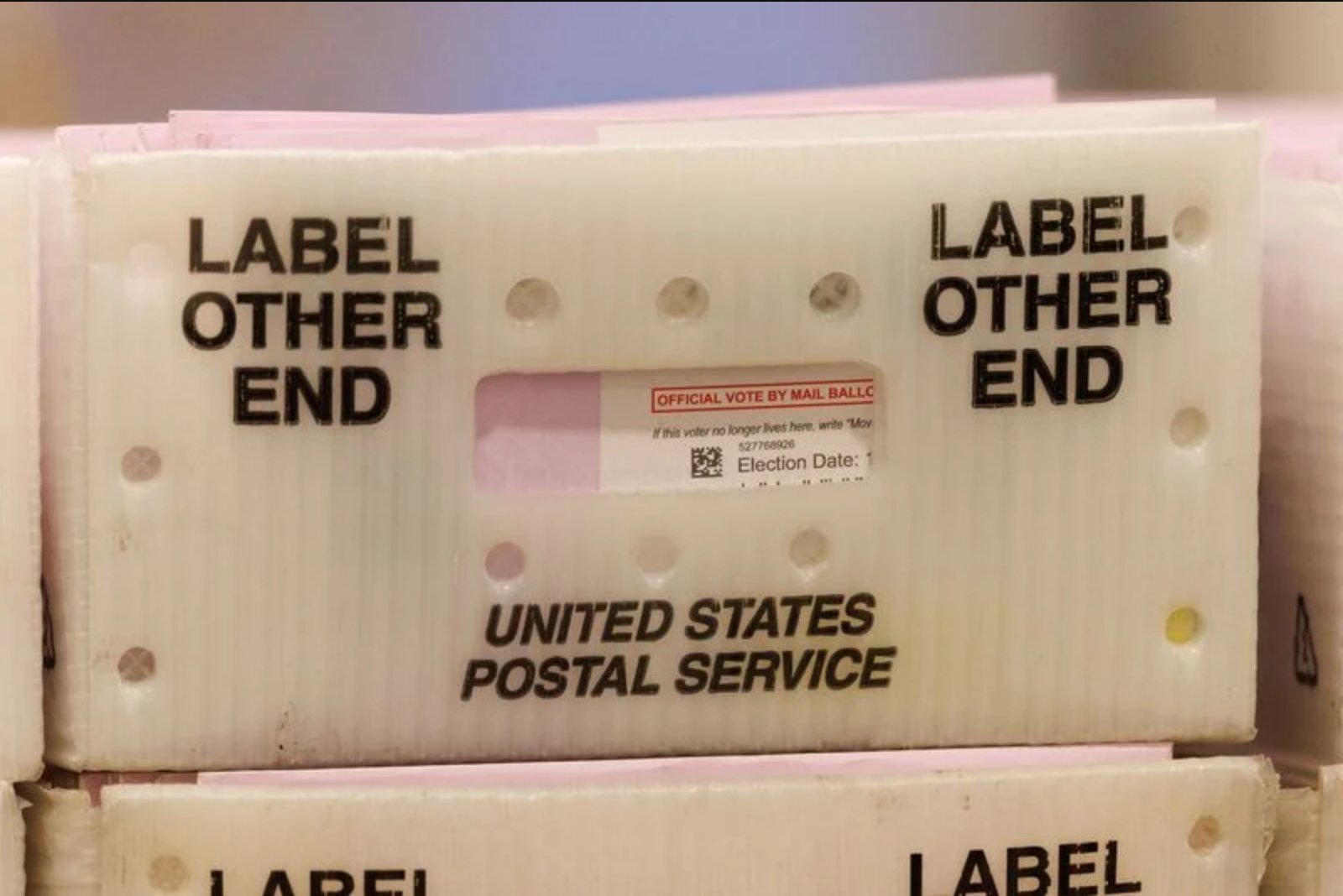
WASHINGTON, June 24 - The leader of the U.S. Postal Service defended a controversial regulatory proposal on Wednesday that would compel states to hand over lists of voters who receive mail‑in ballots, saying the change would improve efficiency and better align USPS handling with state expectations.
At a hearing before the U.S. Senate Homeland Security and Governmental Affairs Committee, Postmaster General David Steiner said the draft rule - a measure urged by President Donald Trump - would stop postal delivery of ballots in states that decline to provide the requested data. Steiner characterized the measure as a technical step to ensure "we match the ballots that a state believes they’re sending out to what actually gets sent out."
The proposal would require states to submit to USPS the names and the barcodes associated with their mail‑in ballots for federal elections. It would also mandate provision of unique barcodes applied to both outbound and return ballot mail envelopes, language in the proposal states would "help determine adherence to federal law and facilitate law enforcement efforts."
Senator Gary Peters, the top Democrat on the committee, criticized the rule as coercive, saying it would effectively force states to surrender their absentee voter rolls or face the consequence of not receiving mail delivery of ballots. "The proposed rule basically coerces states to conform to these new requirements and hand over their absentee voter rolls, or face the consequences of not being able to vote by mail," Peters said. "That’s unacceptable."
Steiner defended the proposal as mirroring practices already in place in many states and as a means to better match state mailing lists with actual postal dispatches. He framed the barcode requirement as a verification tool tied to existing mail operations.
The plan has drawn coordinated opposition from Senate Democrats. All 47 Democratic senators sent a letter to the Postal Service on Wednesday urging the agency to abandon the proposal, calling it an "unconstitutional and illegal attempt to transform USPS into an election administration agency controlled by the White House and President Trump."
Democratic Senator Elissa Slotkin went further in her criticism at the hearing, telling Steiner he was being used by the president. "You are being used (by President Trump)," Slotkin said. "He does not believe elections that he loses are valid elections."
The proposed regulation traces back to an executive order issued by President Trump in March that sought to impose strict limits on mail‑in voting, a method the president has repeatedly said is prone to fraud, a claim he has made without presenting evidence. Last week, a federal judge allowed Democratic‑led states and voting rights organizations to proceed with lawsuits challenging the president’s executive order.
Trump’s order also directed the Department of Homeland Security to compile and send to states a roster of confirmed U.S. citizens eligible to vote in each state, drawing on citizenship and naturalization files and other federal databases, the order states. The Postal Service proposal would operate in the context of that broader executive effort to change how mail‑based voting is administered and verified.
Key points
- The proposal would obligate states to provide names and barcodes for mail‑in ballots, including unique barcodes for outbound and return envelopes - affecting coordination between state election offices and USPS.
- Postmaster General David Steiner told senators USPS would withhold delivery of ballots in states that refuse to comply, raising the prospect of disrupted mail voting in non‑compliant states - with implications for postal operations and election administration.
- All 47 Senate Democrats opposed the plan in a letter, framing it as an improper shift of election responsibilities to USPS and an effort tied to President Trump’s broader executive order on mail‑in voting.
Risks and uncertainties
- Legal challenges - The article notes ongoing lawsuits by Democratic‑led states and voting groups contesting the president’s order, signaling litigation risk for the regulation.
- Noncompliance by states - If states refuse to provide the required data, USPS says it would not deliver ballots, creating uncertainty about access to mail‑in voting.
- Politicization of postal functions - Democratic lawmakers describe the plan as an attempt to make USPS an election administration tool of the White House, raising concerns about institutional neutrality and operational focus.