
Context and stakes
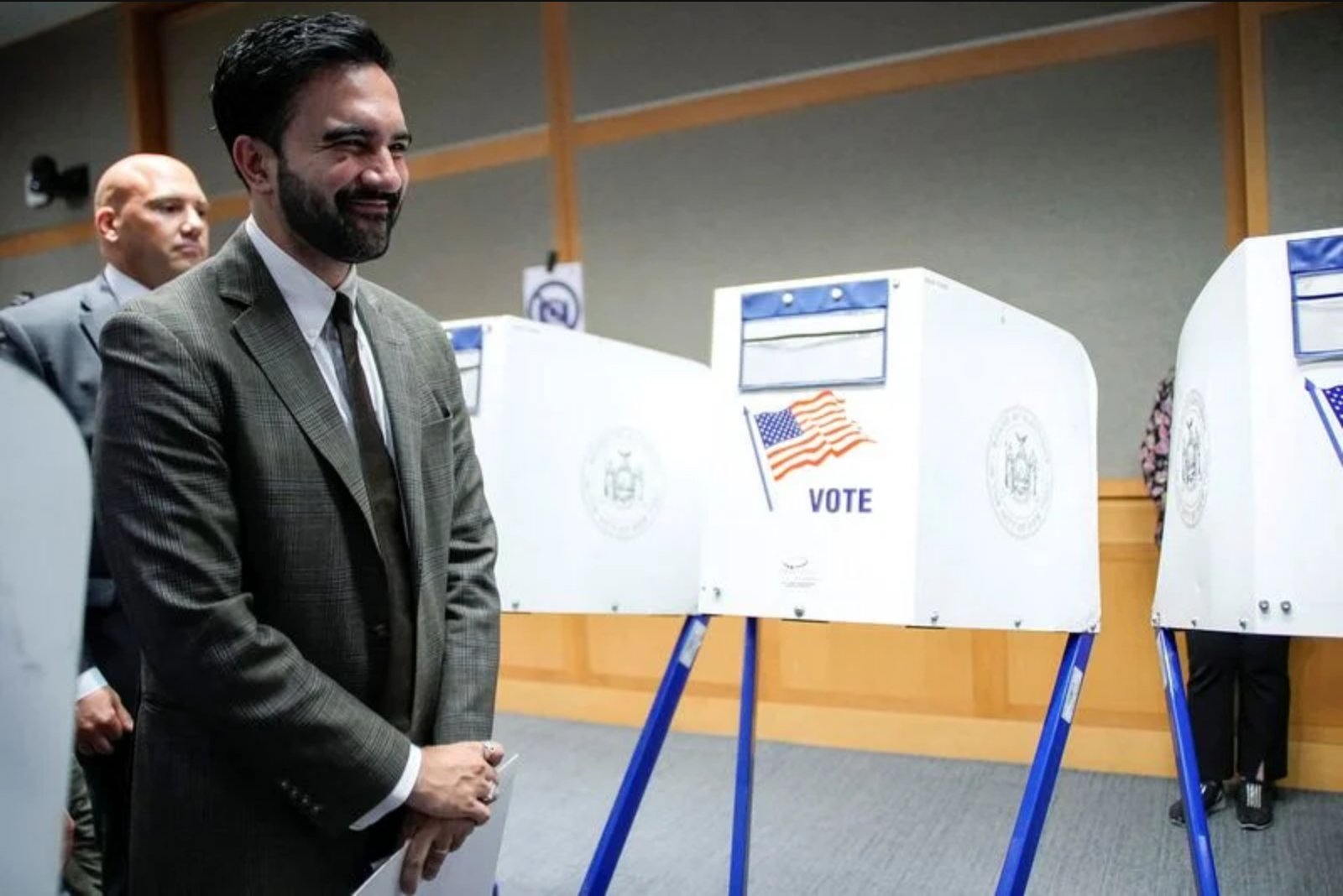
New York City Mayor Zohran Mamdani has placed his political weight behind a group of democratic socialist candidates contesting key Democratic primaries in New York. The contests, held on Tuesday, pit Mamdani-endorsed insurgents against established party figures, including a senior Latino member of the U.S. House of Representatives. Mamdani, who surprised many observers with his 2025 election, is pursuing a strategy intended to broaden the democratic socialist presence within the Democratic Party.
The outcome of these primaries will offer an early gauge of the appetite for further leftward shifts inside the party. Yet party strategists and analysts say that, win or lose, the results are unlikely to present a straightforward road map for national Democratic success in November's congressional elections or the 2028 presidential contest.
Endorsements and recent trends
Mamdani’s intervention follows a series of victories for candidates who identify with democratic socialism in municipal contests. Democratic socialist candidates have prevailed in primaries in Washington, D.C., and Los Angeles’ mayoral race, and a democratic socialist won the Seattle mayor's race last year. Those outcomes form the backdrop to Mamdani’s push to expand the movement in New York.
Observers trace the longer arc of the democratic socialist rejuvenation to the political momentum created by Senator Bernie Sanders’ 2016 presidential campaign, which helped nurture a new generation of leaders. But the immediate energy behind insurgent progressive candidates is also tied to heightened frustration among progressive Democratic voters with President Donald Trump’s policies and governing approach, as well as with the Biden administration’s support for Israel’s military response following the Hamas attack. The Israeli response has been noted in reporting as resulting in more than 73,000 Palestinian deaths.
Internal party tensions and high-profile reactions
Tensions within the Democratic Party surfaced during Mamdani’s own 2025 campaign. House Democratic Leader Hakeem Jeffries faced persistent queries about whether he would endorse Mamdani and did so only 11 days before the general election. Senate Democratic Leader Chuck Schumer remained publicly silent during that campaign. Jeffries now stands in a high-profile position as a likely candidate to become Speaker of the House if Democrats retake control in November, a role that would place him second in line for the presidency.
Party leaders emphasize that the November battle will be decided not in solidly Democratic districts but in purple swing districts where more moderate positions have historically been necessary to defeat Republicans. That electoral math sets up a potential conflict between the priorities of grassroots progressive voters in deep-blue areas and the strategic necessities of winning competitive seats.
Contested races and national implications
One high-profile primary pits Mamdani-backed Darializa Avila Chevalier against five-term Representative Adriano Espaillat in New York’s 13th congressional district, which covers northern Manhattan and the Bronx. Analysts warn a victory for an insurgent democratic socialist over Espaillat, a longtime figure and former chair of the Congressional Hispanic Caucus, could carry national repercussions and complicate Jeffries’ task of assembling a House majority in competitive districts.
Matt Bennett, co-founder of centrist Democratic consultancy Third Way, said that if a member of the Democratic Socialists of America were to unseat the chair of the Congressional Hispanic Caucus, it would have significance beyond the district itself. Bennett pointed to past social media posts by Avila Chevalier as examples of positions opponents could weaponize in general election contests, noting her earlier calls for abolishing police and border controls and remarks casting doubt on Israel’s right to exist.
Avila Chevalier has deleted prior social media posts and issued apologies for some language she used. In a June 17 interview with a consortium of editors, she expressed a categorical view on deportation, saying: "I think that we just should not have a system that allows (migrant) deportation to happen at all," and characterizing deportation as "rooted in deeply racist ideology." Espaillat responded on June 16 via a posting on X, stating: "We can’t just sweep things under the rug. Darializa has taken very extreme positions as reflected in her comments on social media not too long ago." He added, "She is unfit for office and voters are smart enough to see that."
Other primary matchups
Mamdani’s slate includes other contested nominations. A democratic socialist is challenging incumbent Representative Dan Goldman in the 10th congressional district, while another insurgent is running for the seat in the 7th district being vacated by Representative Nydia Velazquez. These races are part of a broader effort to convert local and city-level gains into congressional representation.
Strategic debate inside the party
Progressive strategists and centrist Democrats agree that deep divisions are shaping the party’s internal debate. Alex Jacquez, a progressive strategist who served as a senior adviser to Sanders’ 2020 campaign, said focus groups and polls show a profound level of dissatisfaction among Democratic voters with the party’s current leadership. He described the choice voters face as whether to press harder against concentrated wealth and corporate influence and the status quo, or to pursue a different, less confrontational approach.
Steve Israel, a former U.S. House member from New York who ran an operation to elect more Democrats late in his congressional career, argued that political dynamics are reactive: energy on one side of the spectrum tends to provoke energy on the other. Israel cautioned that the strength of democratic socialists in New York and California could be misconstrued as the national center of gravity for the party in upcoming national elections, a misreading that could have electoral consequences in competitive states.
Outlook and strategic considerations
Party operatives point out that in districts outside deep-blue urban strongholds, Democratic nominees with more moderate or military backgrounds are being fielded in states such as Florida and Colorado. The party’s competitive map, they emphasize, is composed largely of red and pink districts that typically favor candidates with centrist positions in contests against incumbent Republicans.
That dynamic reflects a larger strategic calculation: presidential elections are decided in a handful of moderate battleground states, not in the safest Democratic enclaves. The primaries in New York therefore test whether local enthusiasm for democratic socialist policy prescriptions can translate into broader electoral appeal where margins are slimmer.
Conclusion
Mamdani’s endorsements underscore a widening fault line within the Democratic Party between insurgent democratic socialists who press for more aggressive structural changes and establishment figures focused on broader electoral viability. The primary outcomes will clarify the extent to which democratic socialism can gain footholds within Congress and whether its growth in deep-blue cities will influence the party’s strategy in nationwide contests this fall and into 2028.