
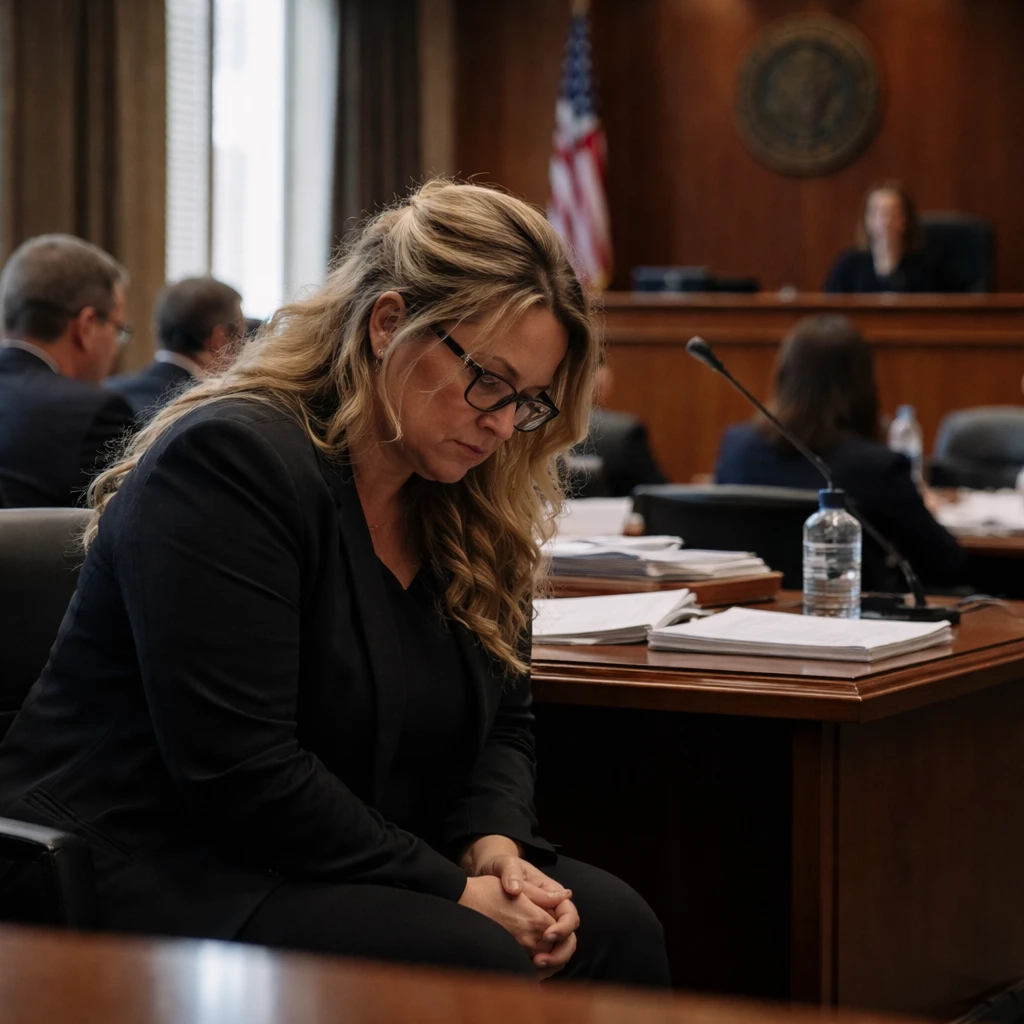
May 19 - A federal judge on Thursday sentenced Aimee Bock, 45, to 500 months in prison after a jury last year found her to be the ringleader of a $250 million fraud targeting a federally funded child nutrition program.
Bock was charged in 2022 in connection with Feeding Our Future, the nonprofit she ran, and was accused by the Justice Department of carrying out what officials have described as the largest known fraud against U.S. government relief programs tied to the COVID-19 pandemic. Prosecutors had asked the court to impose a 50-year sentence.
U.S. District Judge Nancy Brasel imposed a 41 year and eight month term, telling the courtroom that a lengthy punishment was warranted because of Bock's central position in the scheme. The judge said the case represented "a vortex of fraud" and added that Bock was "at the epicenter."
Bock spoke at the sentencing hearing and became emotional as she addressed the judge at the federal courthouse in Minneapolis. She told the court, "I don’t have the words to express just how horrible I feel. I know I’m responsible."
More than 70 other people have been charged in the government investigation connected to the scheme. The number of co-defendants reflects the breadth of the federal case brought against those alleged to be involved.
The fraud tied to Feeding Our Future has been cited in national political debate. The case was invoked by U.S. President Donald Trump, a Republican, as part of his rationale for directing an intensified enforcement effort in Minnesota, a state led by Democrats, aimed at arresting immigrants earlier this year.
The sentence represents one of the most severe penalties handed down so far in prosecutions of alleged abuses of pandemic relief programs. Federal authorities framed the allegations as involving large-scale deception that exploited emergency funding intended to support child nutrition during the public health crisis.
Key factual elements remain straightforward: Bock was convicted last year, was charged in 2022 in connection with Feeding Our Future, the Justice Department labeled the scheme the largest known pandemic-relief fraud against the federal government, more than 70 others face charges, prosecutors sought 50 years, and the judge ultimately ordered 500 months behind bars.
The courtroom exchanges at sentencing included Bock's apology and the judge's characterization of her role. The case continues to resonate beyond the legal proceedings because of its invocation in broader political arguments about enforcement priorities in Minnesota.