
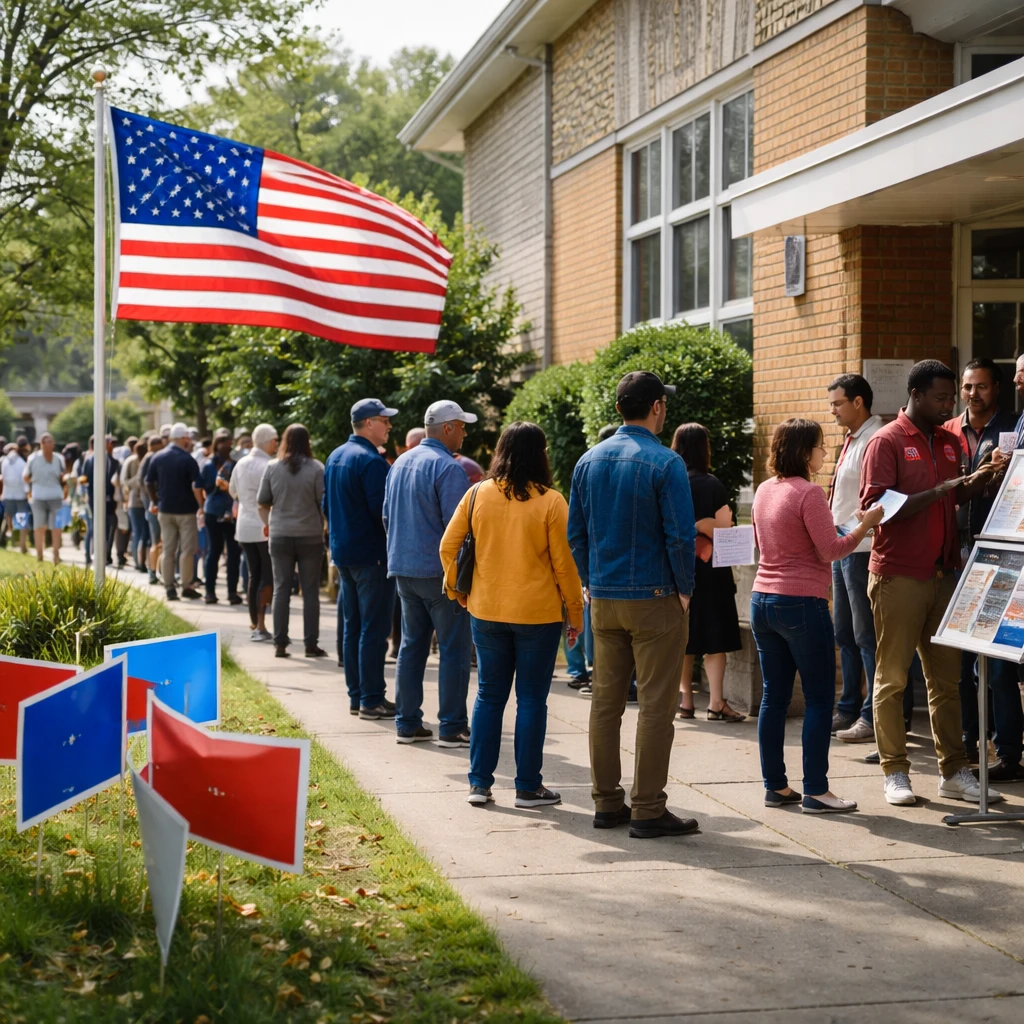
WASHINGTON, Aug 4 - Primary voting in five states on Tuesday will test internal Democratic divisions and deliver a referendum in Kansas with implications for how state high courts are constituted. Michigan’s Democratic Senate primary is the highest-profile contest, but several congressional nominations and a state ballot measure also bear watching for their potential to shape the general election field and the broader political risk picture for markets and policy.
Why Michigan matters
Michigan’s Democratic U.S. Senate primary pits Abdul El-Sayed, a progressive who previously ran for governor, against Haley Stevens, a center-left U.S. Representative who flipped a Republican-held seat in 2018. The outcome has attracted national attention because Democrats need to net four seats to retake the Senate and Michigan is one of two states where they are defending a seat Donald Trump won in 2024. Republicans currently hold a 53-47 Senate majority.
Stevens is supported by the Democratic establishment, including Governor Gretchen Whitmer, and has benefited from substantial outside spending by a pro-Israel super PAC totaling tens of millions of dollars. By contrast, progressives and democratic socialists, energized after primary wins in other parts of the country, have rallied behind El-Sayed. Senators Bernie Sanders and Elizabeth Warren have endorsed him. Recent primary polls show El-Sayed leading Stevens by double digits, though internal polling and other surveys cited by analysts indicate Stevens is considered a stronger general election opponent.
On the Republican side, former U.S. Representative Mike Rogers, the 2024 Republican Senate nominee who is running unopposed in the primary, will begin the general election with $4.5 million on hand per his most recent campaign finance disclosure. Rogers lost the 2024 Senate race by less than a percentage point to Democrat Elissa Slotkin.
Moderates risk splitting and ceding a battleground House seat
Outside of the marquee Senate contest, a Lansing-area congressional district provides another test of whether center-left fractures can open the door for a progressive nominee. The district, now represented by Republican Tom Barrett, features a three-way Democratic primary with two candidates seen as moderates - former U.S. Navy SEAL Matt Maasdam and former U.S. Ambassador to Ukraine Bridget Brink - and a progressive climate activist, William Lawrence.
Establishment Democrats prefer Maasdam or Brink as general election nominees, but there is concern their simultaneous bids could divide the moderate vote and create a path for Lawrence. Trump carried this district by 1.3 percentage points in 2024, and Barrett captured what was then a Democratic-held open seat by nearly 4 percentage points. Democrats need to net three seats in November to win a House majority, which elevates the stakes of competitive districts such as this one.
Cori Bush seeks a comeback in Missouri
Former members of Congress attempting returns to the House have had limited success this cycle, with only a handful advancing in primaries. One high-profile rematch to watch is in Missouri, where progressive Democrat Cori Bush is seeking to unseat U.S. Representative Wesley Bell in a repeat of their 2024 contest.
In the last cycle, a pro-Israel super PAC spent $8 million to help unseat Bush, who had been a vocal critic of Israel, and that same group, United Democracy Project, has spent more than $3 million in the current cycle to try to keep her from returning to Congress. The district is safely Democratic, and the primary winner is heavily favored in November.
Can Shri Thanedar fend off a single challenger?
In a Detroit-area district, U.S. Representative Shri Thanedar faces a one-on-one primary contest against state Representative Donavan McKinney. Thanedar, a wealthy Indian American, was first elected in 2022 after prevailing in a crowded open-seat primary and survived a 2024 primary in which he defeated two Black women. McKinney is a Black lawmaker who is supported by several progressive figures, including Senator Sanders and Representative Rashida Tlaib.
Black Michiganders make up roughly 45% of the district population. Democratic congressional leaders, including House Minority Leader Hakeem Jeffries, have endorsed Thanedar, while many members of the Congressional Black Caucus, including former chair Steven Horsford of Nevada, back McKinney. McKinney has raised in excess of $1.3 million; Thanedar has substantial personal resources to deploy. A poll last month sponsored by the progressive group Justice Democrats showed Thanedar narrowly leading, though respondents preferred McKinney by a wider margin after being shown biographies of both candidates. The district is expected to remain Democratic in the general election, making the primary the decisive contest.
Kansas referendum could alter how justices are chosen
Kansas voters will decide a referendum that would change the process for selecting state Supreme Court justices, a reform critics warn could lead to an eventual overturning of the state court’s rulings on abortion. In 2022, nearly 60% of Kansas voters rejected a constitutional amendment that would have restricted access to abortion. The Kansas Supreme Court determined in 2019 that the state constitution protects a person’s decision whether to continue a pregnancy and reaffirmed that decision in 2024.
Under current law, a nine-member commission produces three finalists and the governor selects one of them to serve on the Supreme Court. The referendum on the ballot would instead permit voters to elect justices to six-year terms, with three seats scheduled for election in 2028, two in 2030 and the final two in 2032. Vacancies would be filled via special elections. Kris Kobach, now the state’s Republican attorney general, said in 2022 that electing justices by popular vote was the next best way to overturn the court’s abortion decision after the 2022 referendum failed. Kobach said Supreme Court elections would allow the state to "slowly and quietly" place anti-abortion justices on the bench and eventually restrict abortion access.
What to watch for markets and policy
Investors and policy observers will be monitoring whether the Democratic Party’s internal struggles produce nominees viewed as vulnerable in the general election, particularly in states Donald Trump carried in 2024. Outcomes in Michigan and other battlegrounds will feed into expectations about control of the Senate and potential legislative dynamics next year. In addition, the Kansas referendum raises questions about how changes to judicial selection could affect litigation risk and the policy environment at the state level.