
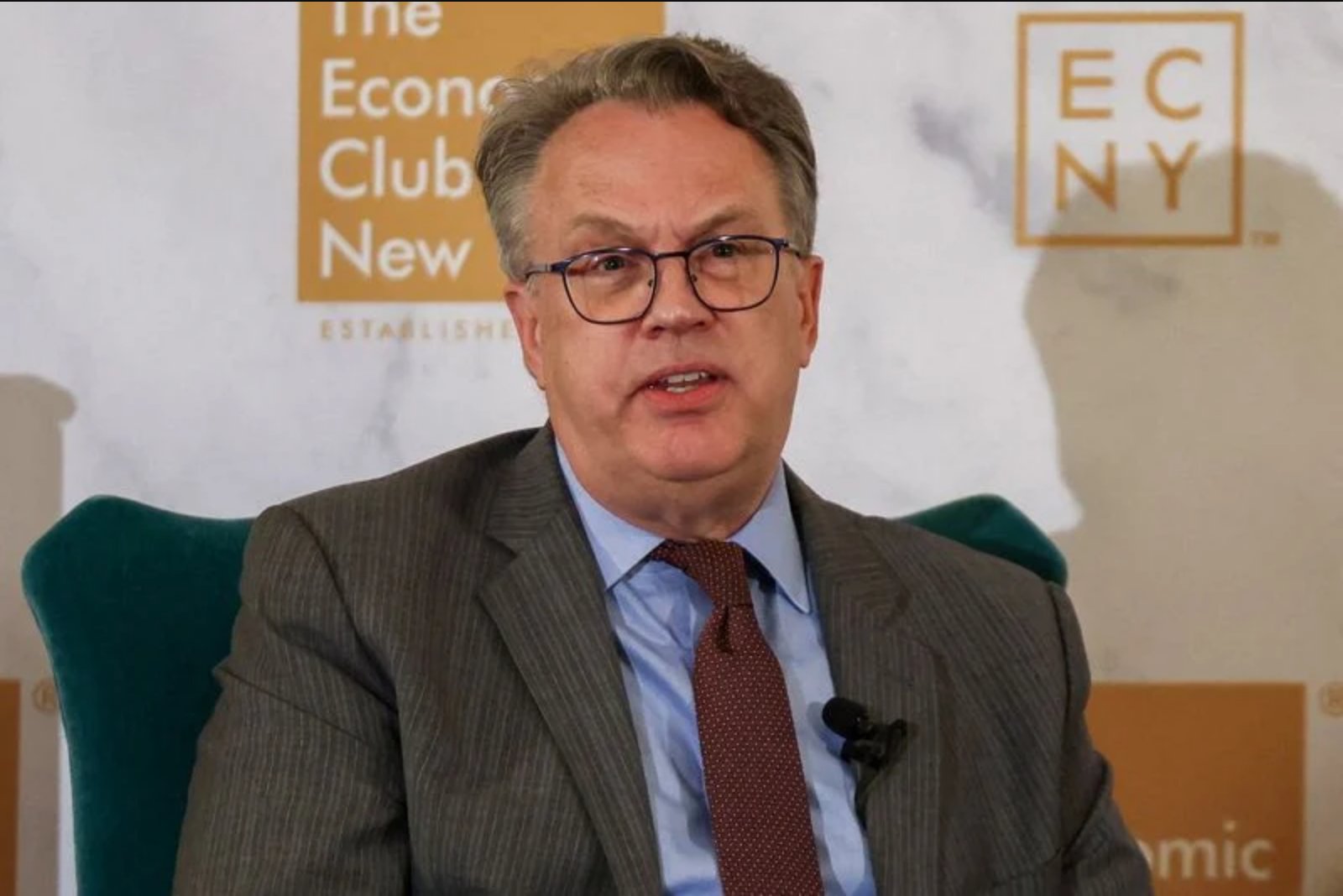
New York Federal Reserve President John Williams said on Wednesday that inflation, while "unquestionably too high," appears to have peaked and should begin to moderate. In remarks prepared for an event in New York, Williams argued that U.S. monetary policy is positioned to steer inflation back toward the Federal Reserve's long-run 2% goal.
Williams reiterated that inflation currently sits at roughly 4%, well above the Federal Open Market Committee's longer-run objective. He pointed to three principal sources that propelled price gains over the past year: higher tariffs, supply chain disruptions and spikes in energy costs tied to the Middle East war. He also singled out robust business spending on artificial intelligence technologies as an additional factor adding upward pressure on prices.
"These three factors together have driven inflation over the past year," Williams said, and he offered several lines of reasoning for why those forces may be losing steam. He listed six specific reasons supporting his outlook that inflation has likely crested and should edge down in coming quarters.
First, Williams said tariff-related price increases have largely played out. Second, he expects shelter inflation to remain on a downward path. Third, he assessed that oil prices have likely reached their peak. Fourth, supply-demand imbalances related to the AI build-out should diminish over time. Fifth, he noted the labor market is not contributing additional inflationary pressure. Sixth, he stated that inflation expectations remain well anchored.
On the trajectory of inflation, Williams provided a numerical forecast. He said he expects overall inflation to decline to about 3.25% by the end of the year, then continue on a downward path toward the Fed's 2% objective in 2027 and to land on target in 2028.
Williams also discussed the labor market, saying it appears to have stabilized. He projected a gradual rise in unemployment, with the rate easing from the current 4.2% to 4% in 2028.
The tone of Williams' remarks aligns with a recent shift in his public commentary toward greater optimism that headline inflation will ease. Last week he described himself as more optimistic that high inflation would recede, citing at the time a decline in energy prices amid hopes for a resolution of the Middle East war. Since then, however, hostilities have intensified and oil prices and costs for related energy products have risen sharply, Williams acknowledged.
The prior month's drop in energy costs contributed to a softer-than-expected consumer inflation reading in June, which may afford Fed officials some breathing room as they prepare for their next policy meeting on July 28-29. At the Fed's most recent meeting - the first chaired by new Chairman Kevin Warsh - policymakers left the federal funds rate unchanged in the range of 3.50% to 3.75%, where it has remained since December.
Williams noted the policymaker projections portray a committee divided between those who believe no further rate increases are necessary this year and those who foresee at least one 25 basis point hike by year-end. Rate futures markets are likewise positioned for an increase.
While Williams framed the outlook as cautiously optimistic, he emphasized that the recent path of energy prices and renewed hostilities in the Middle East remain near-term variables that affected recent readings and could influence the policy backdrop as officials convene later this month.