
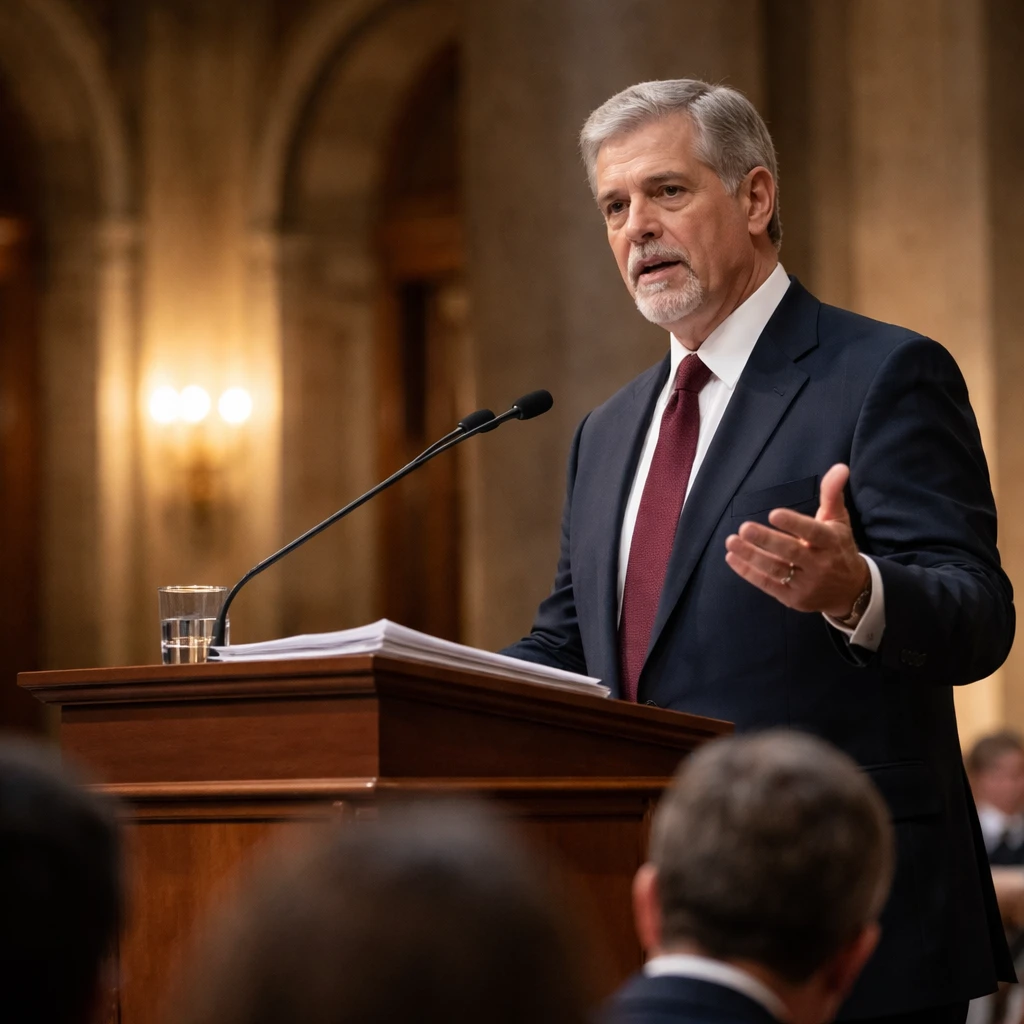
Federal Reserve Governor Christopher Waller said forward guidance is a useful tool for central banking when it is deployed with flexibility, but warned it can become a liability if treated as a fixed commitment.
In remarks prepared for delivery to a Bank of Italy conference in Rome on monetary policy transmission, Waller argued that guidance directed at market participants can accelerate the impact of policy decisions. "I continue to believe that forward guidance can be a valuable tool that has, at times, significantly strengthened policymaking and will continue to be useful," he said.
Waller emphasized how signaling can influence market rates more rapidly than changes in the official policy rate alone. He pointed to the Fed's communications in the fall of 2021, when steering investors toward forthcoming rate increases led market interest rates to climb steadily even though rate adjustments typically take one to two years to feed through the economy. "When it works, forward guidance can change economic conditions more quickly than adjusting the policy rate alone," he added.
At the same time, Waller acknowledged situations where guidance has done more harm than good. He singled out the fall 2021 episode as an example in which prior guidance constrained officials: the Fed discussed raising rates but felt bound by earlier signals and did not approve a hike until March 2022. "In some situations, providing guidance about future policy has hindered, rather than helped," he said.
Waller's framing contrasts with the position taken by Fed Chair Kevin Warsh, who has emphasized that forward guidance can reduce the central bank's ability to respond quickly to new economic developments. After Warsh's first meeting as chair, the post-meeting statement removed references to potential future rate adjustments, reflecting that concern.
Waller also noted that forward guidance can be problematic when policymakers see multiple economic outcomes as roughly equally likely. Fed officials currently face such uncertainty over whether inflation or employment risks should be prioritized. "If it is not flexible enough, it can hinder policy transmission. And, in some cases, it's best not to use it at all," he said.
The governor's remarks underscore a tension within the Fed over communications strategy: while guidance can hasten market adjustments, inflexible signals can limit the committee's ability to act when conditions evolve or when the outlook is ambiguous.
Summary
Governor Waller told a central banking conference in Rome that forward guidance can strengthen and speed monetary policy transmission when used flexibly, but that rigid guidance has at times constrained the Fed - notably in fall 2021, delaying rate increases until March 2022. He contrasted his view with Fed Chair Kevin Warsh's caution about guidance limiting policy agility and highlighted current uncertainty between inflation and employment risks.