
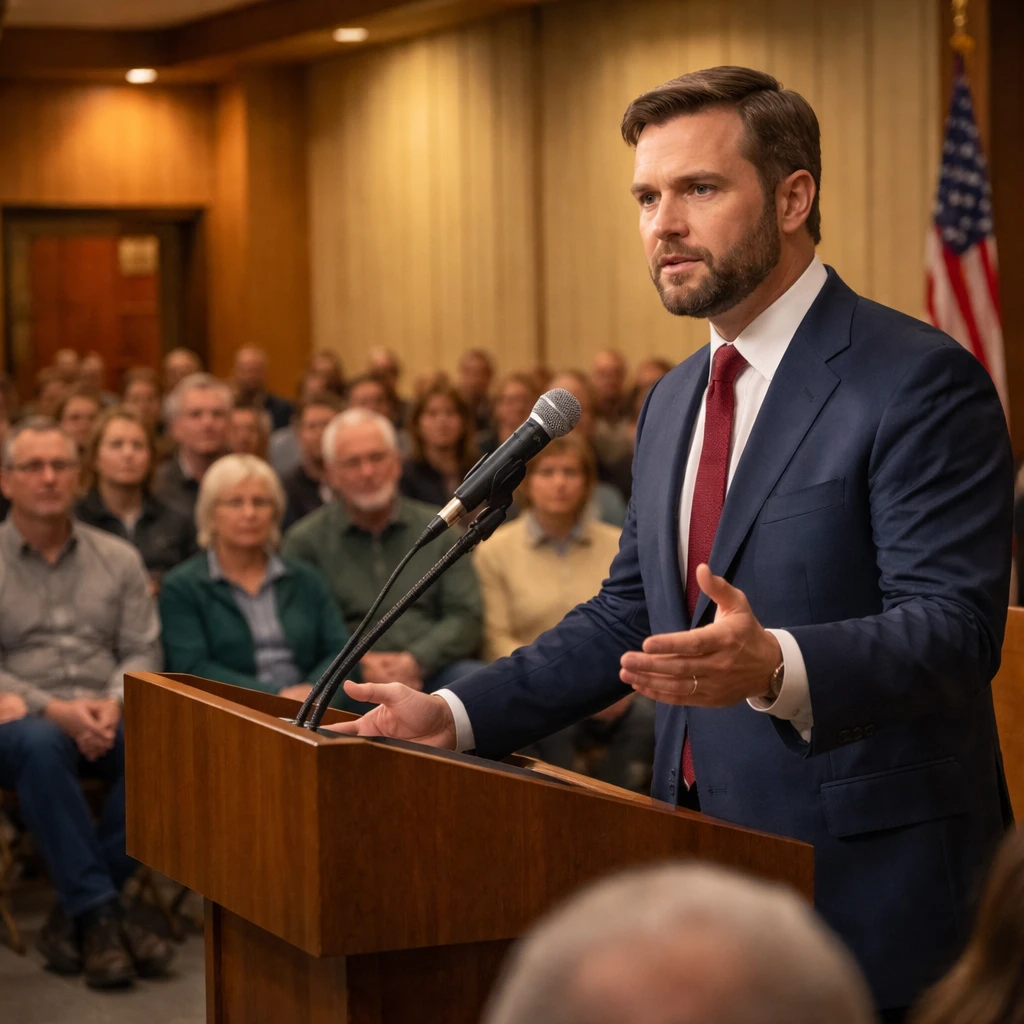
Vice President JD Vance said Monday that trade negotiations with Canada are still underway even as the United States presses for what he described as fair treatment. Addressing an audience in Brewer, Maine, Vance framed the dialogue as active but strained by recent procedural developments.
At the event, Vance criticized changes made late in the negotiating process. He said, in direct remarks to the crowd,
"They came in with a bunch of unreasonable last-minute demands," Vance told the audience. "I think that we should have a deal, but I think that we need to send a message loud and clear to the Prime Minister of Canada: stop taking advantage of the people of Maine. Stop taking advantage of America. It’s over. We expect fairness in our trade policy."
Vance's comments signaled that discussions have not broken down despite what he characterized as contentious last-minute positions from the Canadian side. He said he remains hopeful a deal should be achievable, while also stressing the need to make a political point about perceived unfair treatment.
The remarks underscore two concurrent themes in the talks: ongoing engagement between the two governments and a public posture by the U.S. that emphasizes equitable terms. Taken together, the statements indicate negotiators continue to communicate even as they contend with disagreements over specific demands.
Local context was highlighted by Vance's direct reference to Maine residents. By invoking the people of Maine in his remarks, he tied the negotiation rhetoric to regional concerns and presented fairness in trade as both a national and local political priority.
While the vice president expressed confidence that a deal should be possible, he also made clear that the administration expects changes in conduct from Canada's leadership, as reflected in his call for an end to what he described as advantages taken against Maine and the United States.
The public remarks provide a snapshot of the negotiations' political framing: active talks, visible disagreement on terms, and a U.S. demand for fair outcomes.