
NAIROBI - U.S. military and related flights continued to bring people and material into a Kenyan air base in late May as work proceeded on a planned 50-bed Ebola quarantine unit, even though a Kenyan court had ordered construction suspended and local protests have turned violent.
Flight-tracking information and officials with direct knowledge of the operations show that about 20 flights landed at the Nanyuki base between May 23 and May 31. The aircraft carried technical equipment and dozens of specialists - physicians, engineers, laboratory experts and construction personnel - intended to support the establishment of the isolation facility. A U.S. official who would not be identified confirmed that the planes brought staff and supplies but said no patients had been moved into the unit.
The quarantine site under construction is described by U.S. and Kenyan officials as a 50-bed facility intended to house U.S. citizens who may have been exposed to Ebola. The virus has reportedly infected hundreds of people in the Democratic Republic of Congo and in Uganda, and the planned unit is presented by authorities as part of broader preparedness measures.
Flights and logistics
Data from a flight-monitoring service indicate that at least six military transport aircraft, including C-130 and C-17 types, touched down in Nanyuki since May 24. Three of those aircraft landed after a Kenyan court issued an order on May 28 directing that work on the facility be suspended. Sources with direct knowledge said the incoming flights have delivered equipment and personnel necessary to make the unit operational.
A second source with direct knowledge summed up the situation succinctly: they reported that "they have got everything and everyone in, except any patients." That same source predicted the facility could be ready shortly, saying work might be complete by Thursday, though they also said the U.S. would halt activity only if instructed to do so by the Kenyan government.
A U.S. official noted that flights were paused on the Monday following the court order because of "confusion" about the injunction and what it meant. The pause was later lifted on Wednesday after Kenyan authorities told U.S. officials they could proceed with preparations. Additional shipments of specialised equipment, testing kits and protective gear were expected to be flown in.
Legal and political response
Kenyan courts have intervened in the project. After the May 28 suspension order, a court on Tuesday extended legal restrictions by blocking the plan for three more weeks and instructing the Kenyan government to disclose the agreement it signed with Washington. The judicial orders reflect legal scrutiny over the arrangement and have become a focal point for critics of the plan.
The U.S. embassy in Nairobi said it was aware of the court action and was "working with the Kenyan government to resolve any objections." President William Ruto, who approved hosting the facility, has defended the decision publicly but did not comment on the court order. Speaking to reporters, he said: "We are a responsible government. We know what we are doing."
Local unrest and casualties
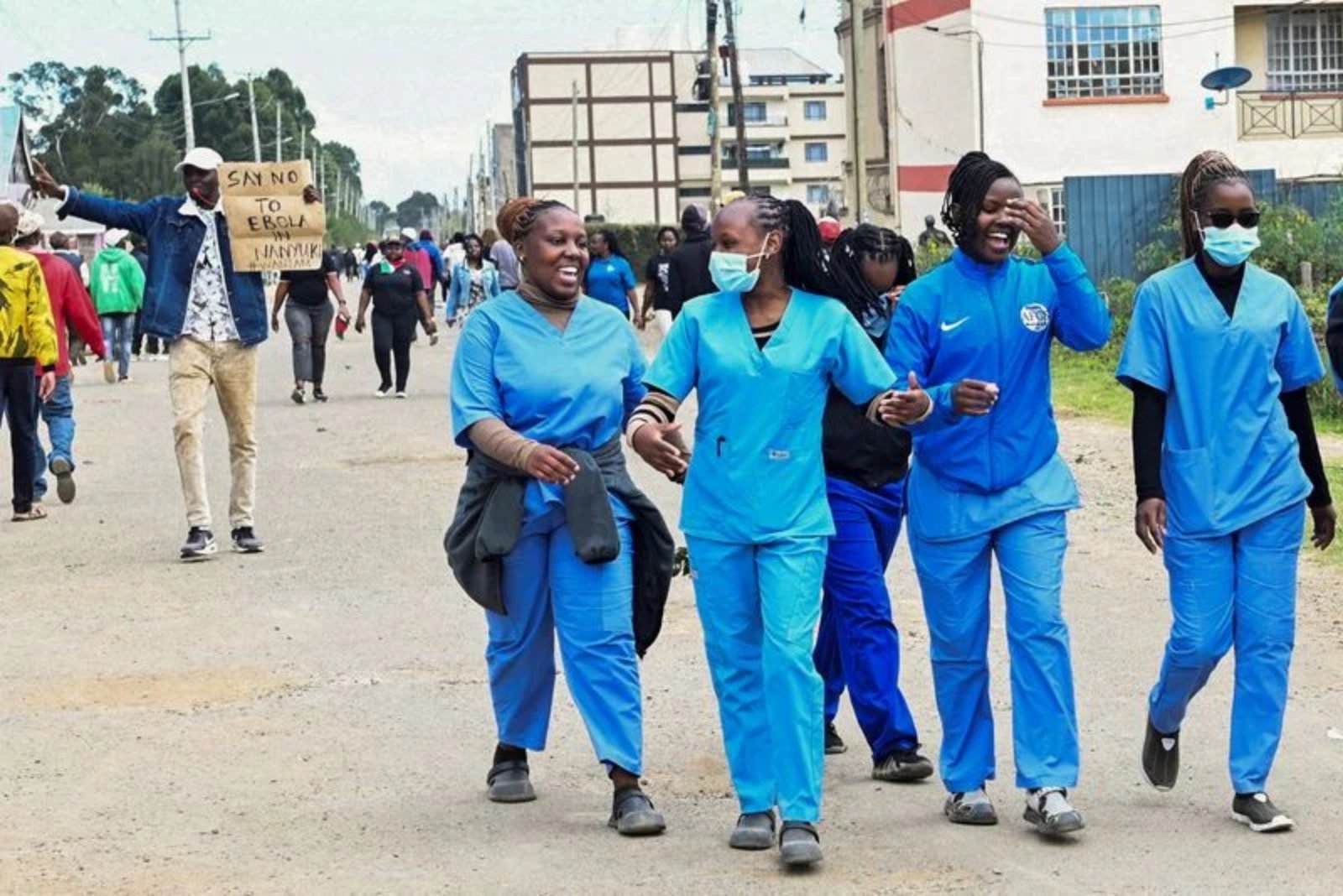
Public opposition to the facility has been intense in and around Nanyuki, the central Kenyan town that hosts the air force base where the unit is being constructed. Protests have occurred at the site and in the town, and at least two people have been killed in the unrest, according to reports. The demonstrations reflect local fears and anger over the presence of a bio-isolation unit on Kenyan soil and have added a volatile security dimension to the legal dispute.
Officials in Nairobi have repeatedly said the facility would be open to Kenyan nationals. However, some U.S. administration officials have described the center as prioritising U.S. citizens, which has fed a perception among critics that the arrangement shifts risk transport and containment responsibilities to Kenya.
Diplomatic cable and wider pressures
In a diplomatic cable sent to Washington on June 2, the U.S. embassy in Nairobi cautioned that President Ruto may have underestimated domestic hostility to the plan. The embassy noted that anger over the facility has come on top of broader political and economic pressures facing the Kenyan government, including rising fuel prices and the imminent anniversary of anti-government protests that in 2024 resulted in dozens of deaths. The embassy observed that continuing construction despite a court injunction has intensified criticism.
Kenyan leaders and U.S. officials have framed the site as part of a longer-standing health partnership. The United States has pledged support for Kenya's preparedness measures, including a recent commitment of $13.5 million to bolster Ebola readiness in the country.
U.S. policy on quarantine and treatment
The U.S. State Department has outlined how the site would be used for Americans at high risk of exposure who have not developed symptoms. Those individuals could be transported to the Kenyan facility for a 21-day quarantine period. If anyone at the site were to develop symptoms, State said they would then be moved elsewhere for medical treatment. No further operational details were provided.
The plan has also drawn criticism within the United States. Some healthcare professionals, including former staff from federal disease control bodies, have warned that establishing such a facility abroad and focusing on evacuating and quarantining U.S. citizens could discourage American frontline responders from deploying to outbreak areas and could undermine broader global response efforts.
Outlook
For now, personnel and material continue to flow into Nanyuki as Kenyan and U.S. authorities navigate a mix of legal rulings, public opposition and diplomatic engagement. The courts have imposed temporal limits and disclosure requirements, protesters have made their opposition clear and officials on both sides say the facility is intended to strengthen preparedness for possible Ebola cases. How those competing pressures will be resolved remains uncertain while the logistical work continues on the ground.