
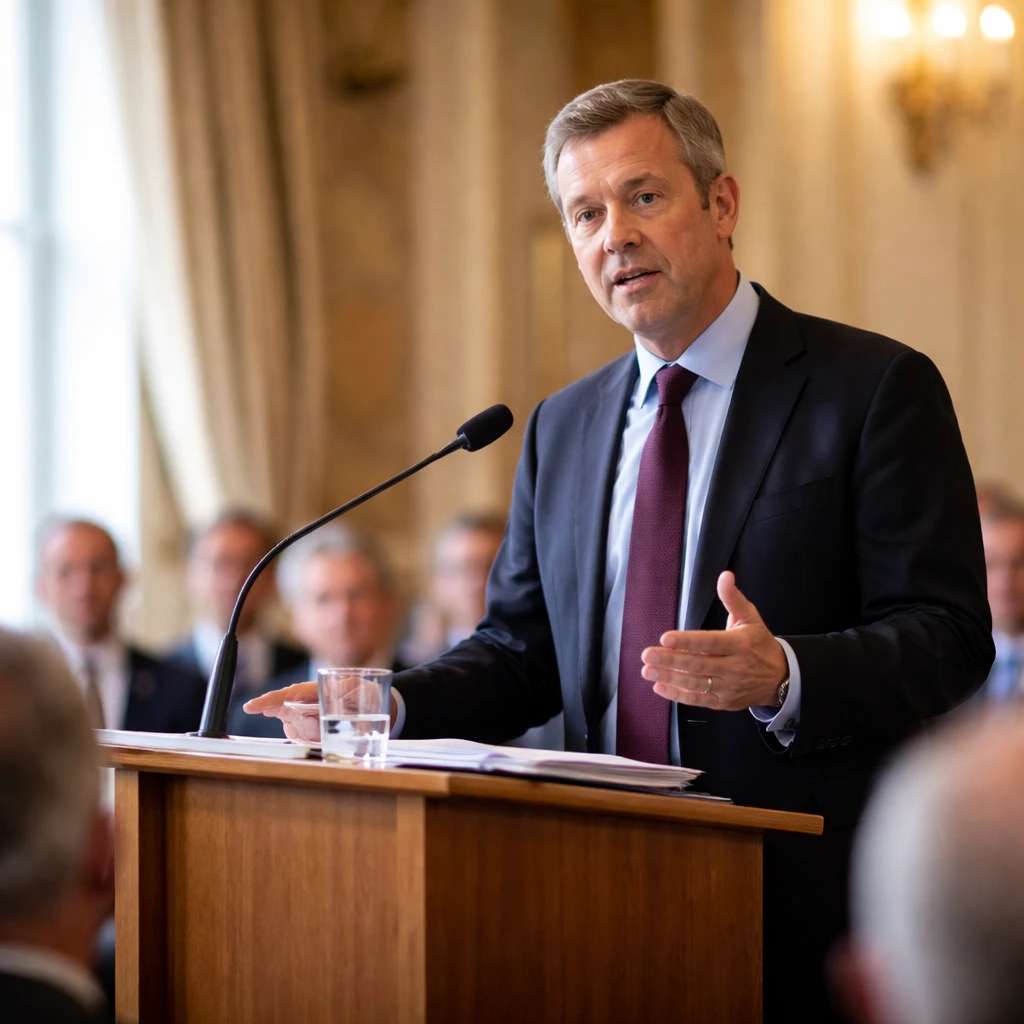
Bank of England Chief Economist Huw Pill said increasing interest rates now would reduce the likelihood that the central bank would have to resort to larger, more forceful hikes at a later date to bring inflation under control. Pill linked the recent rise in inflation to the Iran war and presented his view in remarks prepared for delivery to the Edinburgh Chamber of Commerce on Thursday.
"Raising Bank Rate ... need not be the start of a prolonged and aggressive series of increases,"
Pill argued that, when put in place and explained effectively, an immediate increase in Bank Rate could interrupt nominal dynamics he described as potentially "insidious." He warned these dynamics - which he referred to as a 'catch up' process - threaten to make temporary deviations of inflation from target more persistent.
"Implemented and communicated effectively, a prompt increase in Bank Rate may serve to head-off some of the potential insidious ’catch up’ nominal dynamics that threaten to make temporary departures of inflation from target more persistent,"
The comments outline a case for pre-emptive tightening: a targeted, prompt move that aims to prevent inflationary pressures from becoming entrenched, rather than a drawn-out sequence of rising rates. Pill's remarks were couched as a conditional argument - dependent on effective implementation and communication of policy - rather than an assertion that a single action will definitively resolve the issue.
On the Bank's policy committee, Pill's stance in July was shared by two other Monetary Policy Committee members who voted to raise interest rates. The broader committee majority, however, chose not to raise rates at that meeting, preferring to await clearer evidence on how the Iran war will influence long-term inflationary pressures.
The exchange captures an internal division on the committee between those favouring an earlier tightening to pre-empt persistent inflation and those seeking additional data on the inflationary impact of the Iran war before adjusting policy. Pill's remarks emphasize both the timing of a potential move and the importance of how that move is communicated to the public and markets.
Context limitations: Pill's comments link the recent rise in inflation to the Iran war and state a preference for a prompt, well-communicated rate rise as a way to reduce the chance of later, larger increases. The remarks reflect his judgement and a July voting split on the Monetary Policy Committee; they do not claim certainty about future actions or outcomes.