
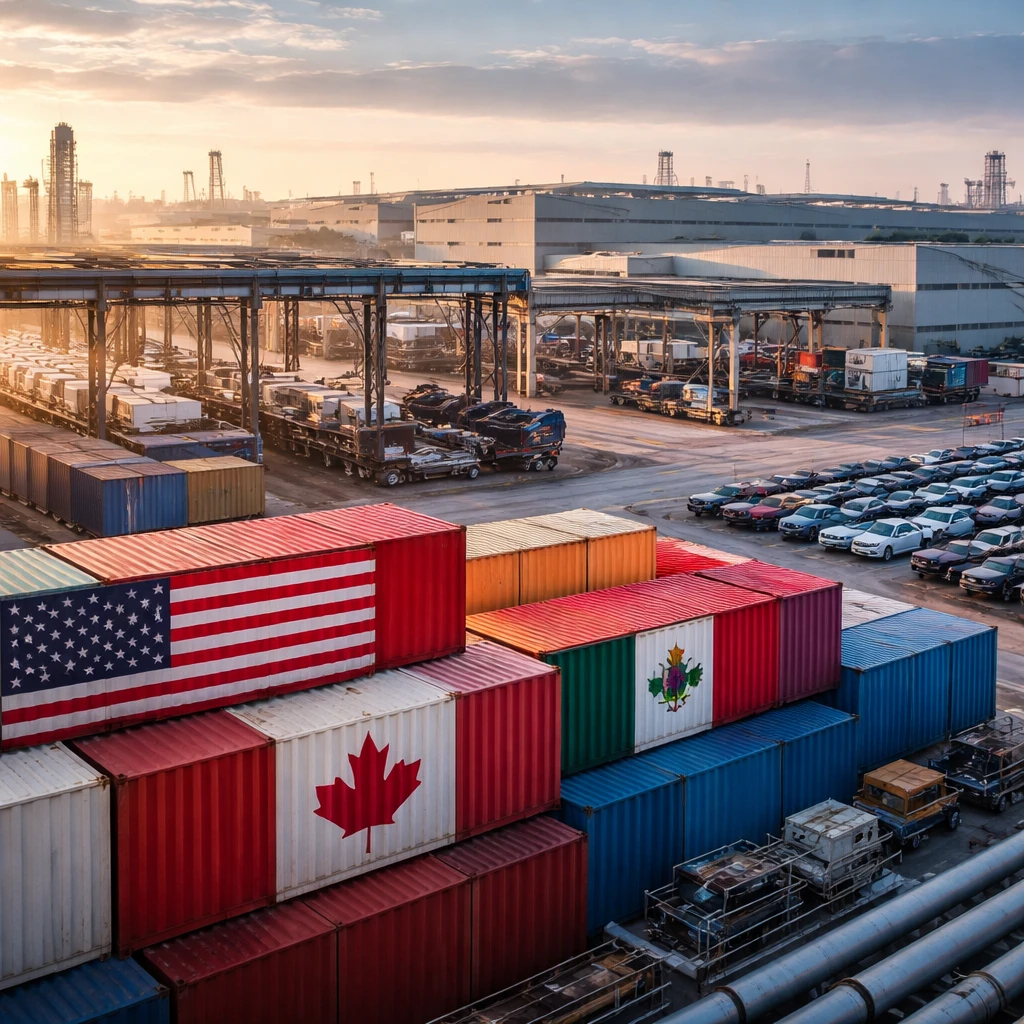
The U.S.-Mexico-Canada Agreement remains at the center of a growing divergence between Washington and its northern neighbors, as President Donald Trump explicitly dismissed the prospect of modernizing or extending the six-year-old trade framework. Speaking on Tuesday, the president outlined a clear strategic pivot away from multilateral trade integration, emphasizing a preference for unilateral economic independence over negotiated regional frameworks.
We don't need them. The deal is important for them. It's not important for us.
These remarks, delivered during a phone interview with Fox News Channel, underscore a deliberate recalibration of American trade posture. Trump's July 1 decision to withhold renewal of the agreement initiates a structured decade-long wind-down of the pact unless the three nations reach a revised framework before the statutory deadline expires. The administration's posture suggests a calculated tolerance for temporary trade friction in exchange for potential long-term industrial realignment.
Key Economic and Market Dynamics
1. Tariff-Driven Manufacturing Relocation and Automotive Supply Chains
Washington has moved to circumvent the USMCA duty-free zone by implementing a 25 percent tariff on vehicles and light trucks manufactured in Mexico and Canada, alongside a 50 percent levy on steel and aluminum products. These measures, justified under national security provisions, fundamentally alter the cost structure for North American automotive production. The administration frames these levies as a targeted mechanism to incentivize domestic assembly. Toyota Motor Corporation's recent disclosure of a $3.6 billion capital deployment to expand truck manufacturing in Texas serves as a primary example of this policy objective. The president highlighted that automakers face zero tariff exposure when production remains within U.S. borders, suggesting a direct correlation between trade enforcement and capital expenditure decisions. This dynamic is expected to reshape regional manufacturing footprints, with potential ripple effects across equipment suppliers, logistics networks, and regional labor markets.
2. Structural Divergence in Trade Rule Enforcement
U.S. Trade Chief Jamieson Greer conducted a third round of negotiations with Mexican counterparts last week, yet discussions exposed substantial disagreements regarding proposed adjustments to regional automotive content requirements. The failure to align on origin rules highlights the complexity of modernizing supply chain standards across jurisdictions with differing regulatory environments. These friction points are likely to persist as both nations navigate the transition from duty-free integration to a more segmented trade architecture.
3. Labor Union Coordination and Cross-Border Industrial Strategy
Two major industrial organizations representing workers across both nations have formally intervened in the tariff debate. The United Steelworkers and the International Association of Machinists jointly recommended that Greer reassess the current tariff approach and prioritize collaborative trade frameworks. Union leadership emphasized that both economies benefit from deep historical integration, particularly in defense and intelligence sharing. The recommendation outlines a strategic alternative: redirecting trade policy toward countering China's excess industrial capacity rather than fragmenting North American production networks. This perspective introduces a notable counterweight to the administration's unilateral stance, reflecting growing industry concern over supply chain fragmentation.
Risks and Uncertainties in the Current Policy Environment
1. Policy Volatility and Market Pricing Dislocations
The implementation of Section 338 of the Tariff Act of 1930, a provision previously unused by the United States, establishes a novel legal precedent for domestic trade enforcement. The new tariffs cover approximately $20 billion in Canadian imports, targeting hockey sticks, beer, dairy, plywood, and ancillary consumer goods. The unprecedented application of this statute creates uncertainty around future tariff triggers, potentially complicating corporate budgeting and inventory management for sectors reliant on stable cross-border input flows.
2. Retaliatory Trade Measures and Sector-Specific Pressure
Washington explicitly linked the new Canadian levies to Ottawa's reciprocal actions, which included provincial bans on U.S. liquor products and pushback against initial automotive and metals tariffs. The administration also cited unresolved barriers to U.S. access in Canada's dairy market as a contributing factor. This tit-for-tat escalation introduces direct headwinds for agricultural exporters, beverage manufacturers, and retail distributors operating in both markets. Companies with integrated North American distribution networks may face margin compression as they navigate shifting duty structures and localized consumer sentiment.
3. Diplomatic Negotiation Uncertainty and Implementation Timelines
Despite the president's stated indifference to USMCA renewal, diplomatic channels remain active. Canadian Trade Minister Dominic LeBlanc, accompanied by Chief Negotiator Janice Charette, is scheduled to travel to Washington this week for direct discussions. These meetings mark the first high-level in-person consultations since the expanded tariff announcement. The U.S. Trade Representative's office has not yet confirmed a detailed agenda, leaving market participants to monitor negotiation outcomes for signals regarding potential tariff adjustments or temporary trade accommodations. The lack of a formal USMCA negotiation track for Canada, combined with ongoing bilateral tariff enforcement, creates a complex diplomatic environment where policy adjustments may occur through ad hoc channels rather than structured treaty revisions.
The current trade posture reflects a deliberate shift toward unilateral economic leverage, with measurable implications for manufacturing investment, cross-border logistics, and sector-specific pricing structures. As diplomatic engagements proceed, market participants will closely track whether temporary tariff suspensions or revised content rules emerge to stabilize regional supply chains before the decade-long wind-down period concludes.