
Economy September 8, 2026 01:37 PM

UK Leads a Dozen Nations in New Trade Restrictions on Israel Over West Bank Settlements

London's move prompts swift Israeli countermeasures and raises diplomatic tensions with allies

By Leila Farooq
Share
Twitter Reddit Facebook LinkedIn

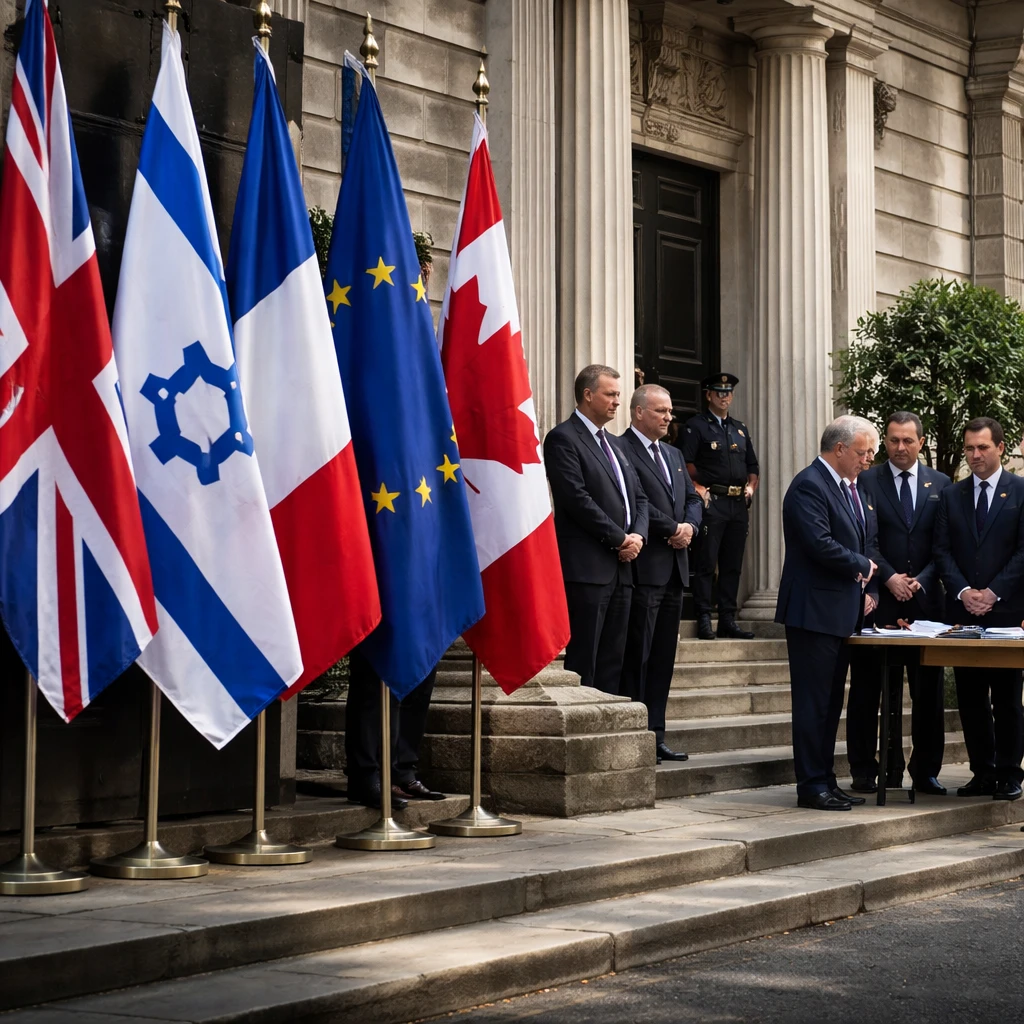
The United Kingdom, France, Canada and nine other countries announced new trade restrictions targeting Israeli activity in West Bank settlements. The UK, first to act, said it would halt trade with settlements and restrict companies that serve them; Israel replied by closing the British consulate in East Jerusalem that handles Palestinian affairs and expelling British representatives from the U.S.-led postwar Gaza coordination center. The measures have strained bilateral ties and drawn warnings of retaliation from U.S. officials.

UK Leads a Dozen Nations in New Trade Restrictions on Israel Over West Bank Settlements
Summarize with
ChatGPT Perplexity Claude Grok Gemini

Key Points

  • Twelve countries, led by the UK, announced trade restrictions aimed at Israeli settlements in the West Bank; the UK singled out direct trade with settlements and British companies that provide services to them.
  • Israel answered with diplomatic reprisals: closing the British consulate in East Jerusalem responsible for Palestinian affairs and expelling British representatives from the U.S.-led postwar Gaza coordination center.
  • The dispute has triggered warnings of countermeasures from U.S. officials and reflects deteriorating UK-Israel ties amid domestic political shifts and public sentiment; sectors directly implicated include international trade, services firms operating in the settlements, and companies with cross-border exposure to affected jurisdictions.

The United Kingdom, France, Canada and nine other countries said on Tuesday they will impose fresh trade restrictions on Israel in response to the expansion of Israeli settlements in the West Bank.

London was the initial government to make a public move, announcing that it would suspend trade with settlements in the Israeli-occupied West Bank. British officials said the measures would apply to direct commerce with the West Bank settlements and to British companies that provide services to those settlements.

Israel moved quickly to react to the British announcement. Government officials said they would close the British consulate in East Jerusalem, the office responsible for Palestinian affairs, and would expel British representatives serving at the U.S.-led coordination center for postwar Gaza.

UK foreign minister Ed Miliband characterized the expansion of settlements as "ethnic cleansing" and said it was undermining prospects for a two-state solution between Israelis and Palestinians. In outlining the scope of the British measures, he identified both direct trade with settlements and provision of services by British firms as targets for the restrictions.

"The expansion of Israeli settlements was 'ethnic cleansing' that was undermining the two-state solution," Ed Miliband said.

Israel rejected the British criticism and framed the move as interference in its sovereign affairs. Israeli Foreign Minister Gideon Sa'ar said: "The accusations made today...were outrageous lies."

Prior to the British announcement, U.S. Ambassador to Israel Mike Huckabee told the BBC that the United States would consider retaliatory steps against the UK if the sanctions went ahead, saying some U.S. states could bar British companies from doing business there.

British Prime Minister Andy Burnham, who assumed office in July, discussed the Middle East with President Trump on Monday.

Tensions between the UK and Israel have worsened as the Labour-led British government has adopted a firmer stance on Israel, a shift officials attribute in part to rising public anger over the Gaza war. A YouGov survey cited by British officials found that 50% of Britons back a ban on trade with what the poll described as illegal Israeli settlements in the West Bank, 16% oppose such a ban, and the remainder are undecided.


  • Immediate measures: Halted trade with West Bank settlements and restrictions on British companies providing services to those settlements.
  • Israeli response: Closure of the British consulate in East Jerusalem for Palestinian affairs and expulsion of British representatives from the U.S.-led Gaza coordination center.
  • Third-party reaction: U.S. diplomat warnings that states could bar British firms from business in response to the UK's sanctions.

Risks

  • Escalating diplomatic tensions that could disrupt trade and complicate operations for firms providing services in the West Bank - this affects exporters, service providers and related supply chains.
  • Potential secondary restrictions or retaliatory measures by allied governments or U.S. states that could restrict market access for British companies, increasing legal and commercial uncertainty for firms with transatlantic business.
  • Heightened political polarization domestically in the UK and Israel tied to the measures and public opinion, which may influence future policy choices and commercial risk assessments for investors and companies engaged in the region.

More from Economy

Bailey Pushes Back Against Market Assumptions on Future BoE Rate Hikes Sep 8, 2026 Chile's CPI Jumps 0.6% in August, Driven by Food and Transport Costs Sep 8, 2026 Canada 10-year yield rises as oil nears $100, fueling inflation concerns Sep 8, 2026 New York Fed: Consumers Hold Inflation Views Steady as Financial and Job Concerns Rise Sep 8, 2026 U.S. Consumers Hold Inflation Views Steady in August as Job Concerns Mount Sep 8, 2026