
Economy June 22, 2026 11:06 AM

Rubio Heads to Gulf to Review U.S.-Iran Memorandum with Arab Allies

Visits to UAE, Kuwait and Bahrain aim to address Gulf concerns over reconstruction fund, missile program and regional security

By Hana Yamamoto
Share
Twitter Reddit Facebook LinkedIn

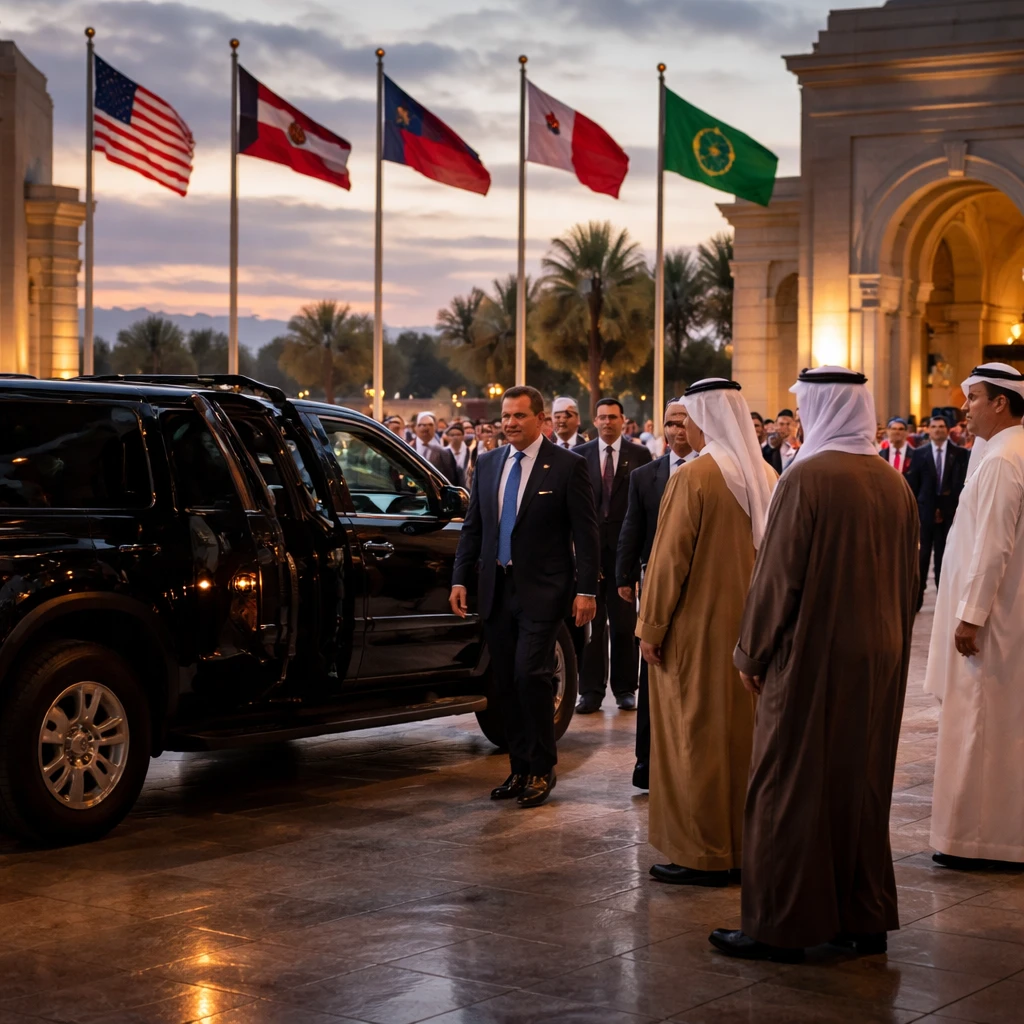
U.S. Secretary of State Marco Rubio will travel to the United Arab Emirates, Kuwait and Bahrain from Tuesday through Thursday for talks with Gulf Arab partners about the preliminary memorandum of understanding between Washington and Tehran. The trip, announced by State Department spokesperson Tommy Pigott, includes a meeting with the Gulf Cooperation Council in Bahrain and comes amid Gulf unease over a proposed $300 billion reconstruction fund and the absence of limits on Iran's ballistic missile program.

Rubio Heads to Gulf to Review U.S.-Iran Memorandum with Arab Allies
Summarize with
ChatGPT Perplexity Claude Grok Gemini

Key Points

  • Marco Rubio will visit the UAE, Kuwait and Bahrain from Tuesday through Thursday to consult Gulf partners about the U.S.-Iran memorandum of understanding.
  • Gulf leaders are particularly concerned about a reported $300 billion reconstruction fund for Iran and the MoU's omission of constraints on Iran's ballistic missile program; the UAE, Saudi Arabia, Kuwait, Bahrain and Qatar host U.S. military bases that underpin America’s regional security posture.
  • A U.S. negotiating team led by Vice President JD Vance participated in talks in Switzerland mediated by Qatari and Pakistani officials; the agreement signed in Versailles begins a 60-day window for a more comprehensive deal, and technical discussions are expected to continue through the week.

U.S. Secretary of State Marco Rubio is scheduled to visit the United Arab Emirates, Kuwait and Bahrain from Tuesday through Thursday to consult with Gulf Arab governments on the Trump administration's recently signed memorandum of understanding with Iran, State Department spokesperson Tommy Pigott said on Monday.

While in Bahrain, Rubio will engage with the Gulf Cooperation Council (GCC). The GCC is a six-member grouping of Sunni Arab states that consists of Saudi Arabia, Qatar, Oman, the United Arab Emirates, Kuwait and Bahrain.

Senior Gulf officials have broadly backed efforts to end fighting involving the United States, Israel and Iran, but they have expressed particular anxiety about several specifics in the memorandum of understanding that President Donald Trump signed last week. A central source of concern among regional leaders is a reported $300 billion reconstruction fund for Tehran. Gulf officials fear that such resources could be used by Iran to rebuild its military capabilities and to finance regional proxy groups.

Allies in the region are also troubled that the MoU does not address Iran's ballistic missile program. That omission resonates in capitals that have recently experienced missile and drone attacks they attribute to Iran. The United Arab Emirates, Saudi Arabia, Kuwait, Bahrain and Qatar host U.S. military bases that are described by officials as a central element of America's security architecture in the Middle East.

President Trump signed the memorandum of understanding on Wednesday during a meeting with French President Emmanuel Macron in Versailles. The signing initiated a 60-day period in which Washington and Tehran are to negotiate toward a more comprehensive agreement.

In related diplomatic activity, a U.S. negotiating team led by Vice President JD Vance took part in discussions in Switzerland over the weekend, meetings that were mediated by Qatari and Pakistani officials. The first round of those negotiations concluded on Monday, and Pigott said that technical talks are expected to continue through the week.

Pigott outlined the subjects Rubio will raise during the Gulf visits, saying that Rubio would "discuss a range of regional priorities including the memorandum of understanding with Iran, efforts to secure full and free safe transit through the Strait of Hormuz, and the importance of peace and stability in the region."


This trip places U.S. diplomacy at the center of attempts to reconcile Gulf security concerns with the opening created by the new MoU with Iran, and signals an immediate focus on issues that Gulf partners have flagged as priorities.

Risks

  • The proposed $300 billion reconstruction fund for Tehran could be viewed by Gulf states as a source for rebuilding Iran's military and financing proxy groups - a concern that affects regional security and defense sectors.
  • The memorandum's lack of provisions addressing Iran's ballistic missile program raises unease among Gulf allies that have experienced missile and drone attacks - a risk with implications for military posture and energy transit security.
  • Potential disruptions to secure transit through the Strait of Hormuz are explicitly on the diplomatic agenda, posing risks for global energy shipping and markets if tensions escalate.

More from Economy

Doval and Wang Meet at BRICS Security Talks in New Delhi Jun 22, 2026 Argentina authorizes up to $5 billion in loans backed by multilateral credit guarantees Jun 22, 2026 Argentina Approves Up to $5 Billion in Multilaterally-Backed Loans Jun 22, 2026 Deutsche Bank Identifies Four Reasons Markets Did Not Surge After U.S.-Iran Interim Deal Jun 22, 2026 Lagarde: Eurozone Inflation Shock Needs Careful Policy Response, Not Aggressive Action Yet Jun 22, 2026