
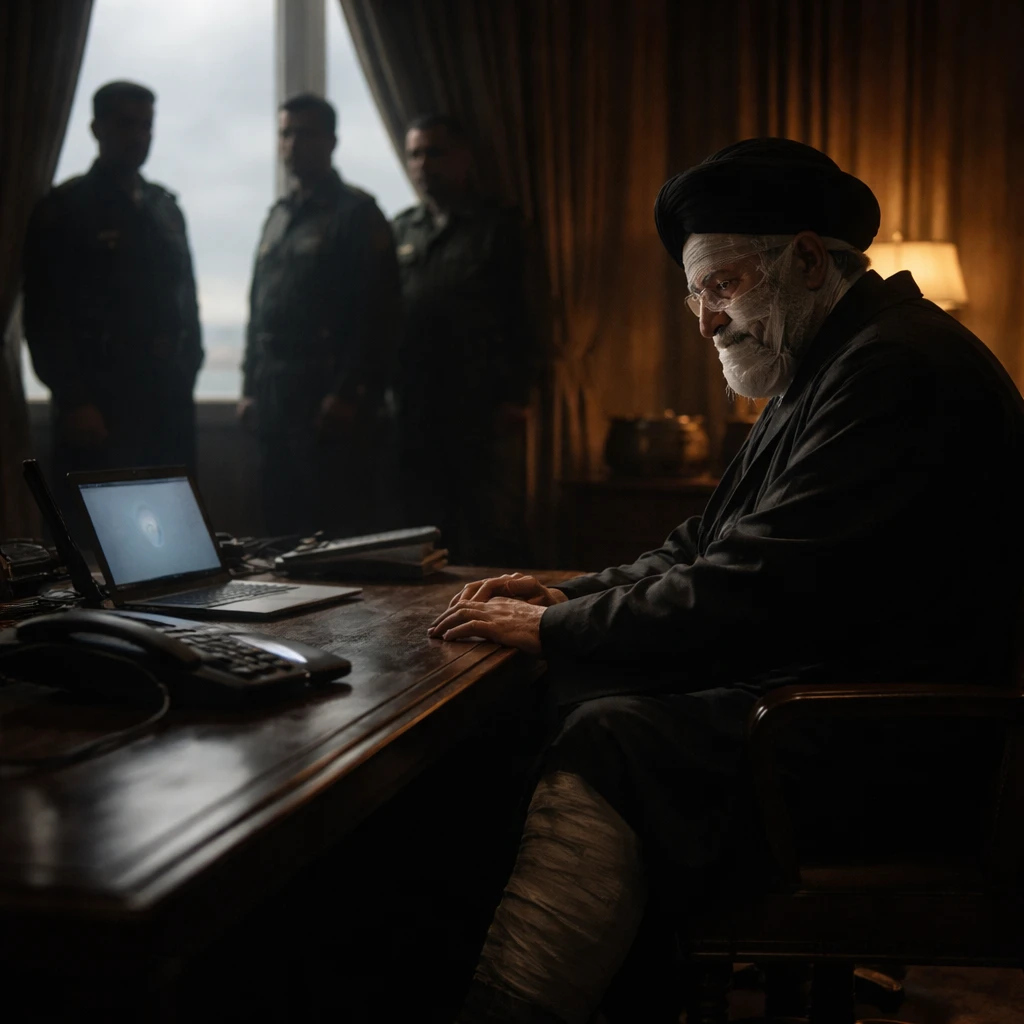
Reports out of Tehran indicate that Mojtaba Khamenei, who was appointed Supreme Leader on March 8, suffered extensive injuries in the February airstrike that also killed his father. Sources close to Tehran's inner circle say the 56-year-old sustained severe facial disfigurement and serious damage to his legs; some intelligence assessments reported the loss of a limb during the initial strike on the leadership compound.
Despite the reported physical trauma, officials have described the leader as "mentally sharp" and say he is handling state business through audio conferencing. Yet the total absence of any audio or video footage since his appointment has intensified public speculation inside Iran, where social media users have circulated "Where is Mojtaba?" memes reflecting the vacuum around his public profile.
A leadership operating in the shadows
Observers note that the lack of a visible, physically present Supreme Leader has opened space for the Islamic Revolutionary Guard Corps - IRGC - to become the predominant voice in strategic decision-making. Analysts quoted in reports emphasize that while the appointment preserves institutional continuity, the new leader does not possess the same "automatic authority" that his father accrued over decades.
That authority gap appears to have shifted internal power toward the military wing of the regime. Commentators suggest this internal recalibration could produce a harder line at the negotiating table, as an inexperienced leader may rely heavily on the IRGC to consolidate his domestic position.
Market and diplomatic implications
The designation applied to the new leader - "janbaz", a term for those badly wounded in war - serves as a rallying symbol for the regime’s core base. At the same time, it has introduced what some observers describe as an "uncertainty premium" for global markets. Investors are watching closely for any sign of a coherent strategic worldview from the new leader; his public communications so far have been limited to written statements urging the continued closure of the Strait of Hormuz.
Financial markets have already registered a risk-off reaction in emerging market equities, with leadership stability in Tehran cited as a central variable behind that sentiment. Until the Supreme Leader can demonstrate both physical presence and political authority, key regional dynamics - including the functioning of the so-called "Tehran toll booth" and any prospect for a broader ceasefire - are likely to remain connected to a fragmented power structure.
Market participants are bracing for continued volatility. The timing of the leader’s first public appearance is estimated to be at least one to two months away, though observers note that this timeline remains uncertain.
What is known and what remains unclear
The available reports include claims of severe facial disfigurement and serious leg injuries to Mojtaba Khamenei, and some intelligence commentary suggests the loss of a limb. Officials maintain he is conducting affairs via audio links and is mentally capable. There has been no publicly released audio or video of the leader since his appointment on March 8. How these reported injuries translate into durable shifts in decision-making, and whether they will materially alter Tehran’s negotiating posture, remain open questions tied directly to the balance of power between the Supreme Leader’s office and the IRGC.
For global markets, the intersection of an unseen leader, an emboldened military wing, and the ongoing closure of a strategic maritime chokepoint presents a backdrop for heightened uncertainty and potential volatility until clearer signals of leadership capacity and cohesion emerge.