
Economy July 1, 2026 07:25 AM

Poland's Three-Month Fuel Price Cap Cost 4.7 Billion Zlotys, Finance Ministry Says

Temporary cuts to VAT and excise plus daily fuel price ceilings ran from March through June and were extended biweekly during that period

By Hana Yamamoto
Share
Twitter Reddit Facebook LinkedIn

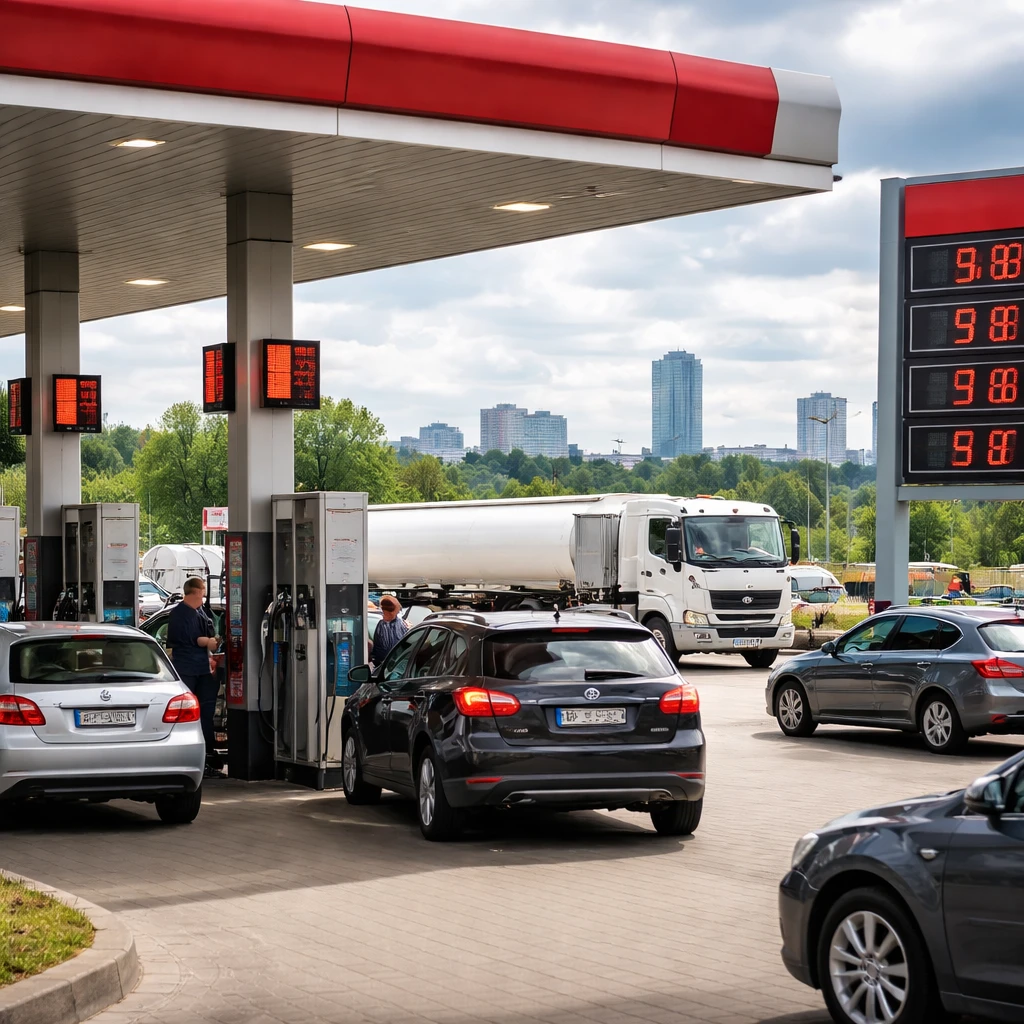
Poland spent about 4.7 billion zlotys (approximately $1.25 billion) over a three-month span to implement fuel price caps introduced in March. The measures included a reduced VAT rate on fuel, alignment of excise duties with the EU minimum, and daily caps on motor fuel prices; they were repeatedly extended every two weeks and concluded in June, the Finance Ministry told PAP.

Poland's Three-Month Fuel Price Cap Cost 4.7 Billion Zlotys, Finance Ministry Says
Summarize with
ChatGPT Perplexity Claude Grok Gemini

Key Points

  • Poland expended about 4.7 billion zlotys ($1.25 billion) on temporary fuel price controls over three months.
  • Measures included reducing the VAT on fuel to 8% from 23%, lowering excise duty to the EU minimum, and setting daily motor fuel price caps.
  • The program was repeatedly extended every two weeks after its March start and concluded in June; the Finance Ministry said it lowered costs for households and many businesses, with inflation at 2.5% year-on-year in June.

Poland's temporary scheme to limit retail fuel prices cost roughly 4.7 billion zlotys - about $1.25 billion - over the course of three months, the Finance Ministry reported on Tuesday.

The government rolled out the package in March, in response to tensions in the Middle East, and deployed a trio of measures aimed at lowering pump prices. The policy lowered the value-added tax on fuel from 23% to 8%, cut excise duties down to the European Union minimum level and imposed daily price caps on motor fuels.

Implemented as short-term relief, the program was repeatedly extended in two-week increments from its March start and was brought to a close in June, the ministry said.

According to the Finance Ministry's comments to the Polish press agency PAP, the package produced lower costs for households and for many businesses. The ministry also noted that Poland's inflation rate was 2.5% year-on-year in June.


Context and mechanics

  • The fiscal outlay - 4.7 billion zlotys - covers the duration of the three-month program.
  • Tax elements of the package included a temporary reduction in VAT to 8% (from 23%) and an excise duty set at the EU minimum allowable level.
  • Daily caps on motor fuel prices were instituted as part of the same package.

The Finance Ministry framed the program as delivering direct savings to consumers and a range of businesses that face fuel costs in operations.


What is clear and what is not

The ministry's disclosure provides explicit figures on the program's fiscal cost and confirms its operational features and timing. What the statement does not detail is how those costs were distributed among different budget lines, the precise industries quantified as 'many businesses,' or any post-June policy intentions.

This account is limited to the facts reported by the Finance Ministry to PAP: the amount spent, the measures enacted (VAT cut, excise reduction to the EU minimum, daily price caps), their phased extensions every two weeks, and the program's end in June, alongside the June inflation reading of 2.5% year-on-year.

Risks

  • The article does not specify how fiscal costs are allocated across government budgets, creating uncertainty about public finance impacts - this affects fiscal policy and government budgeting sectors.
  • Because extensions were made every two weeks and the program ended in June, there is uncertainty about future policy decisions on fuel pricing that could influence households and fuel-dependent businesses - this impacts consumer spending and transport-intensive sectors.
  • The report does not provide a breakdown of which businesses benefited or by how much, leaving unclear the distributional effects across industries and firms - relevant for corporate earnings in transport, logistics and consumer staples.

More from Economy

Trump’s 2025 Filing Shows Crypto as Primary Income Source, Discloses Major Tech Purchases Jul 1, 2026 Saudi Aramco Slashes LPG Official Selling Prices Up to 27% for July Jul 1, 2026 Majority of FX Strategists See Dollar Weakening as Oil Cools, But Near-Term Strength Persists for Some Jul 1, 2026 Peso Seen Staying Near Long-Running Range as Recovery Hopes Support Demand Jul 1, 2026 IMF Official Says Nigeria Has Roughly 2% of GDP in Unreported Spending Jul 1, 2026