
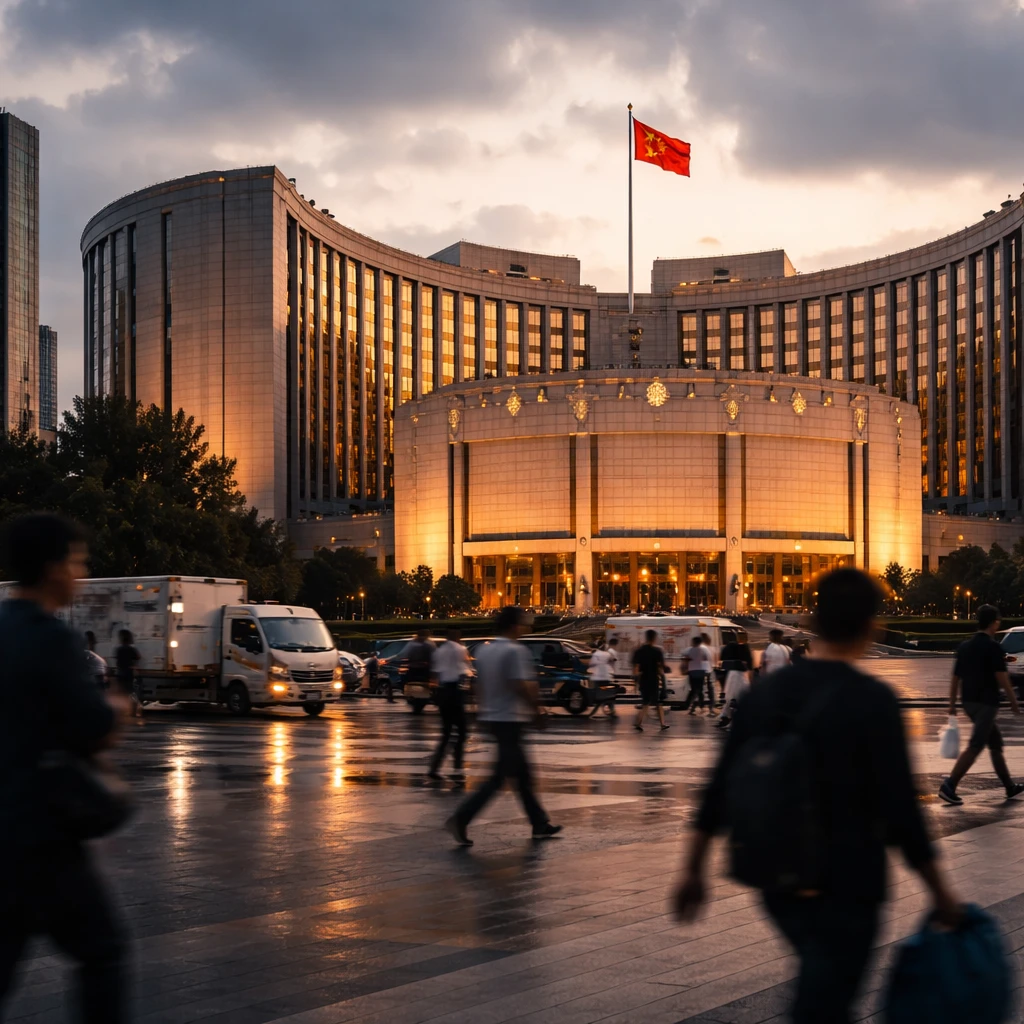
China's central bank has identified a structural imbalance in the economy characterized by relatively strong supply and weak demand, and announced a policy stance aimed at addressing that gap. Following its second-quarter monetary policy committee meeting, the People’s Bank of China (PBoC) said it will maintain an appropriately loose monetary policy and expand financial support measures designed to stimulate domestic consumption.
In its post-meeting statement, the PBoC described the world’s second-largest economy as "generally stable" and improving. The bank also listed key challenges that it sees as persisting: strong supply, weak demand, structural divergence and external shocks. Those descriptions frame the central bank’s rationale for sustaining accommodative settings and increasing targeted financial backing.
The PBoC said it will strengthen guidance on policy interest rates with the goal of promoting a reasonable rebound in prices. At the same time, the central bank reiterated its commitment to keeping the yuan basically stable at a reasonable and balanced level. Those dual aims - nudging prices higher while anchoring the currency - are presented as complementary elements of the central bank’s response to the present imbalance between supply and demand.
The bank’s announcement emphasizes policy continuity: a willingness to preserve looser monetary conditions together with an intent to expand supportive finance to encourage household spending. The statement does not provide additional operational details or new numerical targets, but it underscores the PBoC’s current priorities: demand stimulation, measured upward pressure on prices and exchange-rate stability.
Summary
The People’s Bank of China has flagged a structural mismatch of strong supply and weak demand, pledged to keep policy appropriately loose and said it will increase financial support to help revive domestic consumption. The PBoC described the economy as generally stable and improving, and named structural divergence and external shocks among its challenges. It also plans to strengthen guidance on policy interest rates, seek a reasonable rebound in prices and maintain a basically stable yuan at a reasonable and balanced level.