
Stock Markets July 8, 2026 07:26 AM

Kodiak Gas and Baker Hughes Ink Multi-Year Framework to Supply Up to 1.8 GW for U.S. Data Centers

Initial equipment award calls for roughly 1 GW of gas turbines and generators to be delivered by 2030 for behind-the-meter solutions

By Avery Klein
Share
Twitter Reddit Facebook LinkedIn
KGS BKR

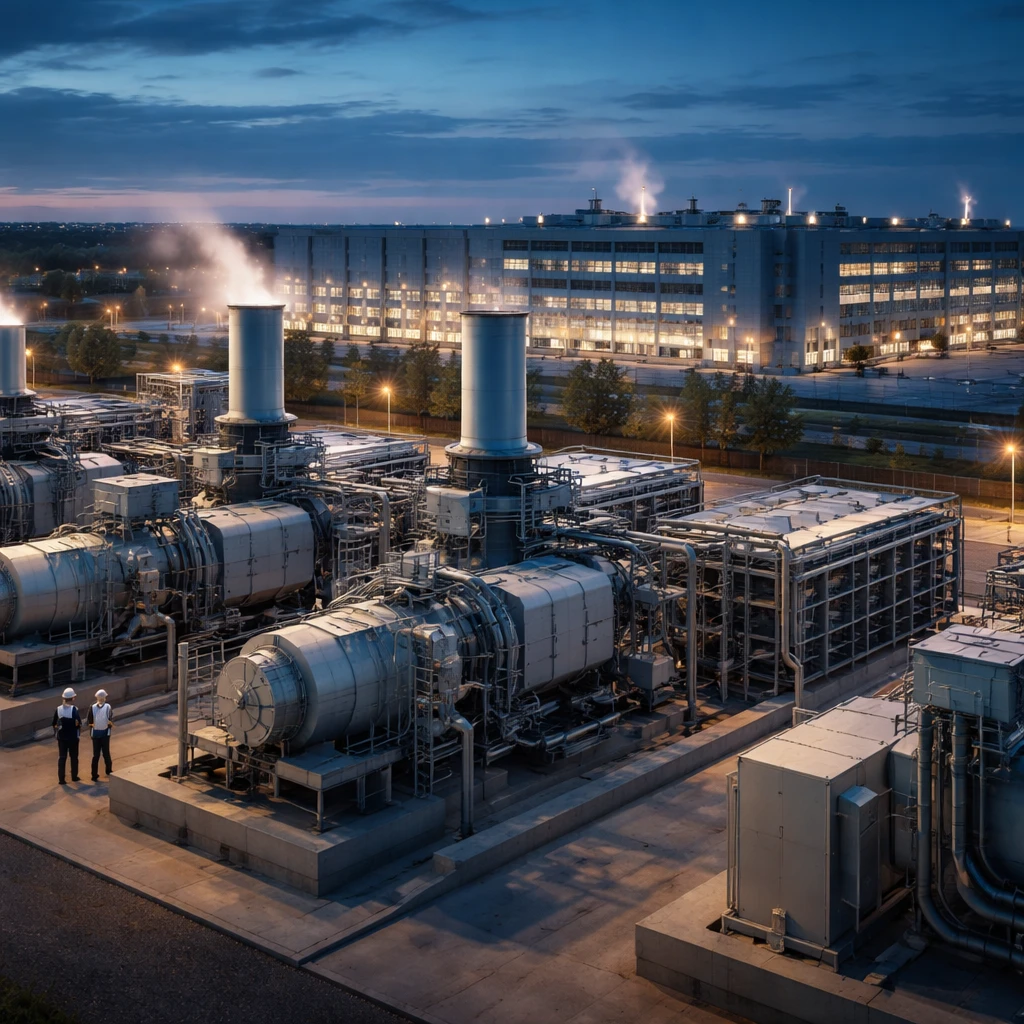
Kodiak Gas Services said Wednesday it has reached a multi-year strategic agreement with Baker Hughes to deploy gas-turbine power generation capacity supporting U.S. data center expansion. The rolling framework covers up to 1.8 GW of capacity and includes an initial equipment award for about 1 GW of turbines and generators to be delivered by 2030 for behind-the-meter projects.

Kodiak Gas and Baker Hughes Ink Multi-Year Framework to Supply Up to 1.8 GW for U.S. Data Centers
KGS BKR
Summarize with
ChatGPT Perplexity Claude Grok Gemini

Key Points

  • The agreement establishes a framework to deploy up to 1.8 GW of gas-turbine generation capacity to support U.S. data center growth and related energy infrastructure.
  • An initial award calls for approximately 1 GW of NovaLT16 and Frame 5 gas turbines plus BRUSH Power Generation generators to be delivered by 2030 for behind-the-meter solutions.
  • The multi-year rolling structure is designed to align capacity commitments with data center demand, streamline execution, and shorten lead times; it also includes training and spare parts commitments and explores a long-term services arrangement.

Kodiak Gas Services (NYSE:KGS) saw its shares rise 4% Wednesday morning following the announcement of a multi-year strategic agreement with Baker Hughes (NASDAQ:BKR) to provide gas turbine power generation capacity aimed at supporting growth in U.S. data center markets.

The arrangement sets a deployment framework for up to 1.8 GW of generation capacity. Under the initial equipment award, the companies said they expect to deliver roughly 1 GW of gas turbines and generator sets by 2030. That initial tranche is intended to support behind-the-meter power solutions for data centers and related energy infrastructure projects.

Equipment specified in the order includes NovaLT16 gas turbines, Frame 5 gas turbines and BRUSH Power Generation generators. Company statements note these assets will be deployed in U.S. markets where rising electricity demand and grid constraints are creating a need for more flexible power infrastructure.

The agreement is structured as a multi-year, rolling framework designed to provide flexibility so capacity commitments can be aligned with data center demand and project development timetables. Kodiak and Baker Hughes said the framework aims to foster closer commercial and technical collaboration, help streamline project execution and shorten lead times for deploying power infrastructure.

Mickey McKee, President and CEO of Kodiak Gas Services: "Our customers require dependable, efficient and rapidly deployable power solutions, and access to Baker Hughes’ industry-leading technology, training and support enhances our ability to meet that demand at scale."

Lorenzo Simonelli, Chairman and CEO of Baker Hughes: The agreement reflects a growing need for flexible power generation technologies as demand for power accelerates, driven by expansion of digital infrastructure and data centers.

Beyond equipment supply, the agreement includes commitments around technical training and provision of spare parts. The companies also noted a mutual interest in negotiating a long-term services arrangement for the installed equipment, though the firms described that as an area of continued discussion rather than a finalized contract.

This strategic framework targets markets where operators face constrained grid capacity and require on-site, flexible generation to support data center loads. Kodiak’s share response Wednesday morning reflected investor recognition of the potential revenue and execution pathway that the rolling agreement could enable.

Risks

  • Timing and alignment risk - Capacity commitments under the rolling agreement must be matched to data center demand and project development schedules, creating execution timing uncertainty for both companies and investors.
  • Delivery and lead-time risk - Streamlining project execution and reducing lead times are goals of the framework, but actual delivery schedules for large equipment orders can be affected by project timelines.
  • Service arrangement uncertainty - While the agreement expresses mutual interest in a long-term services arrangement, that outcome is not finalized and could affect long-term revenue streams if not agreed.

More from Stock Markets

Moody's Upgrades TTM Technologies Outlook Citing Robust AI-Driven Demand Aug 21, 2026 Moscow stocks close higher as energy, mining and power names lead gains Aug 21, 2026 Treasury bill auctions and regional activity readouts headline markets on Monday, August 24 Aug 21, 2026 Latin American markets rebound as dollar softens and commodity prices rise Aug 21, 2026 SNB Official Says AI Could Push Inflation Higher in Short Term, Long-Run Effect Uncertain Aug 21, 2026