
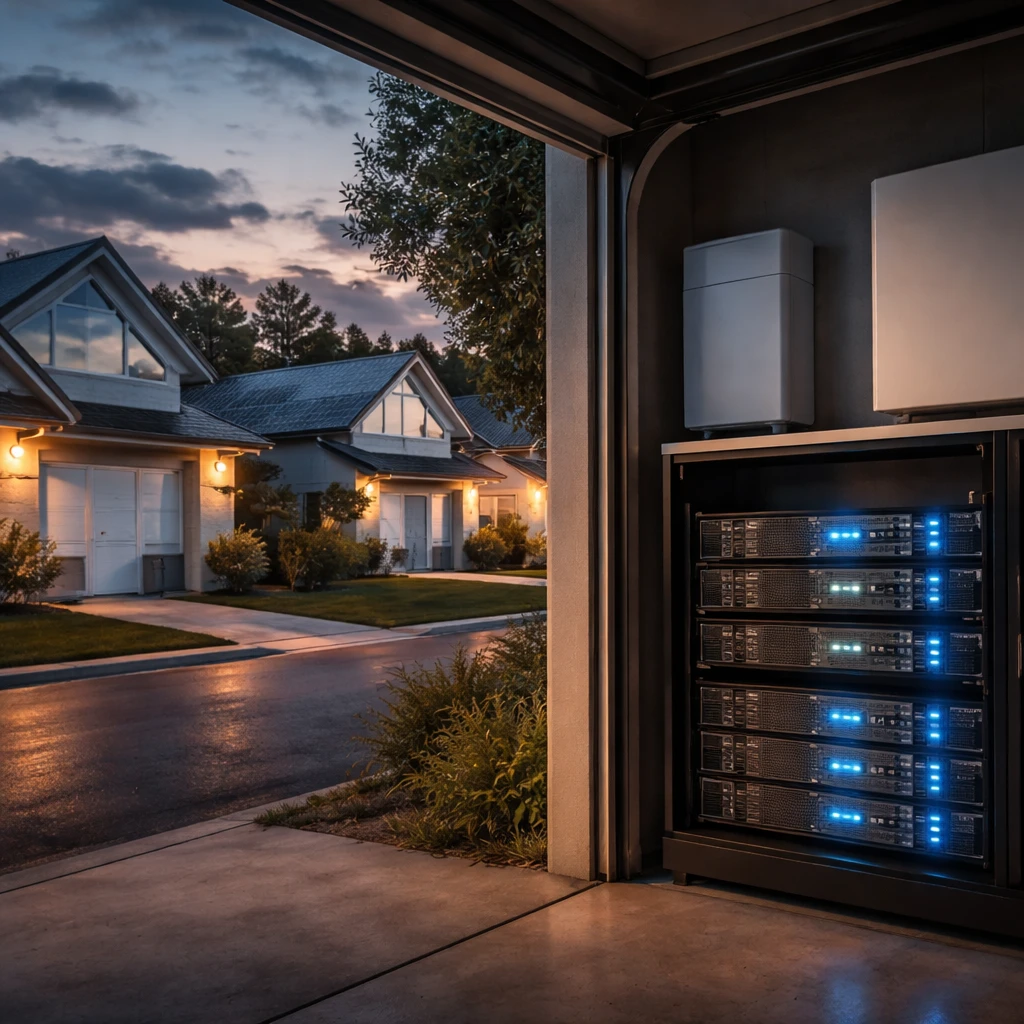
Sunrun reported a strategic pilot program aimed at converting portions of its existing residential solar and battery footprint into a distributed compute network, a move that coincided with a roughly 3% rise in the company's stock on Wednesday. The San Francisco-based firm, which operates 1.1 million home solar and battery systems, is testing a model that places compute nodes in customer homes to process AI workloads.
The pilot follows an initial proof of concept that the company says demonstrated both revenue generation and demand for distributed compute capacity. Sunrun is coordinating sales of inference capacity to enterprise buyers while evaluating nodes under a range of operating conditions. Homeowners who host the compute nodes receive compensation for providing the behind-the-meter space.
"AI companies are scrambling to secure greater access to energy and computing power," said Paul Dickson, Sunrun's President and Chief Revenue Officer. "Over nearly two decades, we have perfected our ability to operationalize, finance, and scale distributed assets."
Sunrun framed the initiative as an entry into distributed edge computing and a potential high-margin revenue stream that leverages its existing energy infrastructure rather than building conventional data center capacity. The distributed model locates compute nodes on the customer side of the meter, which the company says eliminates the need for land acquisition, transmission buildout, and utility interconnection queues typically associated with traditional data centers. Each node is paired with Sunrun's residential battery systems, enabling certain continued operations during grid outages.
The company cited accelerating demand in inference workloads as underpinning the opportunity. Sunrun noted AI inference demand is growing at approximately 35% annually and said McKinsey projects inference will overtake training as the dominant AI workload by 2030, accounting for more than half of all AI compute.
Operationally, the pilot is designed to test real-world node performance while Sunrun sells inference capacity to enterprise customers. The company plans to complete the pilot over the coming months and will measure outcomes against defined milestones before deciding on the pace and scope of a wider rollout. Sunrun also said it is in discussions with enterprise compute offtakers, homebuilders, and utility partners to shape commercial and deployment frameworks.
Sectors affected: residential solar and energy storage, edge and cloud computing, and enterprise AI procurement.