
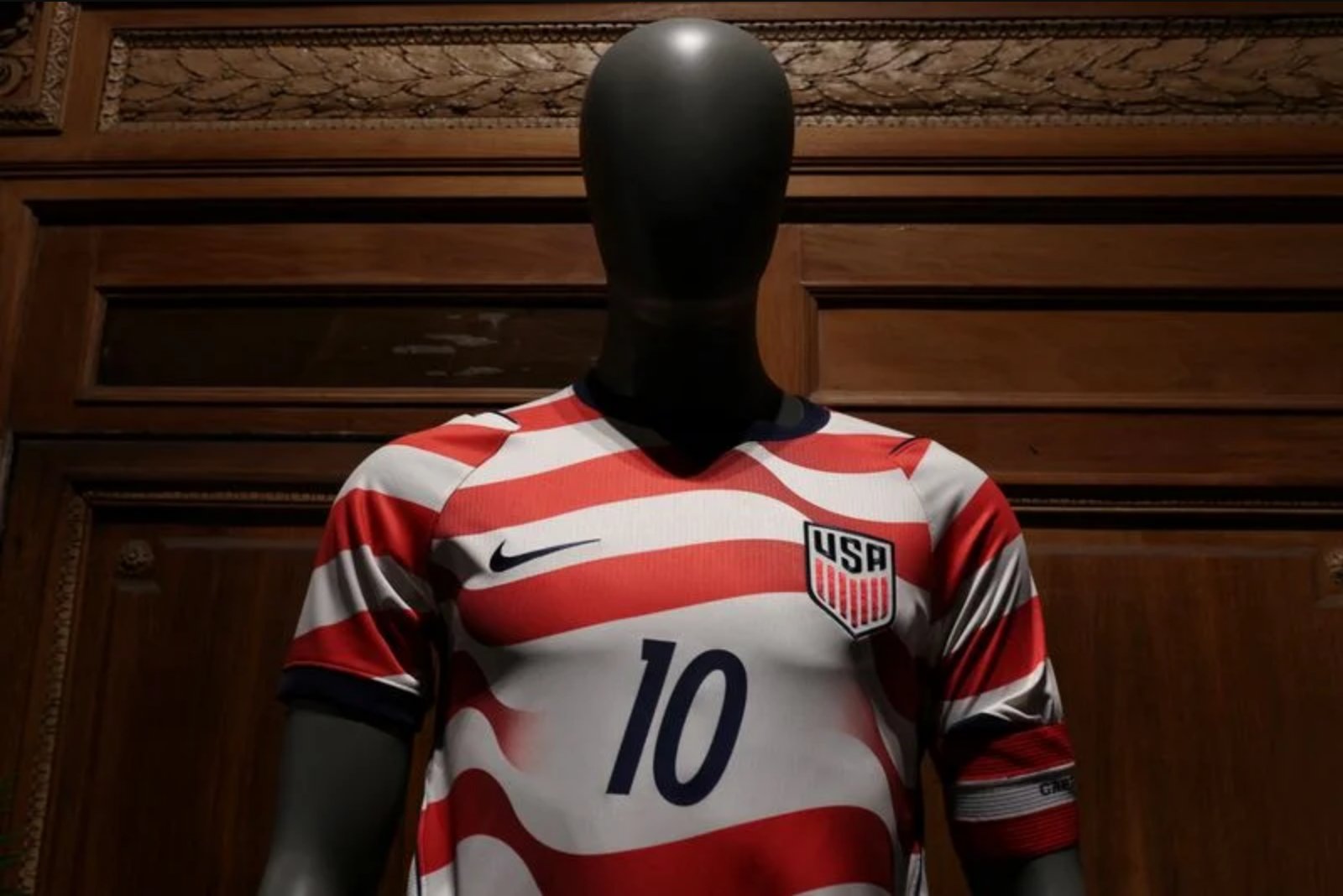
The World Cup's kickoff has put Nike into direct competition with Adidas both on the pitch and in stores, as the U.S.-based sportswear giant seeks to translate tournament exposure into a broader business recovery. The tournament, staged in part on U.S. soil, arrives two years into the turnaround led by CEO Elliott Hill - a period that has seen slipping market share and mounting investor impatience.
Nike projects a sales decline of 2% to 4% for the current quarter, and its shares have plunged by more than 30% so far this year as stakeholders weigh the speed of the company's recovery.
Retail and marketing visibility
At retail, signs of progress are visible. Customers entering the Pelé Soccer store in Times Square recently encountered mannequins dressed in Nike's national team kits for the U.S., Brazil and France. In midtown Manhattan, Nike's "Rip the Script" World Cup campaign - which includes a film featuring soccer stars and celebrities ranging from Kylian Mbappé to Kim Kardashian - was on display in the window of a Champs Sports location.
Those high-profile placements, including a visible assortment at retail outlets operated by Foot Locker's subsidiary, indicate Nike has started to mend ties with wholesale partners. Many of those relationships had been scaled back under former CEO John Donahoe's push toward a direct-to-consumer model.
"Football allows us to reach so many different people," said Camilo Andrade, Nike's vice president of global football.
When asked about the company's approach to wholesale partners, Andrade said the strategy "has been first and foremost to make sure that we restore those relationships."
Product activity and partnerships
Nike has introduced two new Mercurial soccer cleats this month, is outfitting 12 national teams, is collaborating with local streetwear designers, and is refreshing soccer merchandise across more than 5,000 Nike and wholesale stores worldwide. Those moves are part of a broader effort to increase the brand's presence during a period when consumer attention is concentrated on the tournament.
Adidas's position and consumer response
Still, competition remains intense. Adidas enters the World Cup as an official tournament sponsor, backing 14 national teams and supplying the match ball - an item that often serves as a retail focal point. Retailers' sales patterns reflect that positioning: a spokesperson for British retailer JD Sports said Mexico and Argentina jerseys - both Adidas products - have so far been the best-selling team kits.
Consumer preference at stores illustrates the challenge for Nike. Louis Carrillo, 30, browsing at Pelé Soccer, said he was drawn to a rack of Mexico jerseys partly because he wanted to support his native team as it prepared to face South Africa, and partly because of Adidas's signature three-stripe design on the shoulders. Carrillo added that he used to buy Nike's Mercurial boots when he was younger, "but I feel that it’s not the same anymore," noting waning enthusiasm for the design.
Analyst caution and market reaction
Analysts warn that a World Cup-related sales and visibility boost may not be enough to pivot Nike's overall trajectory. RBC Capital Markets downgraded Nike's stock rating one day before the tournament's opening match; analyst Piral Dadhania pointed to a slower-than-expected turnaround and said the World Cup catalyst and the new products are "not sufficient to offset clean-up actions elsewhere in the business."
"The problems that Nike has are not going to just go away because of the World Cup," said Morningstar analyst David Swartz. "But it’s certainly an opportunity to get the brand back in front of people."
Industry observers at Telsey Advisory Group have also noted that Adidas items currently appear more prominent at national retailers such as Dick's Sporting Goods and Foot Locker, suggesting that retail visibility still favors Nike's longstanding rival in certain channels.
Outlook and stakes
For Nike, the World Cup represents both a marketing opportunity and a test of progress on multiple fronts: restoration of wholesale relationships, resonance of new product designs, and the ability to translate tournament exposure into sustained sales growth. Even with noticeable merchandising and advertising efforts, analysts remain measured about whether short-term visibility during the tournament will translate into the deeper operational and product-driven improvements investors are demanding.