
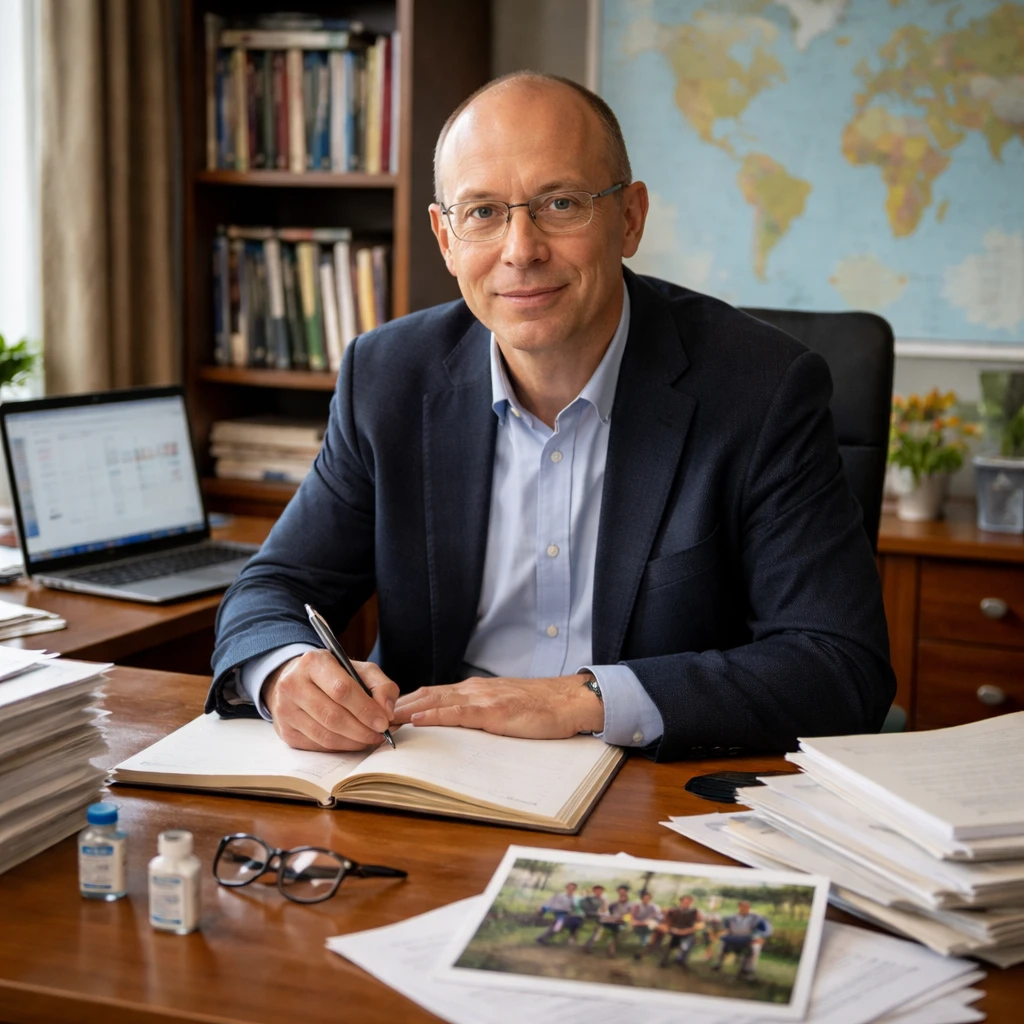
The World Bank Group announced that Michael Kremer, a Nobel Prize-winning economist, will assume the position of Chief Economist and Senior Vice President for Development Economics, with the appointment taking effect on October 1, 2026. The selection was made public by World Bank Group President Ajay Banga.
Kremer currently directs the Development Innovation Lab at the University of Chicago, where he holds the title of University Professor. He shared the 2019 Nobel Prize in Economics with Abhijit Banerjee and Esther Duflo for what the Nobel committee described as an experimental approach to reducing global poverty.
Holding a PhD in Economics from Harvard University, Kremer's academic work spans economic growth, technological change and development economics. His research has emphasized the use of randomized controlled trials to build evidence, test interventions and identify solutions that can be scaled in developing-country contexts.
Research and practical interventions
The announcement highlights several elements of Kremer's record. With Rachel Glennerster, he championed Advance Market Commitments (AMCs) for vaccines and played a role in launching a $1.5 billion AMC for a pneumococcal vaccine in partnership with Gavi and the World Bank Group. Vaccines procured through those AMCs have reached 60 developing countries.
His earlier work on deworming influenced public programs in Africa and South Asia; the announcement states that 2 billion deworming treatments have been delivered to children since 2014 as a result of scale-up informed by that research.
Kremer's current research agenda, as described in the announcement, focuses on innovation across education, health, water, finance and agriculture in lower-income countries. He has also been involved in institution-building and technology-driven initiatives intended to raise productivity and incomes for smallholder farmers.
Honors and institutional roles
The announcement notes Kremer's recognition as a MacArthur Fellow, his memberships in the National Academy of Sciences and the American Academy of Arts and Sciences, and his role as a co-founder of organizations including Precision Development. He also co-founded USAID's Development Innovation Ventures, which the announcement says has invested in more than 300 innovations reaching over 200 million people.
The World Bank statement places Kremer's appointment within the institution's leadership structure but does not provide detail in this release about how his research priorities will be operationalized within the Bank's programs or what specific policy changes, if any, will follow his arrival.