
Economy July 5, 2026 03:24 AM

Mass Mourning in Tehran as U.S. Says Talks with Iran Will Resume After Ceremonies

Funeral processions span Iran and Iraq while diplomacy and market watchers monitor the Strait of Hormuz

By Hana Yamamoto
Share
Twitter Reddit Facebook LinkedIn

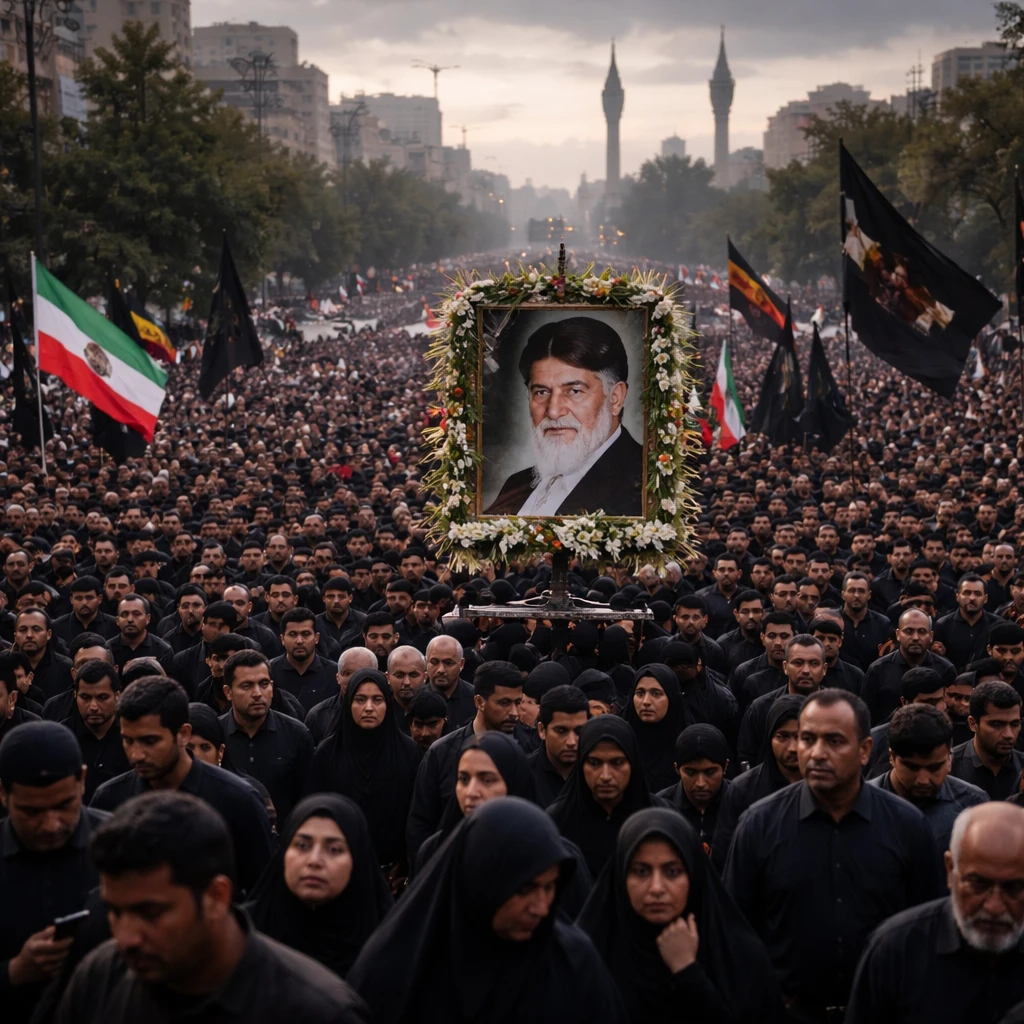
Millions attended a second day of public mourning in Tehran for Iran's late Supreme Leader Ayatollah Ali Khamenei as U.S. President Donald Trump said negotiations with Tehran are expected to resume once weeklong funeral rites conclude. Ceremonies will continue in multiple Iranian cities and in Iraq before burial in Mashhad later this week. Diplomacy remains active even amid tensions, with Iran rejecting U.S. characterizations and senior Iranian officials meeting delegations from Hamas and Hezbollah. Traders are watching the Strait of Hormuz for lingering shipping disruptions that could affect oil supplies.

Mass Mourning in Tehran as U.S. Says Talks with Iran Will Resume After Ceremonies
Summarize with
ChatGPT Perplexity Claude Grok Gemini

Key Points

  • Millions participated in a second day of funeral ceremonies for Ayatollah Ali Khamenei in Tehran; public mourning will continue across multiple cities in Iran and Iraq before burial in Mashhad later this week.
  • U.S. President Donald Trump said talks with Iran would resume after the weeklong ceremonies and that neither side was expected to take military action during the funeral period; he also noted a possible White House visit by Israeli Prime Minister Benjamin Netanyahu after the NATO summit.
  • Iranian officials pushed back on U.S. comments; the Iranian embassy in Armenia said Khamenei's death did not weaken his principles, and Foreign Minister Abbas Araqchi met delegations from Hamas and Hezbollah, reaffirming support for the Palestinian cause and efforts to end hostilities in Lebanon under the existing ceasefire.

Millions of mourners gathered in Tehran on Sunday for the second day of public funeral ceremonies for Ayatollah Ali Khamenei, Iran's late Supreme Leader. U.S. President Donald Trump said negotiations with Tehran would recommence after the weeklong proceedings conclude.

The official mourning is slated to continue across several cities in Iran and in parts of Iraq ahead of Khamenei's burial in his hometown of Mashhad later this week. Processions are scheduled in Tehran on Monday, followed by ceremonies in the holy city of Qom and then in Najaf and Karbala in neighboring Iraq, underscoring the late leader's reach across the Shia Muslim world.

President Trump said neither side was expected to take military action during the funerals and that talks with Iran would resume once the ceremonies end. He also indicated that Israeli Prime Minister Benjamin Netanyahu could visit the White House after the NATO summit, a comment he framed as evidence that Washington remains engaged in diplomatic channels following last month's ceasefire.

Iran pushed back on the U.S. president's remarks. The Iranian embassy in Armenia issued a statement saying Khamenei's death did not weaken the principles he stood for and accused Washington of misreading Iran's history and national identity.

Separately, Iranian Foreign Minister Abbas Araqchi met with delegations from Hamas and Hezbollah in Tehran. Both groups conveyed condolences over Khamenei's death and praised Iran's support during the recent conflict with Israel and the United States. Araqchi reiterated Tehran's backing for the Palestinian cause and said Iran remained committed to efforts aimed at ending hostilities in Lebanon under the current ceasefire framework.

Attention also remained fixed on the Strait of Hormuz. Shipping data indicated some commercial vessels were still altering their routes even as maritime traffic showed signs of gradual recovery since the conflict. The strait is one of the world's most important energy corridors, and traders continued to monitor the waterway closely for any disruption that could affect global oil supplies.

For now, the official stance from the United States is that diplomatic engagement will resume once the funerary period concludes, while Iranian authorities have emphasized continuity of principle and diplomatic activity with regional interlocutors. Observers and market participants are watching both the diplomatic timeline and shipping patterns through the Strait of Hormuz for developments that could influence energy markets.

Risks

  • Potential disruption to shipping through the Strait of Hormuz - the waterway is a major energy corridor and shipping route, and continued route alterations by commercial vessels could pose risks to oil supply chains and energy markets.
  • Diplomatic uncertainty during the mourning period - although both sides said military action was not expected during the funerals, the weeklong proceedings and regional visits could create short-term political and market volatility, particularly for energy and shipping sectors.

More from Economy

Khamenei Family Members Lead Public Rites as New Supreme Leader Remains Unseen Jul 5, 2026 EV battery life outpaces expectations as replacement worries linger Jul 5, 2026 Trump Delivers National Mall Address as U.S. Observes 250th Anniversary Jul 5, 2026 China Signals Push for Deeper Commercial Links with Sweden and Europe in Stockholm Meeting Jul 5, 2026 New Zealand Pledges Seven New Trade Talks Under National Party Victory Jul 4, 2026