
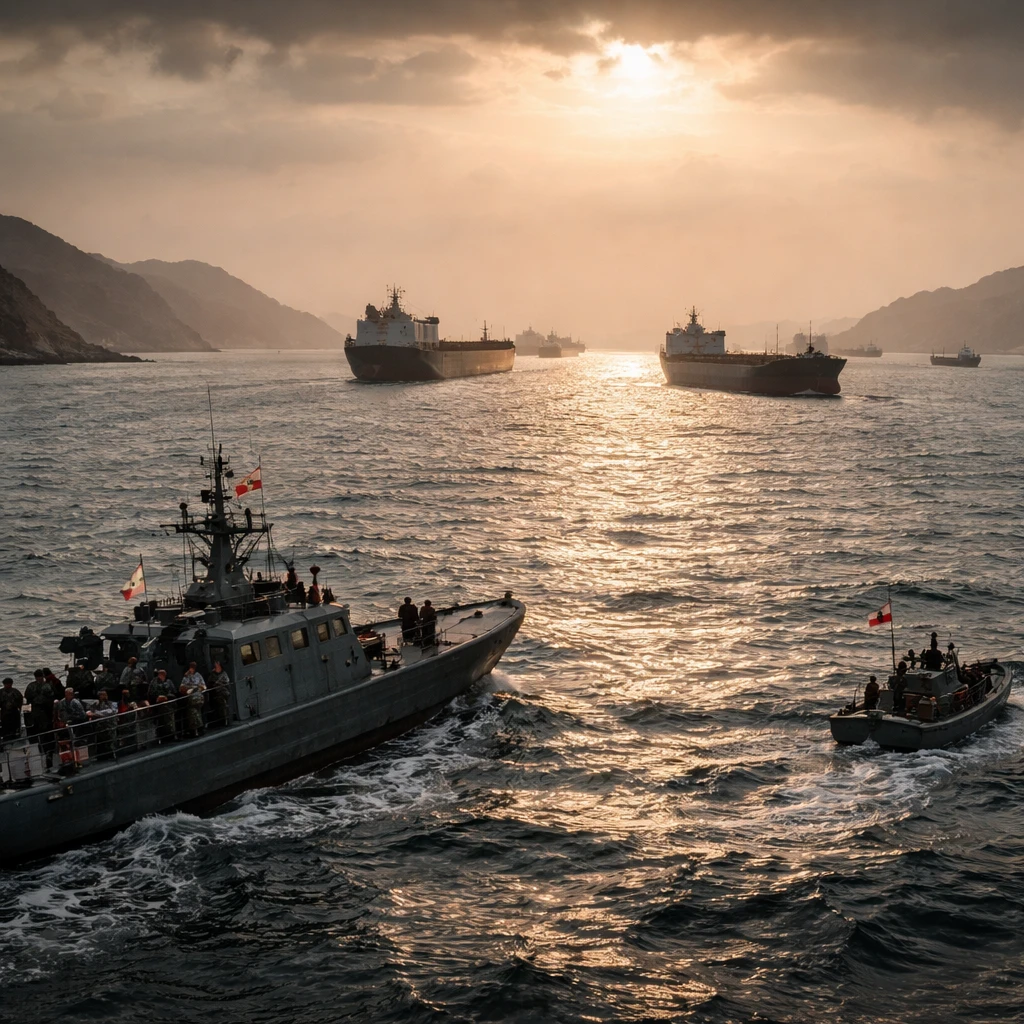
Iran said on Sunday that it is not in a hurry to restore normal transit through the Strait of Hormuz, underscoring Tehran's view that it retains leverage over a strategic chokepoint for oil and gas shipments. The declaration is part of a broader standoff that has stretched into its sixth month with the United States and has left diplomatic initiatives struggling to gain momentum.
Iranian Deputy Foreign Minister Kazem Gharibabadi explicitly stated that the waterway remains closed, while the Islamic Revolutionary Guard Corps reiterated its control over passage and accused U.S. officials of providing misleading accounts of shipping conditions - an allegation the IRGC tied to attempts to shape energy prices.
Washington and Tehran have offered conflicting narratives about whether commercial shipping has effectively resumed. That discrepancy is consequential: limited and restricted traffic through the Strait of Hormuz has been one of the most significant economic effects of the conflict, contributing to upward pressure on oil prices and disrupting regional trade flows.
Diplomatic channels remain active but face obstacles. Iraq has moved to play an intermediary role between Tehran and Washington, according to Qasim al-Araji, the security adviser to Iraq's prime minister. Regional governments are exploring avenues to restart negotiations even as substantive progress remains unclear.
At the same time, the Trump administration has escalated economic pressure on Iran. Officials in Washington have intensified measures that add to a sanctions campaign intended to limit Tehran's access to international trade and financial markets. President Donald Trump has threatened what has been described as "total economic warfare," a formulation that highlights the administration's intent to broaden economic leverage.
The wider regional response is reshaping defense and energy arrangements. Greece and Israel are expected to formalize an agreement for the $3.4 billion "Achilles' Shield" air and missile defense system - a package that reportedly links existing Greek Patriot batteries and drones with Israeli-made platforms. Such deals reflect an environment in which governments are recalibrating their security postures in response to the conflict.
Syria, meanwhile, is seeking to rehabilitate its damaged oil industry and resume exports as higher energy prices elevate the value of domestic production. Persisting constraints - limited refining capacity and ongoing fuel shortages - continue to affect Syrian transport, push up food costs and restrain industrial activity.
The ramifications of the conflict extend beyond Iran and Syria. Tensions remain high across Gaza, Lebanon and the occupied West Bank, and the spillover effects add to regional instability that in turn affects markets and supply chains.
For global markets, the Strait of Hormuz remains a central vulnerability. A prolonged closure could continue to constrain crude supplies and sustain price pressures, while a credible reopening or a substantive diplomatic breakthrough would likely relieve some of the current strain on oil markets.
Key points
- Iran maintains the Strait of Hormuz is closed and the IRGC says it controls passage - impacting global oil and shipping markets.
- Diplomatic efforts, including an Iraq-facilitated role, are ongoing but have not produced a clear resolution; sanctions and economic pressure from the U.S. continue.
- Regional defense deals and efforts to revive domestic oil output in Syria are reshaping security and energy dynamics.
Risks and uncertainties
- Prolonged closure of the Strait of Hormuz could keep crude supplies constrained, sustaining higher oil prices - a risk to energy markets and economic sectors dependent on fuel costs.
- Conflicting claims from Washington and Tehran about shipping status create uncertainty for commercial shippers and insurers, affecting maritime trade and logistics.
- Ongoing sanctions and intensified economic pressure present continued uncertainty for trade and financial market access for Iran, with potential knock-on effects for regional commerce.