
Overview
Federal Reserve officials are widely expected to show in their forthcoming projections that most policymakers plan to keep the federal funds rate on hold for the remainder of the year, with a minority still penciling in the possibility of a rate hike to counteract signs that inflation could become more persistent. The revisions to the Fed's so-called dot plot would represent a more hawkish posture than officials signaled three months ago and could complicate messaging for the Fed's new leader.
Leadership and the dot plot question
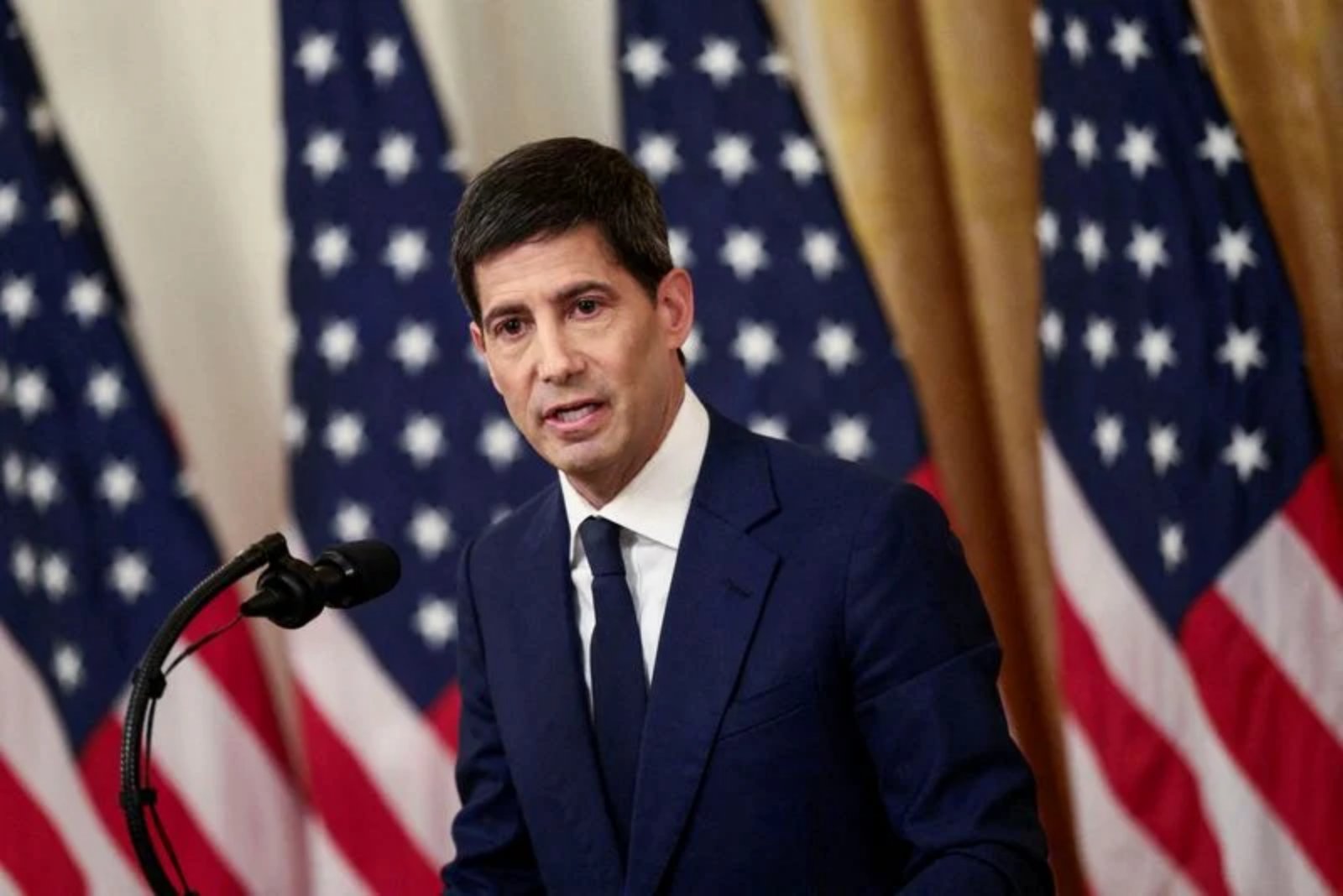
Kevin Warsh, President Donald Trump's pick to lead the central bank, steps into the chairmanship with market and political attention on whether he will pursue the interest-rate cuts that his backer expects. Warsh has publicly argued for reasons to cut rates - including what he describes as the disinflationary potential of artificial intelligence - but he has also cautioned that he has not made promises and has told lawmakers he disfavors providing forward guidance.
The most immediate uncertainty for the Fed's June projections is whether Chair Warsh will supply his own policy projection - a single dot on the plot - or opt out of the exercise entirely. Some analysts have suggested he might decline participation as a way to signal skepticism about the value of the quarterly projection exercise. Regions Bank Chief Economist Richard Moody wrote that it could be possible "that Chair Warsh simply decides not to participate as a means of signaling how little regard he has for this exercise."
TD Securities economists have argued that Warsh could omit his dot deliberately to avoid contributing a hawkish signal that might flow from the updated plot. Conversely, other market watchers expect Warsh to participate. JPMorgan Chief U.S. Economist Michael Feroli said he expects Warsh to submit a projection, arguing that failure to do so could appear as a spiteful dissent from his own committee.
Because Warsh has only been in the role a short time, another possibility is that he requests more time to settle into the job before contributing to the projections. Yet the act of submitting a dot also carries a political risk: it could make clear whether he is aligned with calls for lower rates or is more cautious, an outcome that would reveal his relative stance compared with a recently departed Fed governor who had provided some of the lowest rate projections on the plot.
Stephen Miran, who served briefly as a Fed governor and consistently entered the lowest rate projections among policymakers, left the board after Mr. Miran's departure created a vacancy that Warsh filled. The absence of Miran's comparatively low point on the dot plot, with no similar low projection to take its place, could spotlight Warsh as comparatively more hawkish if he submits a higher projection.
How the outlook has shifted since March
In March, most Fed officials had expected that rates would likely be cut by the end of the year, reflecting a view that either inflation was easing, the labor market was weakening, or both. Only one policymaker had registered a hike on the dot plot, and that single projection looked to 2027 rather than to 2026.
For the upcoming meeting, officials are expected to keep the policy rate steady in the 3.50%-3.75% range. The post-meeting statement is likely to be adjusted so it no longer conveys that a cut is the Fed's next anticipated move. A modest upward adjustment in the median and distribution of dots would signal that officials are more open to the idea of raising rates if conditions warrant, even as most continue to expect no hike this year.
BNP Paribas economists summarized the evolving internal debate as centered on whether a prolonged hold at current rates would be sufficient to steady inflation, or whether a rate increase would be required to prevent inflation from becoming entrenched.
Labor market and inflation projections
The Fed will also publish updated projections for unemployment and inflation. Those projections may reflect a somewhat more optimistic assessment of the labor market and a less sanguine view on price pressures than officials signaled in March - a stance that could justify the expected change in the dot plot.
JPMorgan's Feroli expects the committee to adjust its year-end unemployment forecast from 4.4% in March to 4.3%, which would match the actual unemployment rate registered over the past three months. He also anticipates policymakers will raise their year-end forecast for core PCE inflation to 2.9% from 2.7% in March. Other economists expect that the Fed's view could push that core PCE projection above 3%.
Whichever exact figures the Fed publishes, the likely outcome is a higher core inflation projection than in March, though still lower than the year-on-year inflation rate some economists expect upcoming government reports to show for May - currently estimated at 3.4% year-on-year by economists cited by analysts.
Messaging and the role of forecasts
Former Chair Jerome Powell frequently reminded audiences that the Fed's forecasts are not precise predictions and that the dot plot is meant to reflect individual policymakers' projections rather than a binding committee commitment. Analysts expect Warsh to echo that perspective in his post-meeting remarks, even as he seeks to distinguish himself from his predecessor in other respects. Powell remains on the board as a governor.
Outside the Fed, economists show a range of views on the path of policy through the year. A Reuters poll of economists indicated a general expectation that the Fed will hold rates steady this year, but important dissenting views remain.
Economists at PGIM, for example, argue that the Fed would need to raise rates three times this year to bring inflation under control. By contrast, Citibank economists - noting recent declines in oil prices tied to progress toward ending the Iran war - forecast three rate cuts this year to support what they see as a weakening labor market.
Market implications and the balancing act
Observers note that the new Fed leadership will have to navigate a careful path. Evercore ISI's Krishna Guha wrote that an overly hawkish posture by the Fed could prompt markets to price in a series of rate increases, pressuring equities lower. Conversely, an overly dovish stance could lift longer-term yields and inflation expectations - also a negative for stock valuations.
Against that backdrop, the upcoming dot plot and accompanying economic forecasts will be closely parsed by investors, market strategists, and policymakers for clues about both the near-term outlook and the committee's tolerance for inflation risk.
Conclusion
The Fed's June projections are likely to show a committee that, compared with three months prior, is more open to the prospect of higher rates if inflation proves sticky, while still leaving the majority of officials expecting to hold policy steady through the year. The uncertainty over whether Chair Warsh will enter his own projection adds an additional layer of ambiguity to the policy outlook and to the central bank's communications strategy.