
Economy July 29, 2026 09:20 AM

Fauci Pleads the Fifth at Senate Covid Hearing, Citing Risk of Self-Incrimination

Former NIAID director declines to answer committee questions, saying the session aims to elicit incriminating statements

By Avery Klein
Share
Twitter Reddit Facebook LinkedIn

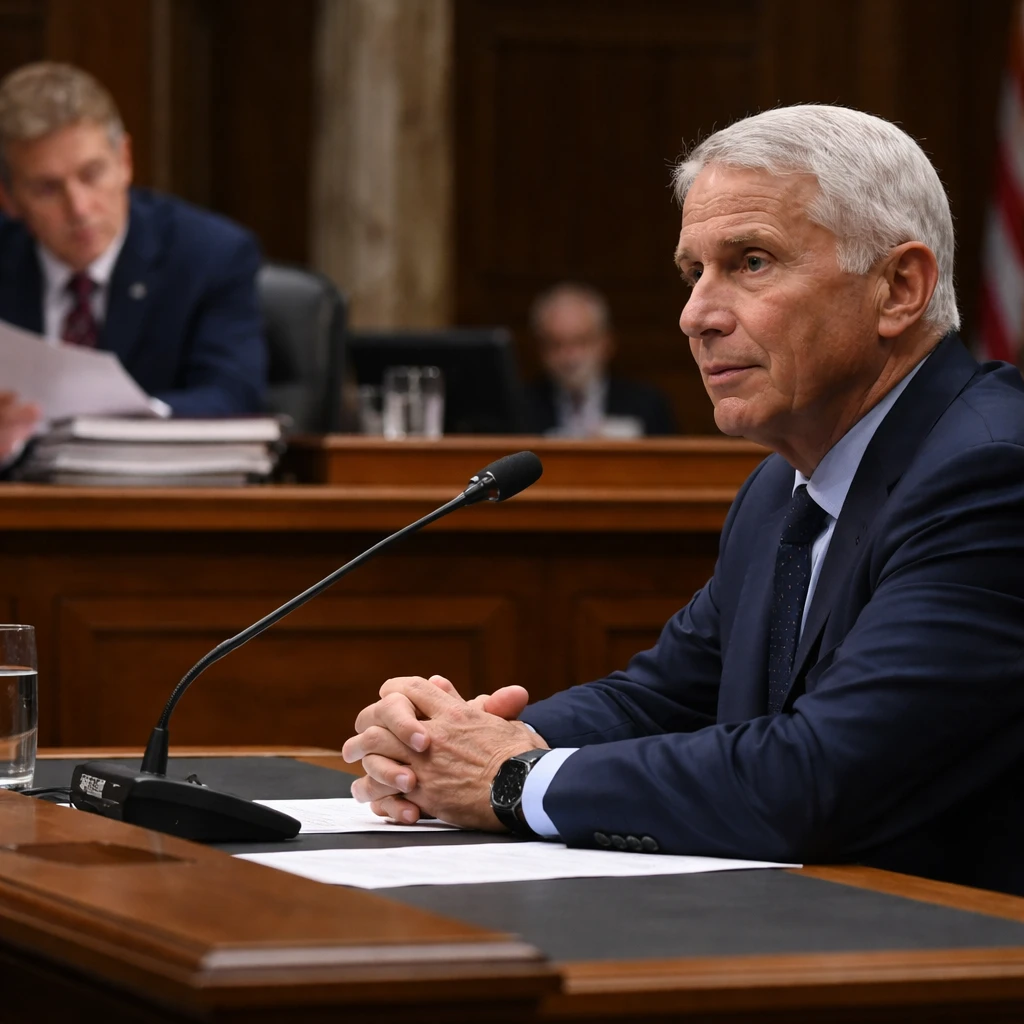
Anthony Fauci invoked his Fifth Amendment right at a Senate Homeland Security and Government Affairs Committee hearing on Wednesday, declining to testify about his role in the U.S. Covid-19 response. Fauci said the hearing is intended to push him into making statements that could be used against him, and singled out Senator Rand Paul, who chairs the committee and has sought to hold him legally accountable. Paul has released portions of Fauci's personal diaries and reiterated claims that Fauci hid evidence pointing to a laboratory origin for the virus.

Fauci Pleads the Fifth at Senate Covid Hearing, Citing Risk of Self-Incrimination
Summarize with
ChatGPT Perplexity Claude Grok Gemini

Key Points

  • Anthony Fauci invoked his Fifth Amendment right and refused to testify at a Senate committee hearing about his role in the U.S. Covid-19 response.
  • Senator Rand Paul, who chairs the Senate Homeland Security and Government Affairs Committee, has been a persistent critic and released portions of Fauci's personal diaries last week.
  • The dispute centers on the origins of the pandemic and accusations by Senator Paul that Fauci concealed evidence suggesting a lab origin; the episode touches on government oversight and public health governance.

Anthony Fauci declined to provide testimony at a Senate committee hearing on Wednesday, invoking his constitutional right under the Fifth Amendment against self-incrimination.

The former director of the National Institute of Allergy & Infectious Diseases framed the proceeding as an effort to compel him into making statements that could be used to pursue legal consequences. In his remarks, Fauci said he believed the motive behind the summons was to trigger an incriminating comment. He specifically accused Senator Rand Paul of seeking to elicit such remarks, saying: "The only conclusion I can reach, is that the sole reason he is calling me before this committee, is to get me to say something - anything - that would allow him to meet his repeated pledges to get me behind bars."

Fauci, who is now retired, played a prominent public role during the U.S. response to the coronavirus while leading the infectious diseases institute. His decision not to testify came amid a sustained public dispute with Senator Paul, a long-standing critic who chairs the Senate Homeland Security and Government Affairs Committee.

Last week, portions of Fauci's personal diaries were released by Senator Paul. The diaries included Fauci's private reflections on the pandemic response and the heightened public scrutiny he experienced. The release of those diary entries has formed part of the material referenced in the committee's inquiry.

The pair have a history of public confrontations over the origins of the pandemic. At the hearing on Wednesday, Senator Paul reiterated his accusations that Fauci concealed evidence suggesting the disease originated from a laboratory in Wuhan, China. Fauci's invocation of the Fifth Amendment stopped him from answering committee questions on those points.

The hearing highlighted the deep and ongoing tensions between public officials involved in pandemic-era policymaking and elected overseers pressing for accountability. Fauci's refusal to testify under the Fifth leaves open legal and political questions cited by both sides, though the formal evidentiary record in the hearing will reflect the decision not to answer on the grounds of self-incrimination.

Risks

  • Legal uncertainty for Fauci stemming from the committee's effort to extract testimony - this carries potential consequences for individuals and could affect public-sector accountability discussions (impacts public sector and legal oversight).
  • Heightened political polarization as oversight proceedings and the release of personal diaries amplify disputes over pandemic-era decisions - this may affect public trust in health institutions (impacts healthcare and government relations).
  • Ongoing uncertainty over the origins of the pandemic, underscored by renewed allegations and competing narratives, prolongs scrutiny of scientific and public-health leadership (impacts public health and related research communities).

More from Economy

U.S. Mortgage Rates Rise Near Yearly Highs as Geopolitical Tensions Push Yields Up Jul 29, 2026 S&P: El Niño Unlikely by Itself to Prompt Sovereign Rating Cuts Jul 29, 2026 Uniper signs 20-year pact for Canadian LNG from Ksi Lisims project Jul 29, 2026 U.S. Futures Tick Up Ahead of Fed Decision as Chip Stocks Falter and AI Spending Comes Under Scrutiny Jul 29, 2026 JPMorgan Maps S&P 500 Reaction to Today's Fed Decision, Lays Out Probabilities Jul 29, 2026