
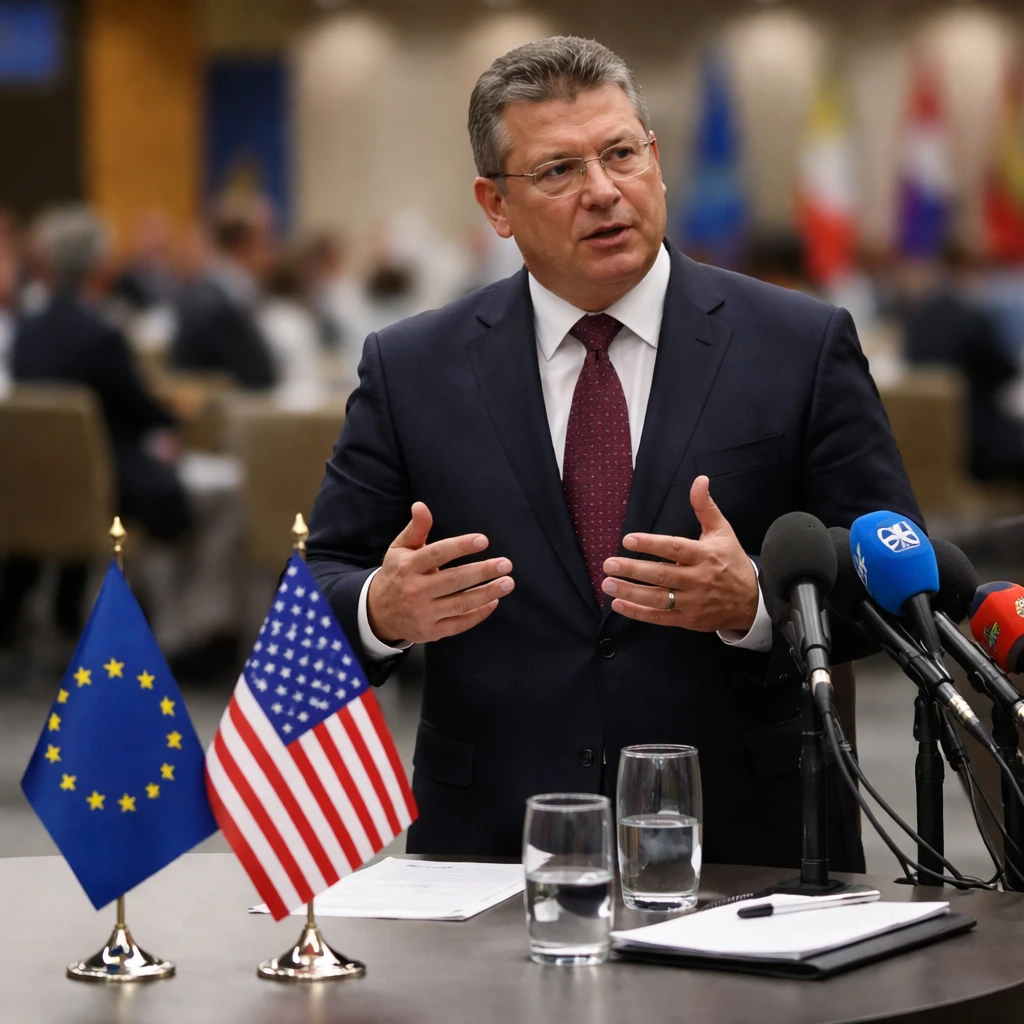
The European Union is pressing for strict adherence to the Turnberry framework in any trade agreement with the United States, insisting that tariffs should not exceed a 15% all-inclusive ceiling, EU Trade Commissioner Maros Sefcovic said on Thursday after attending an OECD ministerial meeting.
Speaking to reporters, Sefcovic emphasized the EU's position on the tariff cap.
"This is absolutely crucial for us that at the end of the process we would end up well within the Turnberry parameters. And for us this is 15% all inclusive,"
His remarks followed a proposal from the U.S. administration to impose duties as high as 12.5% on imports from 60 countries, including members of the EU. The U.S. proposal is reportedly tied to determinations that those countries had not sufficiently reduced trade in goods produced with forced labor. The EU has rejected that finding.
Sefcovic also voiced confidence about the political ratification process in Brussels. He said he expected members of the European Parliament to endorse the agreement, underlining the EU's view that political commitments should be respected.
"I believe that the European Parliamentarians will approve Turnberry agreement with US: ’A deal is a deal,’"
Summary
The EU insists any trade deal with the United States adhere to the Turnberry limit of a 15% all-inclusive tariff cap, EU Trade Commissioner Maros Sefcovic said on Thursday after an OECD ministerial meeting. His statement came amid a U.S. proposal to impose tariffs up to 12.5% on imports from 60 countries, including the EU, based on findings related to goods made with forced labor; the EU rejects that finding. Sefcovic expressed confidence that the European Parliament would approve the Turnberry agreement.
Key points
- The EU is firm that any agreement with the U.S. must remain within Turnberry parameters, defined as a 15% all-inclusive tariff cap - affecting cross-border trade policy and import-exposed industries.
- The U.S. has proposed tariffs as high as 12.5% on imports from 60 countries, including EU members, based on findings related to trade in goods produced with forced labor - a move with potential implications for trade negotiations and markets sensitive to tariff risk.
- EU Trade Commissioner Maros Sefcovic expressed confidence that the European Parliament will approve the Turnberry agreement, framing the deal as a binding political commitment.
Risks and uncertainties
- Policy divergence - The U.S. proposal to levy tariffs up to 12.5% introduces a point of contention that could complicate negotiations; this uncertainty could affect sectors reliant on cross-border supply chains.
- Disputed findings - The EU has rejected the U.S. determination regarding insufficient reductions in trade of goods produced with forced labor, creating a factual disagreement that may delay or alter the shape of any agreement.
- Political approval - Although Sefcovic expressed confidence that European Parliamentarians will approve the Turnberry agreement, formal ratification remains a step with inherent political risk.
The EU's public insistence on a clear numerical ceiling - portrayed by Sefcovic as non-negotiable - sets a defined negotiating parameter ahead of any formal conclusion of talks. His comments link the diplomatic talks to both a specific tariff figure and to political expectations inside the EU institutions.
Beyond the immediate diplomatic exchange, the dispute over the U.S. finding on goods produced with forced labor highlights an evidentiary disagreement between the two sides; the EU's rejection of that finding is integral to its negotiating posture. Sefcovic's dual emphasis on the Turnberry cap and on anticipated parliamentary approval frames the EU's approach as both technical and political.