
Economy May 29, 2026 10:22 AM

ECB official urges swift response to Iran conflict's economic fallout

Dimitar Radev warns delay could be costlier and calls on governments to bolster fiscal and structural measures

By Leila Farooq
Share
Twitter Reddit Facebook LinkedIn

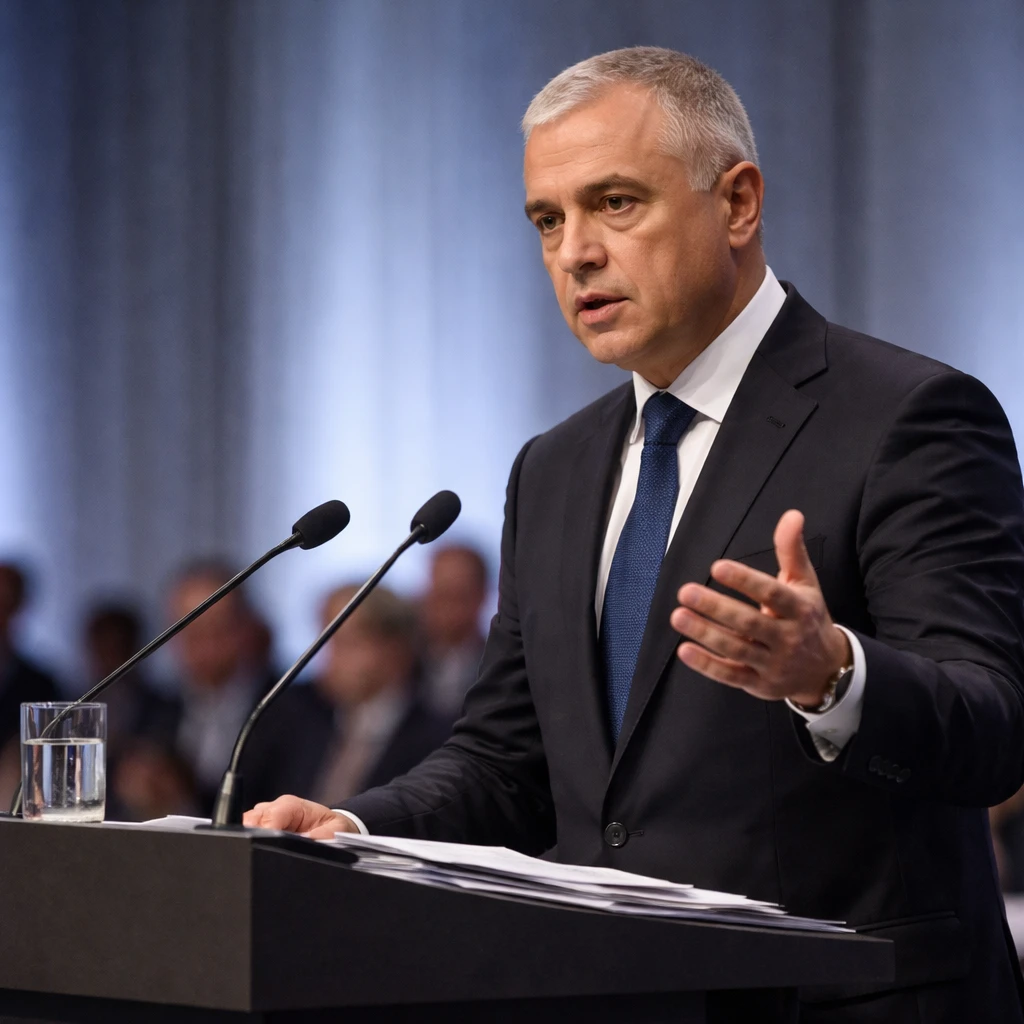
European Central Bank Governing Council member Dimitar Radev said in Reykjavik that the ECB should not postpone addressing economic consequences from the Iran war, arguing that waiting too long could prove more costly than acting sooner. He emphasized the asymmetric tradeoff when inflation expectations risk becoming less firmly anchored and urged governments to complement monetary action with spending, investment and reforms.

ECB official urges swift response to Iran conflict's economic fallout
Summarize with
ChatGPT Perplexity Claude Grok Gemini

Key Points

  • ECB member Dimitar Radev warned in Reykjavik that delaying a policy response to the Iran war's economic fallout could be more costly than acting sooner - impacts: financial markets, monetary policy decisions.
  • The Governing Council is weighing a first rate hike since 2023 after the Middle East conflict pushed inflation above the 2% target - impacts: borrowing costs and market expectations.
  • Radev urged governments to back monetary policy with fiscal measures, investment, energy efficiency and structural reforms to strengthen resilience amid repeated supply shocks - impacts: public budgets, energy sector, broader economy.

Key message

European Central Bank Governing Council member Dimitar Radev told an audience in Reykjavik that the central bank should avoid excessive delay in responding to the economic repercussions of the Iran war. He warned that the potential cost of moving too late could outweigh the cost of taking earlier action.


Context and stance

Radev, who serves as the head of Bulgaria's central bank and is a member of the ECB's Governing Council, framed the current policy choice as asymmetric. He said the tradeoff is not balanced at the moment because there is a risk that inflation expectations could become less firmly anchored, raising the stakes of delayed intervention.


Policy debate within the ECB

Policymakers appear to be converging on the prospect of a first interest rate increase since 2023 following a surge in inflation tied to the Middle East conflict that pushed inflation well above the ECB's 2% target. Within the Governing Council there are differing views: some officials favor waiting to see how spillover effects unfold before taking action, while others have voiced concern about the potential impact of policy moves on economic growth.


Call for coordinated response

Radev stressed that monetary policy should not be the sole instrument used to manage the fallout. He urged national governments to support the ECB's efforts through targeted spending measures and economic reforms. He specifically highlighted fiscal policy, investment, improvements in energy efficiency and structural reforms as important contributors to economic resilience in the face of repeated supply shocks.


Implications

The remarks underline the tension facing policymakers between the need to address inflationary pressures linked to the Middle East conflict and the desire to avoid undermining economic growth. Radev's comments call for a coordinated mix of monetary and fiscal actions, together with investment and structural measures, to bolster the economy against continued supply disturbances.

Risks

  • Waiting too long to respond risks higher costs if inflation expectations become less firmly anchored - sectors affected: financial markets, consumers.
  • Divergent views among policymakers create uncertainty over timing of a rate increase, with some worried about spillover effects and others about risks to growth - sectors affected: banking, corporate borrowing.
  • Reliance on monetary policy alone may be insufficient to withstand repeated supply shocks without complementary fiscal and structural measures - sectors affected: public finances, energy and investment-driven industries.

More from Economy

House Republicans Advance $95 Billion Budget Blueprint Centered on Iran War Aid and Voter ID Overhaul Jul 16, 2026 Marex CEO Says Markets May Be Underestimating Risk From Strong El Nino Jul 16, 2026 Kansas City Fed’s Schmid Says Inflation Is Broad-Based and Not Clearly Temporary Jul 16, 2026 Kansas City Fed's Schmid Calls Ongoing Inflation 'Concerning' as Policy Focus Jul 16, 2026 Teleprompter Operator Faces Civil Case After Six-Figure Kalshi Winnings Jul 16, 2026