
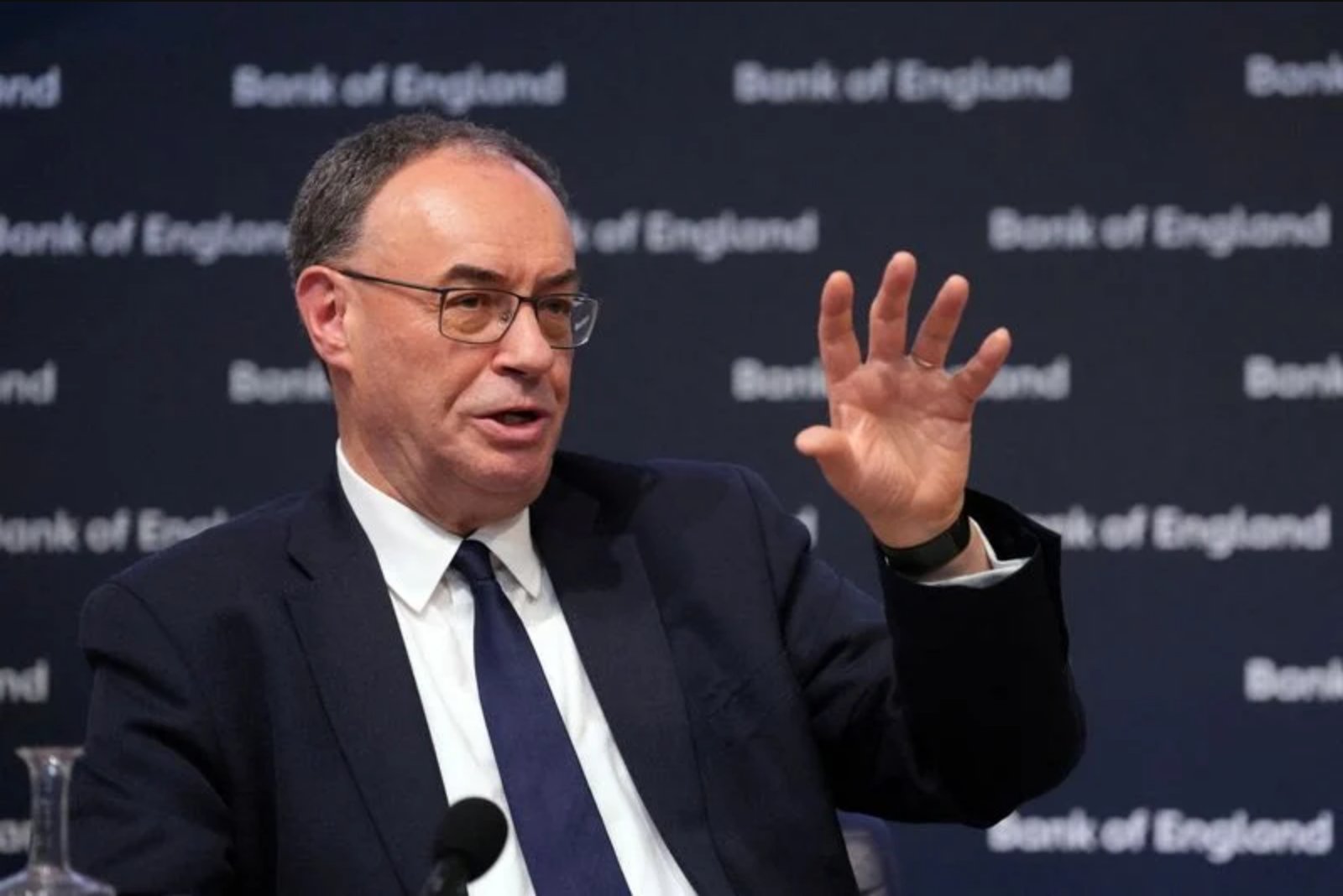
Sintra, Portugal, July 1 - The Bank of England is not currently positioned to contemplate a reduction in interest rates, Governor Andrew Bailey said on Wednesday at a European Central Bank conference in Sintra.
Bailey noted that some had anticipated rate cuts this year in light of signs of a softening economy, but he said that prospect had been removed from consideration. "There was an expectation that we would cut rates this year. That’s not unreasonable in the context of a softening economy. That was off the table in March, and it’s off the table at the moment," he said.
His comments came as oil prices eased back toward levels seen before the Iran conflict, but Bailey cautioned against drawing quick policy conclusions from that development. After the Bank of England kept rates unchanged last month, he reiterated the view that the central bank did not need to rush into adjustments and could afford to observe how the earlier spike in oil costs - which is now receding - worked its way through the British economy.
Bailey also pointed to the challenge of interpreting energy market signals. He said futures prices for oil and gas had failed to serve as reliable predictors, complicating decisions about the path of monetary policy. In response to a question about his least-favourite piece of data, Bailey said:
"One (data point) that we’re wrestling with at the moment, and have wrestled with for years ... is oil and gas futures prices. They are terrible indicators in history. The problem is that everything else is also a terrible indicator."
Other panellists at the conference voiced similar caution about committing to future policy paths. Among those speaking alongside Bailey, new Federal Reserve Chair Kevin Warsh expressed opposition to providing forward guidance on policy plans.
Market and economic expectations remain mixed. Most economists polled expect, by a slim margin, that the Bank of England will leave rates unchanged over the year. Financial markets, by contrast, assign roughly a 75% probability to a single quarter-point rate increase, a downshift from the pricing of three hikes that prevailed shortly after the conflict began.
Bailey’s remarks underline the central bank’s current stance of patience amid uncertain signals from energy markets and other data. The BoE appears prepared to wait and assess how the retreat in oil prices and other incoming information affect inflationary pressures and economic momentum before making fresh policy moves.
Contextual note - The comments reflect the BoE governor's public remarks at the Sintra conference and restate the central bank’s recent inclination to hold policy while monitoring evolving indicators.