
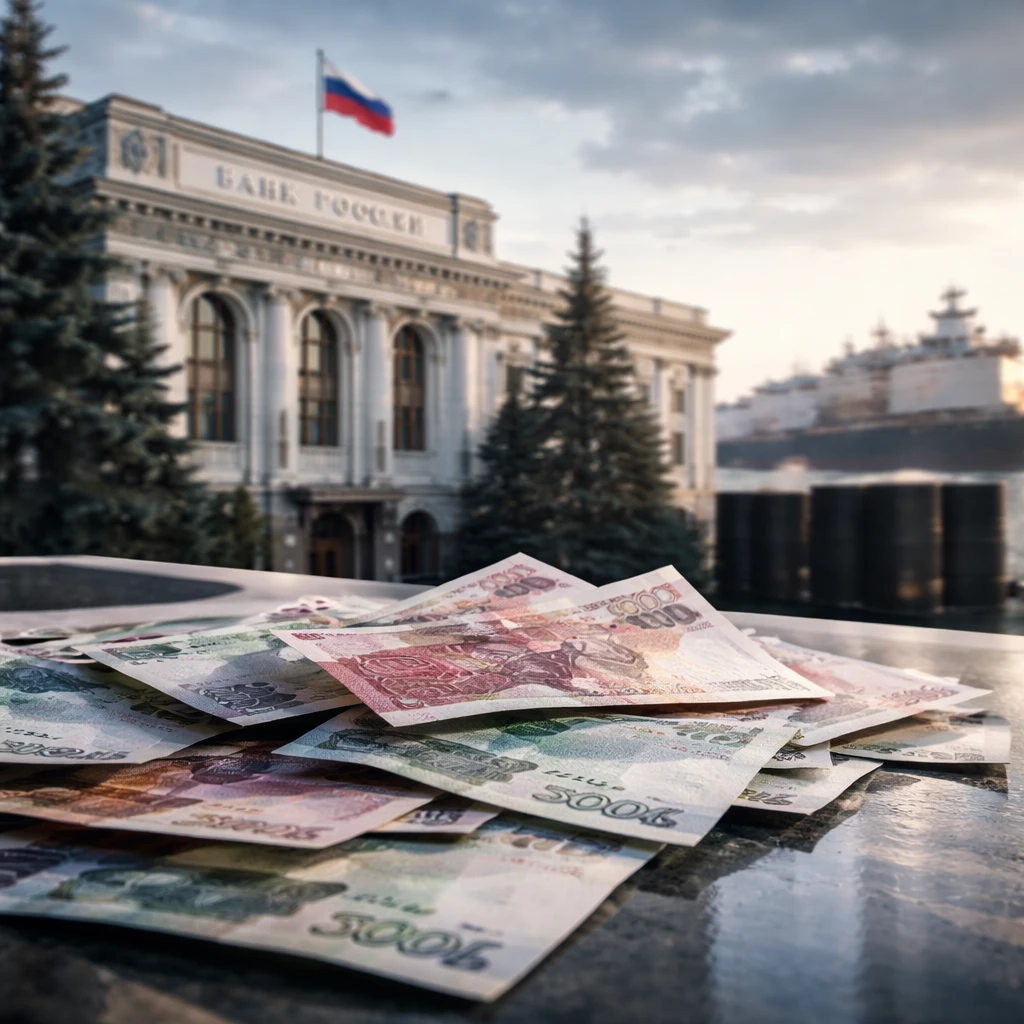
The central bank announced on Monday a sizable reduction in its routine foreign exchange sales for the second half of 2026, setting a new daily ceiling of 0.58 billion roubles, equivalent to $7.37 million. That figure represents a sharp decline from the 4.62 billion roubles per day that the bank recorded for the first half of the year.
The change amounts to a significant drawdown in one element of official support for the rouble. The central bank's foreign exchange operations account for up to one-tenth of the country's entire forex market. Those activities encompass the bank's own transactions and separate interventions carried out on behalf of the finance ministry for the National Wealth Fund fiscal reserve.
Under the finance ministry's "budget rule," the ministry purchases foreign currency to replenish the National Wealth Fund when oil prices are elevated. Russian officials have indicated that the current period of higher oil prices may not persist, a consideration driving steps to reinforce the country's fiscal position.
For the first days of July, the central bank and the finance ministry plan a different operational profile. Between July 1 and July 6, foreign currency purchases conducted jointly will total 9.34 billion roubles per day, up from the current combined pace of 5.28 billion roubles per day. The finance ministry said it will disclose its new operational volume on July 3.
The rouble has shown market sensitivity to moves in oil prices. Last week the currency fell 8% against the U.S. dollar following a decline in global oil prices. Oil remains Russia's principal export commodity, and changes in its price feed directly into currency flows and fiscal calculations.
Market commentary cited in official communications notes that many analysts consider the rouble to be overvalued. Business representatives have urged authorities to allow the currency to weaken, arguing that a softer rouble would raise export receipts and increase revenues for the state budget.
Contextual note: The central bank's reduced daily sales in the second half of 2026 cut the direct level of forex market intervention provided by the institution, while planned early-July purchases increase combined official buying activity for a short window. Details on the finance ministry's longer-term operational volumes will follow its July 3 announcement.