
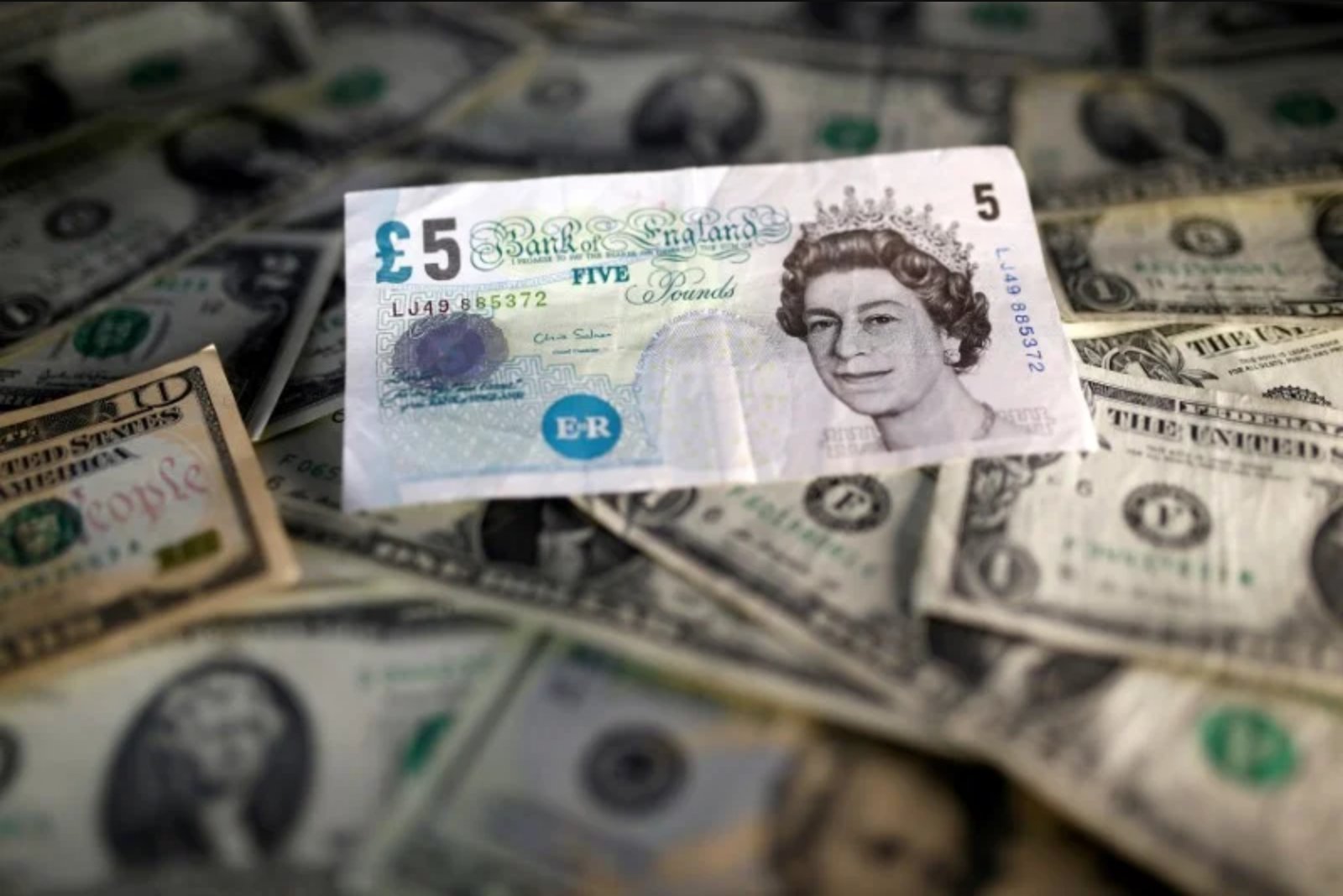
Sterling posted small gains on Tuesday as traders paused to reconsider the pace of the dollar's advance ahead of a key U.S. inflation release, while the euro also picked up ground. Activity in both crosses was driven more by dollar dynamics and oil market developments than by country-specific news.
GBP/USD traded at 1.3375, up 0.20% as of 06:56 ET (10:56 GMT), moving inside a session range between 1.3342 and 1.3381. EUR/USD advanced 0.13% to 1.1395, within a daily band of 1.1378 to 1.1400.
Dollar-side pressures remained the dominant influence on both pairs. Momentum had swung back in favour of the greenback after the United States reimposed a blockade in the Strait of Hormuz, a development that helped lift Brent crude to $84 a barrel and supported demand for the dollar.
"Short-term risks remain on the upside for the dollar," said Francesco Pesole, FX strategist at ING. "Still, both oil (Brent is at $84/bl this morning) and the USD are showing reluctance to fully price back in another supply shock." Pesole also highlighted that overall U.S. crude inventories stood at 730.8 million barrels as of July 3, a level he noted as the lowest since 1984.
Market attention was focused on U.S. June consumer price index data due later in the day. Consensus expectations point to a headline reading that eases month-on-month, reflecting lower energy prices, while a 0.2% month-on-month rise in core CPI would, according to analysts cited in the session, do little to remove hawkish pricing in Fed rate expectations.
Markets were assigning roughly a 50% probability to a rate hike at the July FOMC meeting, with around 43 basis points of additional tightening priced in by the end of the year. Fed Governor Christopher Waller cautioned on Monday that a further rate increase could be necessary if core inflation remains elevated.
Several Fed officials were due to speak, with Chair Kevin Warsh beginning his first House testimony and Governors Barr, Goolsbee, Cook and Bowman also scheduled to deliver remarks, adding to the potential for market-moving commentary.
Sterling's modest rise in the session was driven more by broad dollar moves than any U.K.-specific developments. There were no market-moving economic releases or policy comments from U.K. officials during the trading period, and the pound largely moved in line with the wider dollar trajectory.
For the euro, short-term rate differentials versus the U.S. are providing a degree of support. The two-year swap rate gap has narrowed by roughly 15 basis points since the start of July, as a rebound in oil prices coincided with fading bets on additional European Central Bank hikes. That narrowing has given EUR front-end rates some room to recover.
Market pricing currently implies about 46 basis points of ECB tightening by year-end. "We aren’t convinced this rate gap can offer sustainable support to EUR/USD if energy prices continue to rise," Pesole said, signalling concern that rising energy costs could erode the current cushion for the euro.
ING's base case remains that the dollar will weaken through the remainder of 2026, but that outlook is conditional on de-escalation in the Gulf and a shift toward a more dovish Fed. The firm identified the principal threat to that scenario as another, sustained jump in energy prices.
Pesole warned that should Brent crude climb back toward the $90 to $100 a barrel range and Dutch TTF natural gas rise to the region of 55-60 per megawatt-hour, a slide in EUR/USD toward 1.10 would become "a tangible risk." On the dollar front, he said that the DXY index could move quickly toward 102.0 if the Strait of Hormuz blockade remains in place.
In short, near-term FX moves remain tied to developments in energy markets and geopolitical tensions, with the U.S. CPI release and a stream of central bank-related speeches set to provide further directional cues for the dollar, sterling and the euro.