
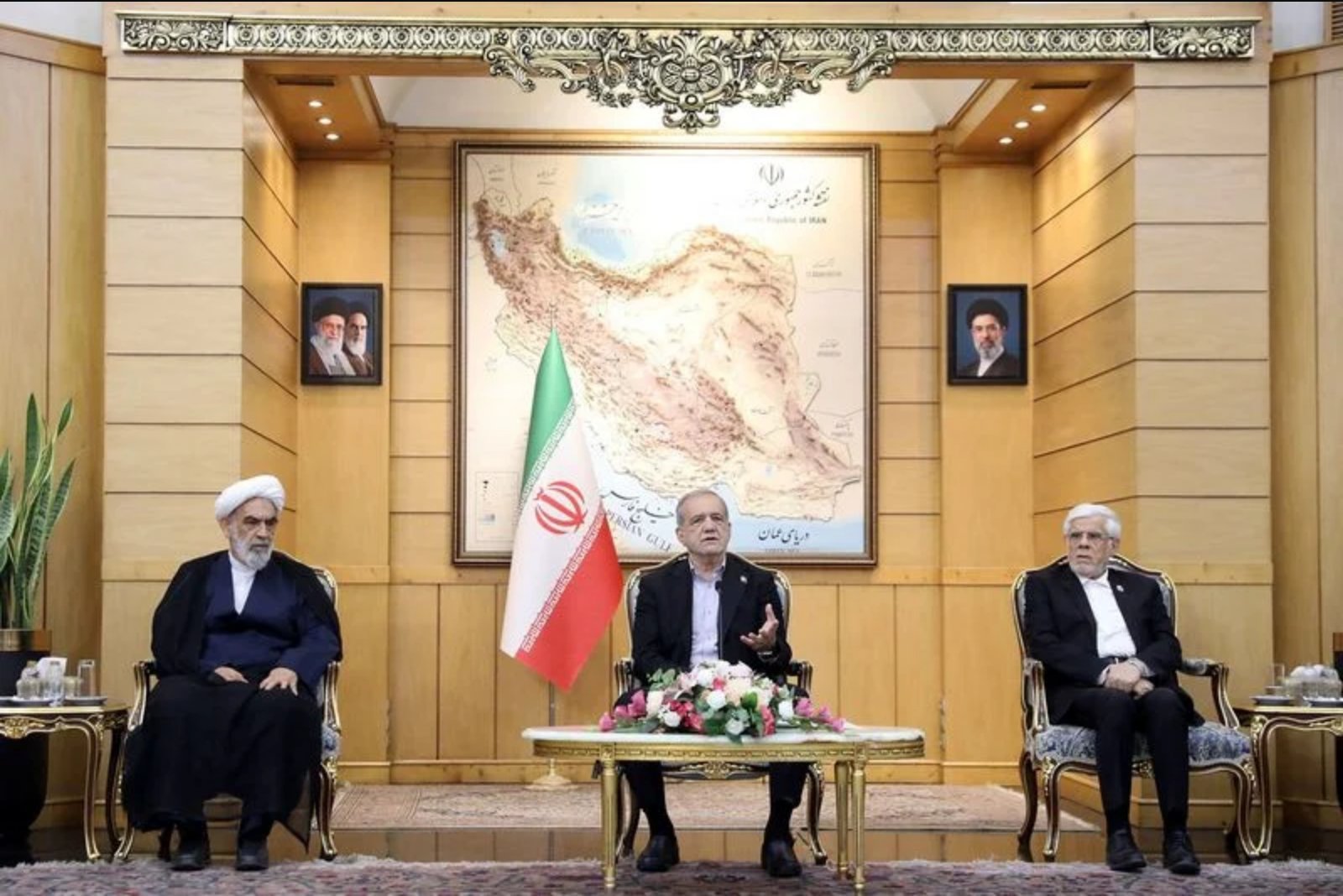
A senior Iranian official said on Tuesday that Iran could permit Gulf shipping to resume passage through the Strait of Hormuz within days if the United States lifts its blockade, calling the United Nations General Assembly meetings a "golden opportunity" to restore diplomacy between the two countries.
The official indicated that Iran's delegation heading to the UN carries full authority to reopen dialogue with Washington, but added that no direct meetings between the two presidents are planned during the assembly. Both presidents are due to attend the General Assembly in New York, marking the first time they will share the same international forum since the United States launched "Operation Epic Fury" in February.
According to the official, Iran sent its most recent proposal to Washington through intermediaries on September 16. He said the United States must make an explicit diplomatic overture - to announce that it seeks a diplomatic resolution, formalize that intention, and agree a timeline for moving the process forward - before Iran would take reciprocal steps to lift its restrictions on shipping through the Strait.
Separately, US Secretary of State Marco Rubio said on television that the United States was open to talks with Iran at the General Assembly, noting that discussions would be welcomed particularly if they offered the prospect of reaching a positive outcome and advancing stated objectives.
Gulf leaders are gathering in New York this week for meetings with the US president. He is scheduled to meet with leaders of the six Gulf Arab states - Bahrain, Kuwait, Qatar, Oman, Saudi Arabia and the United Arab Emirates - countries that share a strong interest in restoring normal shipping through the Strait of Hormuz but remain cautious about empowering Iran.
All of those Gulf states except Oman host large US military bases that have been targeted repeatedly during the conflict, a dynamic that has strained long-standing security ties with Washington. Saudi Arabia, the region's largest oil producer, has become more deeply involved in the conflict this month as Houthi forces aligned with Iran have advanced in Yemen, routing forces of a Saudi-backed government and threatening Saudi oil exports through the Red Sea.
Markets saw some relief on Tuesday after sources indicated that Saudi Arabia had restarted operations at its East-West Pipeline and could resume exports from the Red Sea port of Yanbu within hours, although at reduced volumes. The East-West Pipeline serves as Saudi Arabia's primary alternative route to bypass disruptions in the Strait of Hormuz. It had been shut down after attacks on September 10 that Riyadh blamed on Iran-aligned actors.
Houthi forces in Yemen have been pursuing control of strategic terrain that would strengthen their ability to threaten maritime routes. They are pushing to seize the heights of the Kahboub Mountains, positions that overlook the western coastline and Bab el-Mandeb - the southern gateway to the Red Sea - potentially improving the Houthis' capacity to exert influence over the strait and coastal areas.
The rugged topography of the Kahboub area also presents tactical advantages for the Houthis, enabling fighters to remain more concealed from drones and air strikes than they would be on the coastal plains. The recent fighting has already displaced more than 130,000 people during the month, and the UN refugee agency warned that tens of thousands more could be forced from their homes if the campaign continues.
Despite repeated requests from Saudi Arabia for US military intervention against the Houthis, the United States has so far declined to re-engage directly. A separate report indicated that planned US strikes against the Houthis were called off at the last minute on Sunday after forces had begun preparing munitions.
Regional efforts to reduce tensions are appearing alongside the heightened security concerns. A proposal from Qatar is reportedly on the table in discussions with the Gulf states and the United States. The Qatari proposal seeks a regional security framework that would bring Iran and the Arab Gulf states into a common architecture, according to statements made by Qatar's prime minister during a forum in New York.
That Qatari official said any such arrangement would need to include security guarantees for the Gulf states and expand economic interdependence with Iran. Another regional source indicated that Iran is reviewing the Qatari proposal.
Meanwhile, the intensifying campaign in Yemen continues to affect regional stability and maritime commerce. The Houthis' focus on strategic heights and control of maritime chokepoints could have lasting implications for shipping, insurance costs, and energy markets if the situation does not de-escalate. The humanitarian toll from the fighting, reflected in the recent large-scale displacement, adds another layer of uncertainty to the conflict environment.
As leaders converge at the UN General Assembly, the narrow window for renewed diplomacy and potential practical steps to reopen vital shipping lanes remains open but conditional. Tehran has signaled readiness to engage if Washington first formalizes a diplomatic intent and agrees to a timeline, while Gulf states weigh the balance between restoring maritime commerce and preserving regional security arrangements.