
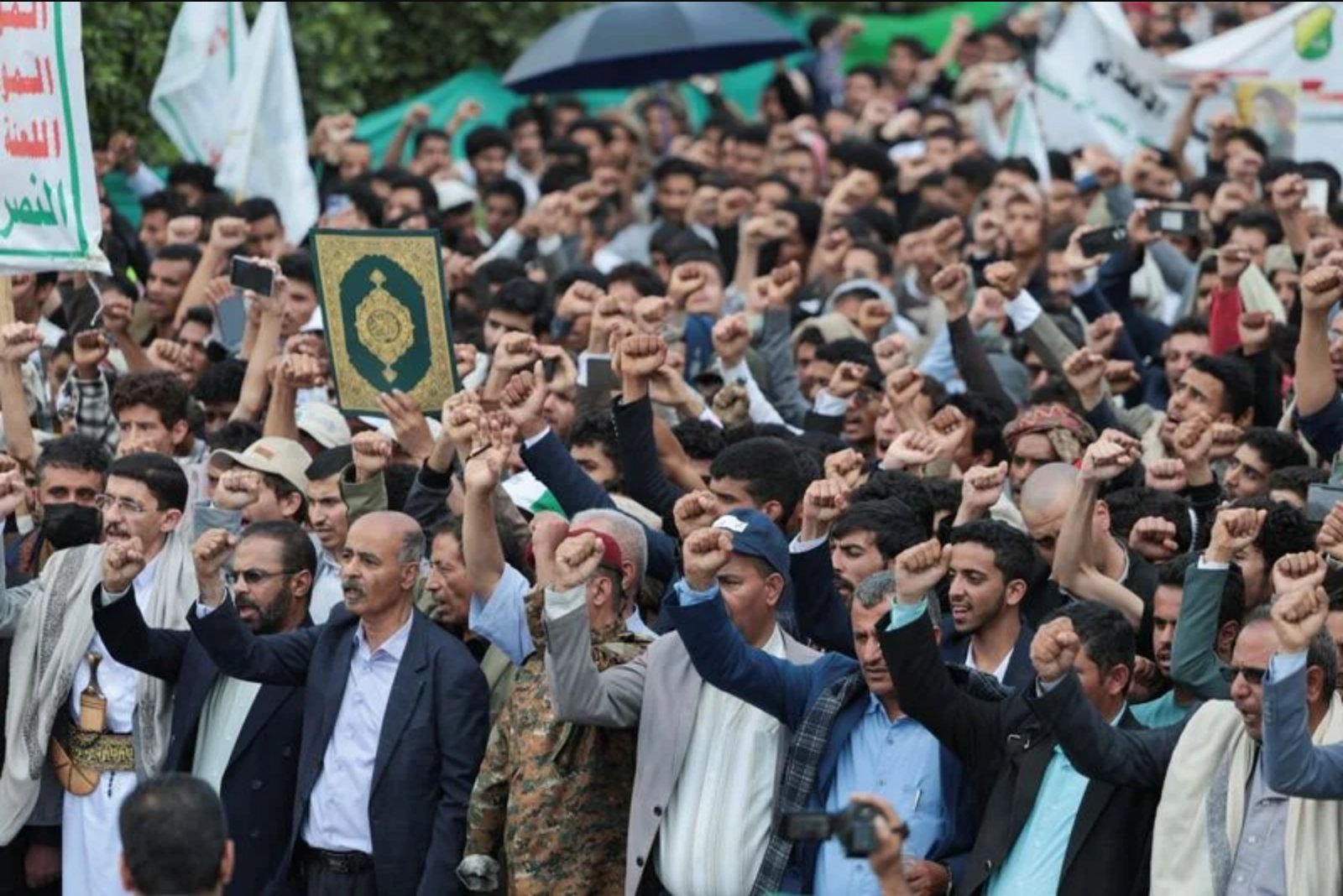
On July 15, missiles launched by Yemen's Houthi movement struck targets in Saudi Arabia after the group accused the kingdom of bombing an airport it controls. The attack broke a four-year truce between the Iran-aligned militia and Saudi-led forces, bringing an end to a period of relative de-escalation and reigniting concerns about the security of key maritime passages.
Analysts and regional observers worry that renewed hostilities could enable Iran to use its local allies to pressure global shipping routes - most notably by threatening to close the Bab el-Mandeb gateway that connects the Red Sea to the Gulf of Aden. Such an action would represent a second major shipping choke point under threat, following the long-standing strategic vulnerabilities of the Strait of Hormuz.
Who are the Houthis?
The Houthis are a political, military and religious movement rooted in northern Yemen and led by the Houthi family. Their followers adhere to the Zaydi branch of Shi'ite Islam. Under the leadership of Abdul Malik al-Houthi - described as highly secretive - what began as a group of mountain fighters grew into an armed force numbering in the tens of thousands. Since the eruption of wider regional conflict following the Gaza war, the group has demonstrated an ability to disrupt global trade and to pose challenges to Israel and Western states.
The movement's rise traced back to domestic discontent and marginalisation in Yemen's north. It evolved from a religious revival for Zaydi Islam in the late 1990s into an organized insurgency that engaged in repeated guerrilla campaigns against the Yemeni state and at times clashed with neighboring Saudi forces.
How the Houthis expanded their power
Political instability in the aftermath of the 2011 Arab Spring provided a pathway for the Houthis to consolidate power. They capitalized on the weakening of central authority and in 2014 captured the Yemeni capital, Sanaa. In response, a Saudi-led coalition of Arab states launched a military intervention the following year, aiming to restore the internationally recognised government. The intervening years produced intense fighting that devastated civilian life and generated one of the world's most severe humanitarian emergencies.
Across that period, the Houthis advanced their military capabilities, developing and deploying missiles and drones to strike targets in Saudi Arabia and the United Arab Emirates, including energy-related infrastructure. Those capabilities factored into the broader regional dynamics that followed.
Recent attacks on shipping and regional actors
Since the October 7, 2023, attack on Israel by Hamas - and the subsequent intense Israeli military campaign in Gaza - the Houthis have expanded their operations beyond Yemen's borders. They began firing on international shipping in the Red Sea, citing solidarity with Palestinians as their rationale. The group has also launched drones and missiles at Israel, actions that elicited retaliatory strikes by Israel and counterstrikes by the United States.
The Houthi campaign against maritime traffic produced immediate global consequences. Attacks on vessels in the Red Sea disrupted international commerce and forced many shipping operators to reroute around the Cape of Good Hope, taking the longer passage around South Africa to avoid the danger zone.
Relations with Iran
The Houthis have cultivated links with Iran, who promotes the movement as part of its so-called Axis of Resistance. However, the exact depth and nature of those ties remain contested. The Saudi-led coalition has repeatedly accused Iran of supplying arms and training to the Houthis, allegations denied by both Tehran and Houthi leaders. Accusations have extended to claims that Lebanon's Hezbollah assists the movement, a charge that the accused parties reject.
Observers of the conflict note that while the Houthis share political affinities with Iran and Hezbollah, their motivations are primarily driven by domestic agendas. At the same time, U.S. statements contend that Iran has armed, funded and trained the Houthis, with alleged assistance from Hezbollah. The Houthis themselves deny serving as a proxy and maintain that they develop their own weaponry.
Ongoing war and humanitarian fallout
The conflict, which began in earnest when the Houthis seized Sanaa in late 2014, prompted Saudi Arabia in March 2015 to lead a coalition intervention aimed at rolling back Houthi gains and supporting the Saudi-backed government. Over time, the Houthis entrenched control over much of northern Yemen and several major population centres, while the internationally recognised government established itself in Aden.
After years of intense fighting and widespread civilian suffering, the United Nations brokered a truce in 2022. The recent missile strikes and the breakdown of that ceasefire underscore the fragility of the diplomatic respite and the persistent potential for renewed large-scale conflict.
Implications
The resumption of attacks is likely to reverberate beyond Yemen's borders, affecting shipping, energy and logistics sectors already sensitive to disruptions in key maritime corridors. Markets and companies reliant on uninterrupted passage through the Red Sea may face higher transport costs and route adjustments if threats to the Bab el-Mandeb escalate. The humanitarian crisis inside Yemen also remains acute and unresolved, a core factor shaping both local dynamics and international responses.