
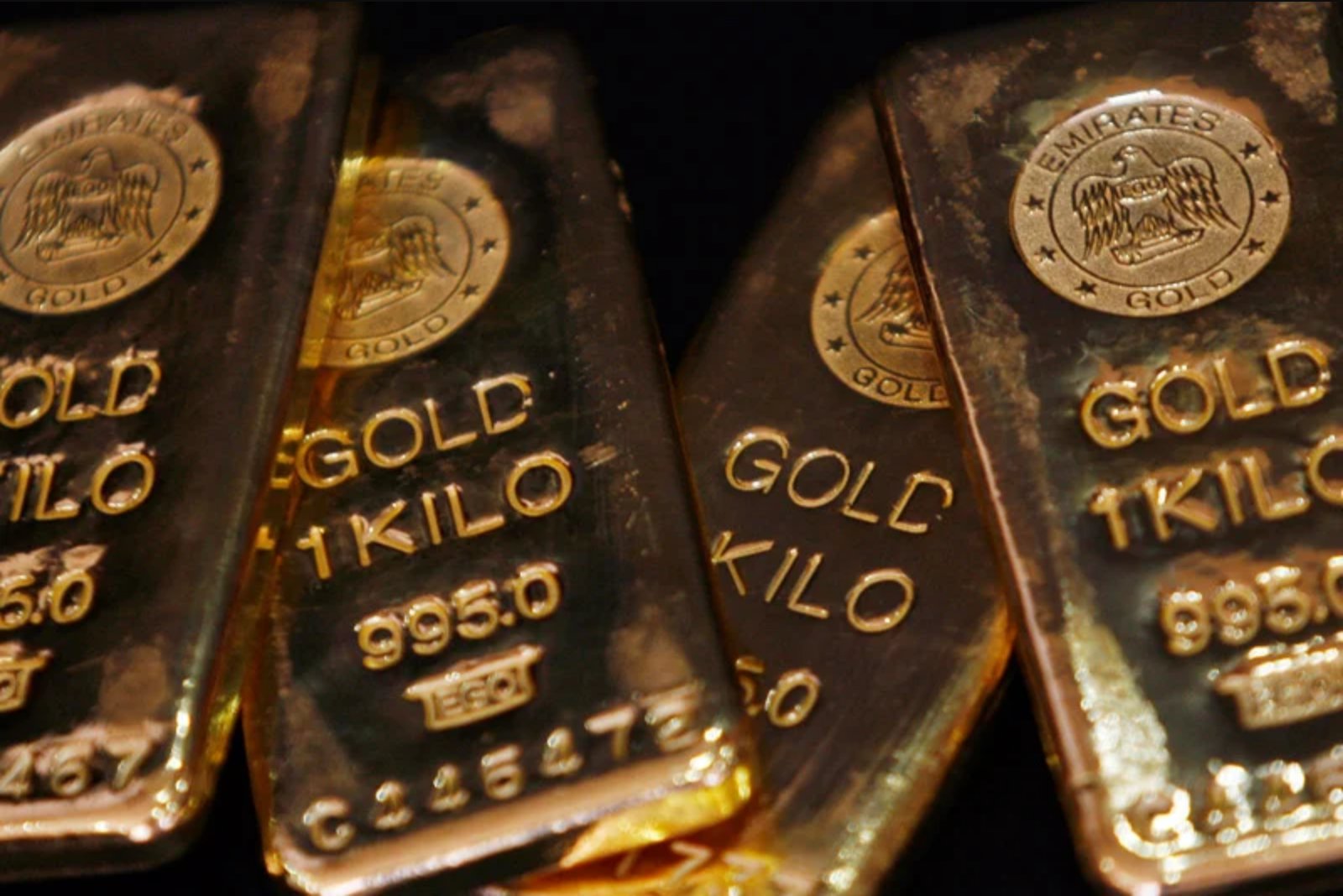
Gold prices showed little movement on Tuesday following a decline of more than 1% in the prior trading session, as renewed disruption to oil flows in the Middle East fueled stronger market bets that the Federal Reserve will raise interest rates this week.
At 22:06 ET (02:06 GMT), XAU/USD rose 0.2% to $4,306.86 an ounce, while Gold Futures were slightly lower at $4,346.65. Silver (XAG/USD) gained 0.3% to $63.42 an ounce, and platinum (XPT/USD) was virtually unchanged at $1,764.36. The US Dollar Index climbed to 99.60.
Oil disruption lifts odds of Fed action
Market attention turned to energy after Saudi Arabia shut its East-West pipeline following attacks last week. That pipeline had been used to move crude around the Strait of Hormuz, and its closure puts millions of barrels per day at risk, at a time when global markets are already seeking additional supplies. The resulting rise in oil prices has raised concerns that inflation could remain elevated, increasing the probability that the Fed will tighten policy.
Markets were pricing roughly a 92% probability of a Federal Reserve rate increase this week, reflecting the impact of higher energy costs on inflation expectations. Rising borrowing costs are traditionally negative for gold because bullion yields no interest, making income-generating assets relatively more attractive when rates climb.
The renewed inflation risk has also pushed Treasury yields higher. The 10-year U.S. Treasury yield briefly touched 5% on Monday, marking the first time in almost three years that it reached that level. The move reflected concerns about inflation as well as growing government and corporate borrowing needs.
Gold has fallen more than 3% in September, after trading above $4,600 an ounce in late August. The metal hit a five-week low following the more than 1% drop on Monday, as traders repeatedly adjusted their expectations for the Fed's policy path in response to shifting macro data and energy market developments.
Longer-term demand remains supportive
Despite the short-term pressures from higher oil, yields and a stronger dollar, longer-term investor demand continues to underpin the outlook for bullion. OCBC has revised up its precious-metals forecasts, citing a stronger starting point for prices, improved investment participation and ongoing structural demand that supports the market.
Chez Anbu, head of wealth advisory at OCBC, said gold's strong rebound in August had reversed an earlier softer tone as the macroeconomic backdrop became more supportive. OCBC now projects gold at $4,600 an ounce by December 2026, and has a silver target of $69.70 an ounce.
Gold remains well above the near $4,000 floor that formed during an earlier correction, and improved investment participation together with structural demand continue to provide a foundation for the longer-term case for bullion.
Market snapshot
- XAU/USD: $4,306.86 an ounce (up 0.2% at 22:06 ET / 02:06 GMT)
- Gold Futures: $4,346.65 (marginally lower)
- XAG/USD (Silver): $63.42 an ounce (up 0.3%)
- XPT/USD (Platinum): $1,764.36 (little changed)
- US Dollar Index: 99.60
- Market-implied Fed rate-hike probability: ~92% for this week
- 10-year U.S. Treasury yield: briefly touched 5% on Monday
Short-term forces tied to energy prices and interest rates have pushed bullion lower in recent sessions, but analysts and investors continue to point to structural demand and increased investment participation as supportive elements for the metal over time.