
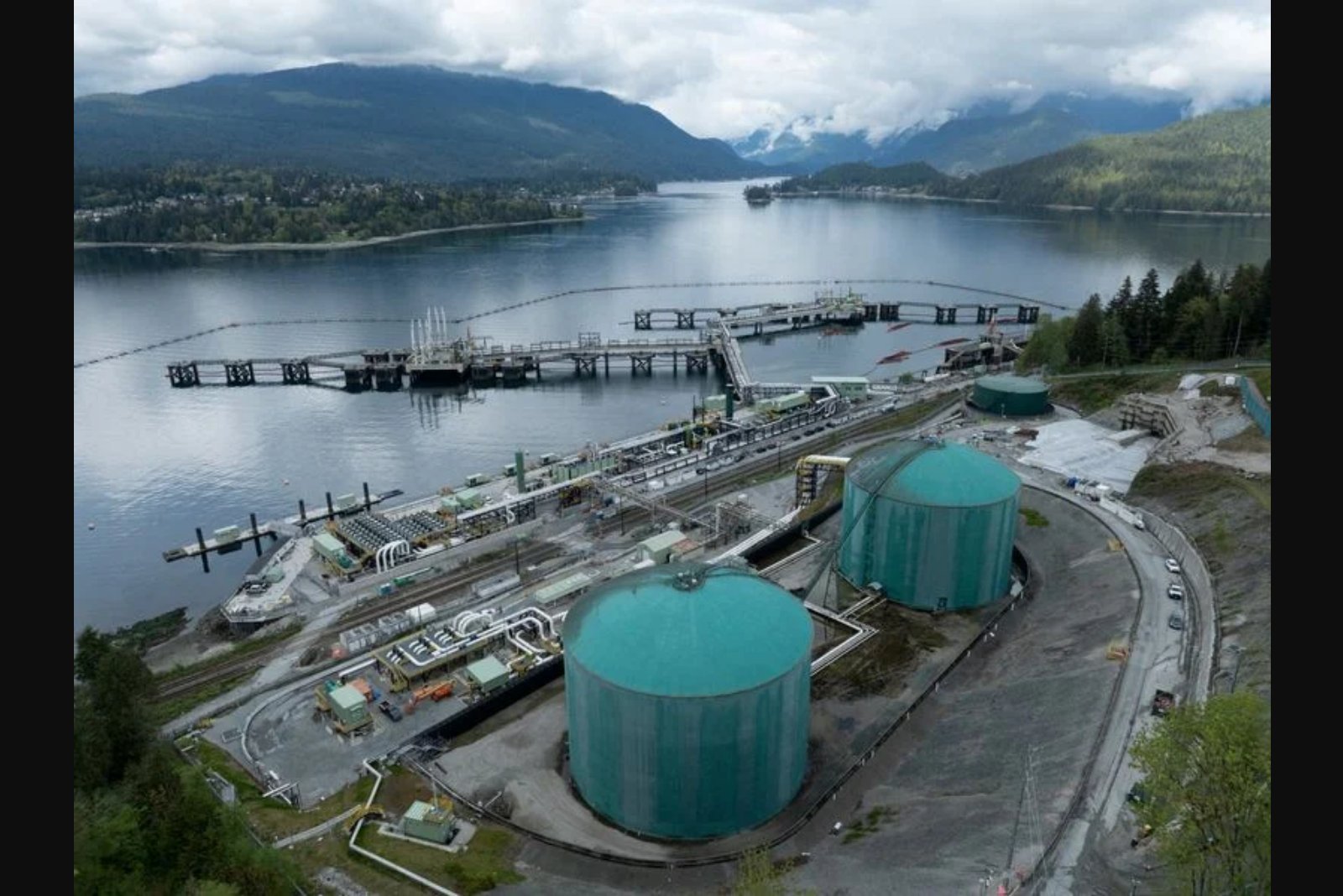
Canadian pipeline operators are promoting a slate of multi-billion-dollar projects designed to move more crude to U.S. refiners and Pacific coast export terminals. Collectively, the proposals - at least six distinct projects under consideration or development - would lift Canada’s export pipeline capacity by about 45%, equal to roughly 2.25 million barrels per day by 2035, according to a Reuters calculation.
Filling those newly proposed pipes, however, would demand a large expansion in Canadian oil supply. To meet the incremental capacity in full, Canada would need to increase output by more than a third by 2034 - a pace that represents almost a doubling of the country's current annual average growth rate. That scale of production growth would require companies to greenlight major new oil sands builds - projects of the kind that have not been initiated in over a decade.
These dynamics highlight a growing disconnect between the pipeline industry's ambitions and the cautious stance of many oil sands producers. Executives at Suncor Energy and Canadian Natural Resources indicated recently that they are not prepared to accelerate plans for significant production increases. Enbridge, one of the pipeline operators behind proposed expansions, said in July it is pausing plans for a second phase of its Mainline expansion after customers did not commit to additional capacity.
"Producers are behaving with discipline," Enbridge’s executive vice-president for liquids pipelines Colin Gruending said on a conference call. "I think they’ll get there. We were just a little too quick off the line here." The comment underlines the gap between pipeline developers, which have been moving to secure future flows, and producer customers who are refraining from immediate capacity commitments.
Canada is a major global energy supplier, ranking as the world’s fourth-largest oil producer, and it ships roughly 90% of its crude output to the United States. Northern Alberta’s oil sands contain vast reserves, yet existing export pipeline capacity is close to full. In the near term, global buyers have shown heightened interest in Canadian crude as disruptions tied to the Iran war shift trade flows. At the same time, the federal government has set an agenda to expand Canada’s role in global energy markets - President-turned-Prime Minister Mark Carney has spoken publicly of building an "energy superpower" - in part to help the country withstand external tariff threats.
Despite that supportive posture, the long-run outlook for demand remains clouded by uncertainty about domestic and international climate policies and evolving geopolitics. That ambiguity is weighing on producers’ decisions about capital allocation and long-term growth.
Of the six pipeline proposals, some are incremental additions that could be completed relatively quickly and at lower cost. Examples include capacity expansions being pursued on the Enbridge Mainline and the Trans Mountain system. But other schemes are far larger and carry more execution risk - most notably the proposed 1-million-barrel-per-day east-west pipeline to the Pacific coast out of Alberta. Projects of that magnitude would require substantial new production as well as additional infrastructure commitments.
About half of the potential new capacity - approximately 950,000 barrels per day - would be directed to U.S. markets. That total includes a proposal to revive portions of the former Keystone XL project in the form of a new crude pipeline.
Historical experience underlines how difficult it can be to marshal the investment and political consensus required to expand pipeline networks. Pipeline development in Canada has often faced political controversy and environmental resistance. More recently, the return of investor focus to shareholder returns, regulatory uncertainty, and a period of reduced oil prices have helped to limit the capital available for the major projects that would materially increase oil sands output.
Canadian oil production rose 4% in 2025 to a record 5.35 million barrels per day, and most analysts surveyed expect a further 3% to 4% growth in 2026. Those growth rates are modest compared with the 8% or higher annual increases seen in the 2000s and 2010s when new oil sands mines were coming online. Annual capital expenditure in Canada’s oil sands peaked at C$35 billion in 2014; by 2024 that figure had fallen to C$14.2 billion, as reported by Statistics Canada.
The last major greenfield oil sands project was Suncor’s Fort Hills operation, which began production in 2018. Since then, companies have largely focused on expanding and optimizing existing facilities rather than starting new mines.
"If you go back in the last decade, we (the oil sands industry) spent $10 billion per year less than we did the decade before that," Imperial Oil CEO John Whelan said at a conference in June. Whelan also estimated that bringing on enough additional production to fill the proposed east-west pipeline - and to deliver the carbon capture infrastructure that the government has said must accompany it - would require more than C$100 billion in capital investment.
Analysts and consultants say the scale of the investment is feasible from a technical standpoint but would require a different investment mindset than the one dominating the sector today. "It’s all doable. It’s stuff the oil sands (industry) has done in the past," said Wood Mackenzie analyst Mark Oberstoetter. "But then you had a different view on long-term oil prices, arguably, and kind of a growth-at-all-means mantra at some of these companies which seems quite different today." The remark underscores how assumptions about long-term pricing and corporate strategy have shifted.
Energy consultancy Novi Labs catalogued a set of oil sands growth projects in various stages of planning. Nineteen named projects could add about 652,000 barrels per day of production by 2037, Novi Labs found. When the consultancy included other projects that companies have flagged as medium- or long-term plans - projects for which no firm timing has been provided - that added another 730,000 barrels per day. Even with those additions, however, total potential growth still comes up short of the pipeline capacity under consideration, leaving a gap of more than 850,000 barrels per day.
Company executives report a brighter tone toward future investment prospects than seen in recent years, crediting Prime Minister Carney’s commitments to accelerate permitting and to soften or revise certain environmental and climate rules. Yet many of the negotiated policy adjustments - including arrangements on carbon pricing, financial incentives, and permitting timeframes - have not been translated yet into final legislation.
"Will we see some big projects moving ahead if we get these investment conditions right? That’s absolutely our objective," said Kendall Dilling, president of the Oil Sands Alliance industry group in an interview. The comment captures the industry’s conditional optimism: firms may proceed with larger projects if the promised regulatory and fiscal environment materializes in practice.
As current plans stand, the mismatch between envisioned pipeline capacity and realistic near-term supply expansion signals a period of strategic choice for Canada’s energy sector. Pipeline developers must weigh the commercial risk of building ahead of committed supply, while producers - mindful of capital discipline, investor expectations, and policy uncertainty - must decide whether to endorse the scale of greenfield oil sands growth needed to realize the pipeline ambitions.