
Overview
President Donald Trump is attempting to convey continued authority as he reaches his 80th year, but recent developments both domestically and abroad are underscoring limits to his leverage. Nearly 17 months into his second term, the administration is encountering judicial resistance, has seen its effort to end the Iran war stall, and is facing weaker public approval. These pressures, combined with signs of dissent among some Republican lawmakers, are contributing to speculation that the president may be on a path toward a status regularly described as lame-duck - a condition he has repeatedly told aides he intends to avoid.
Political posture and intra-party dynamics
Within Republican ranks, Trump’s influence remains consequential. He has played a role in unseating incumbent Republicans in primary contests and has continued to push a forceful trade agenda. At the same time, several members of his party in Congress have shown a willingness to challenge parts of his program. The White House has actively signaled to Republican lawmakers that the president retains the capacity to advance or derail their political prospects, according to a presidential adviser who spoke on condition of anonymity to discuss internal deliberations.
That adviser conceded, however, that an erosion of authority is likely over time. "He’ll naturally start to lose leverage, especially after the midterms," the adviser said, signaling expectations inside the administration that influence could diminish as the political calendar advances.
Privately, the president has expressed concern about public perceptions of becoming irrelevant. A former senior aide, speaking on condition of anonymity, said Trump has mentioned the idea of a third presidential term - a possibility barred by the Constitution - as a rhetorical device aimed at countering worries about sliding into irrelevance.
White House spokeswoman Olivia Wales encapsulated the administration’s public line: "President Trump is the unequivocal leader of the Republican Party who is committed to maintaining Republicans’ majority in Congress."
Health, visibility and public perception
Alongside political calculations, scrutiny of the president’s stamina has intensified. A Reuters/Ipsos poll in February showed that 61 percent of Americans believed Trump had become more erratic with age, while a separate April survey found a majority of respondents concerned about his temperament and mental sharpness. Trump, who is the oldest president sworn into office, plans to mark his 80th birthday by hosting a UFC cage fight on the White House lawn.
Following a period of near-weekly travel earlier in the year, the president has spent most of his time at the White House or his Mar-a-Lago resort in Florida since the initiation of the Iran war on February 28. He has undertaken only a limited number of domestic trips since then. Observers note his public calendar now largely consists of so-called "executive time" supplemented by policy meetings conducted behind closed doors.
At the same time, he maintains a strong presence on his Truth Social platform, posting frequently across the day and late into the night. After a routine medical checkup last month, Trump described himself as being in excellent condition. The checkup followed public appearances in which he was seen with swollen ankles - which his doctors called a "slight" issue - and bruising on his hands.
A senior White House official, speaking on condition of anonymity, said the president is attentive to avoiding comparisons with his predecessor, who faced public questions about fitness for office prior to leaving at age 82. Nevertheless, the president has at times been captured on camera appearing to doze during events. One such instance occurred at an NBA Finals game at Madison Square Garden on Monday. As short video clips of those moments circulated online, aides countered on social media that the president was merely blinking or listening intently.
White House spokesman Davis Ingle defended the president’s condition and availability, describing him as "the sharpest and most accessible president in American history."
Signs of a weakening hand
Analysts interviewed by the administration acknowledge that even if Mr. Trump’s political sway diminishes, he retains tools to shape policy - notably through executive orders and unilateral action on the global stage, areas where presidents typically have broader latitude. Still, there are concrete indicators that his authority is softening.
While a full-scale revolt within Republican ranks appears unlikely, some defeated incumbents who will remain in office until January have started to oppose elements of the president’s agenda and have signaled resistance to certain cabinet nominees. In a span of recent weeks, small Republican groups in both the Senate and the House have joined Democrats in actions that pushed back on the administration: they rebuked the president over the Iran war; rejected $1 billion in funding tied to the construction of a ballroom; and forced a retreat on a proposed $1.8 billion fund intended to compensate political allies who argued they had been subject to "weaponized" prosecution.
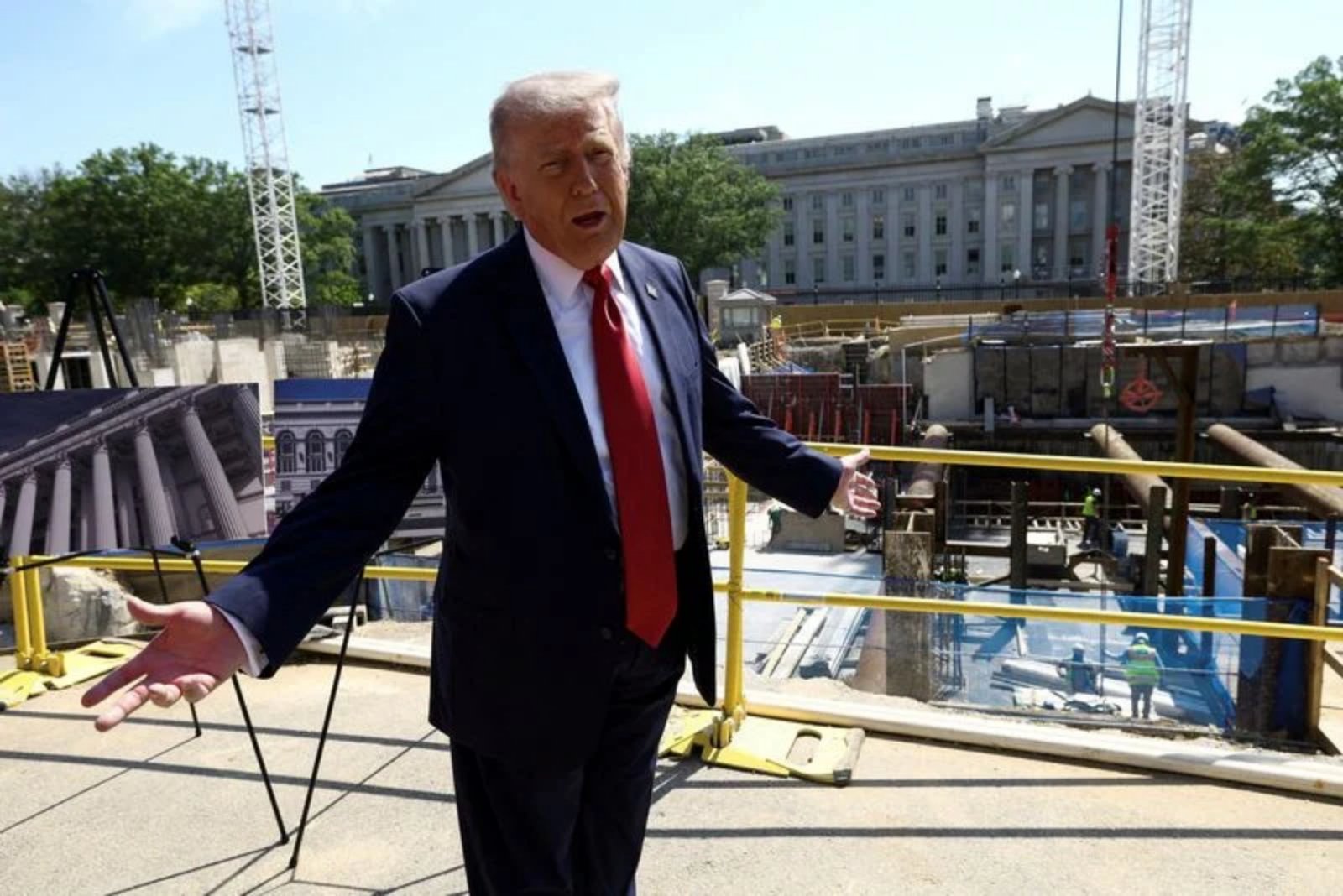
As policy goals have become harder to realize, the president has devoted more attention to high-profile construction projects. He has increasingly highlighted not only the ornate ballroom under construction, but also plans tied to refurbishing the Reflecting Pool on the National Mall and a proposed triumphal arch. These building projects have become a visible expression of priorities for which the White House is seeking support and funding.
Influence over future nominations and outlook
One enduring avenue for Mr. Trump to shape the Republican Party will be in selecting its 2028 presidential nominee. Inside party discussions, the 2028 contest is being characterized as a potential face-off between Vice President JD Vance and Secretary of State Marco Rubio. The president’s backing could be decisive in steering that nomination process.
Looking ahead to the remainder of the term, observers counsel that administrations can be unpredictable even as their formal levers of power shift. Douglas Brinkley, a presidential historian at Rice University, summed up that expectation in stark terms: he said the president’s "helter-skelter style of leadership" is unlikely to disappear, regardless of whether Democrats take control of one or both chambers of Congress.
Immediate political calendar
These dynamics are playing out with only months to go before November’s midterm elections, when control of Congress is at stake. Political strategists and lawmakers on both sides view the outcome as pivotal. The loss of one or both chambers by Republicans could accelerate a decline in the president’s influence - a characteristic feature of the lame-duck phase, historically associated with diminished effectiveness in pushing domestic priorities - although the precise political consequences remain contingent on the election results.
Conclusion
The interplay between retained strengths - a loyal base, influence over nominations and the capacity to issue executive actions - and mounting constraints from courts, congressional pushback and public perceptions of fitness defines the current phase of the presidency as he turns 80. The White House is actively resisting a narrative of decline, but even some aides acknowledge that a natural reduction in leverage is likely to emerge, particularly after the midterms.
Key points
- Political influence: Trump continues to shape Republican primaries, pursue aggressive trade policies and remains influential over the party’s potential 2028 nominee - sectors impacted include political campaigning and party politics.
- Institutional pushback: Courts and small Republican factions in Congress have joined Democrats in rebuking parts of the administration’s agenda, rejecting funding tied to White House construction and forcing a retreat on a $1.8 billion compensatory fund - impacts include federal budgeting processes and appropriations.
- Public perception and health scrutiny: Polls show rising public concern about temperament and sharpness, while the president has reduced travel and increased presence at the White House and Mar-a-Lago since the Iran war began - sectors impacted include political communications and media coverage.
Risks and uncertainties
- Midterm outcomes: If Republicans lose one or both chambers in November, the president’s leverage could diminish further, affecting legislative priorities and federal policy implementation - uncertainty for markets that react to changes in congressional control, especially fiscal and regulatory policy.
- Judicial and congressional constraints: Ongoing court rulings and bipartisan pushback in Congress may limit the administration’s ability to enact its agenda, with implications for federal funding decisions and appointments - uncertainty for sectors tied to federal contracts and appropriations.
- Public confidence and visibility: Continued public concern about stamina and mental sharpness could affect political momentum and the administration’s ability to rally support for initiatives - uncertainty for political communication strategies and election-year campaigning.