
World January 22, 2026 07:43 AM

NATO Raises Alarm Over Strengthening China-Russia Collaboration in Arctic Operations

Alliance Monitors Joint Maritime and Air Patrols Amid Greenland Agreement Discussions

By Ajmal Hussain

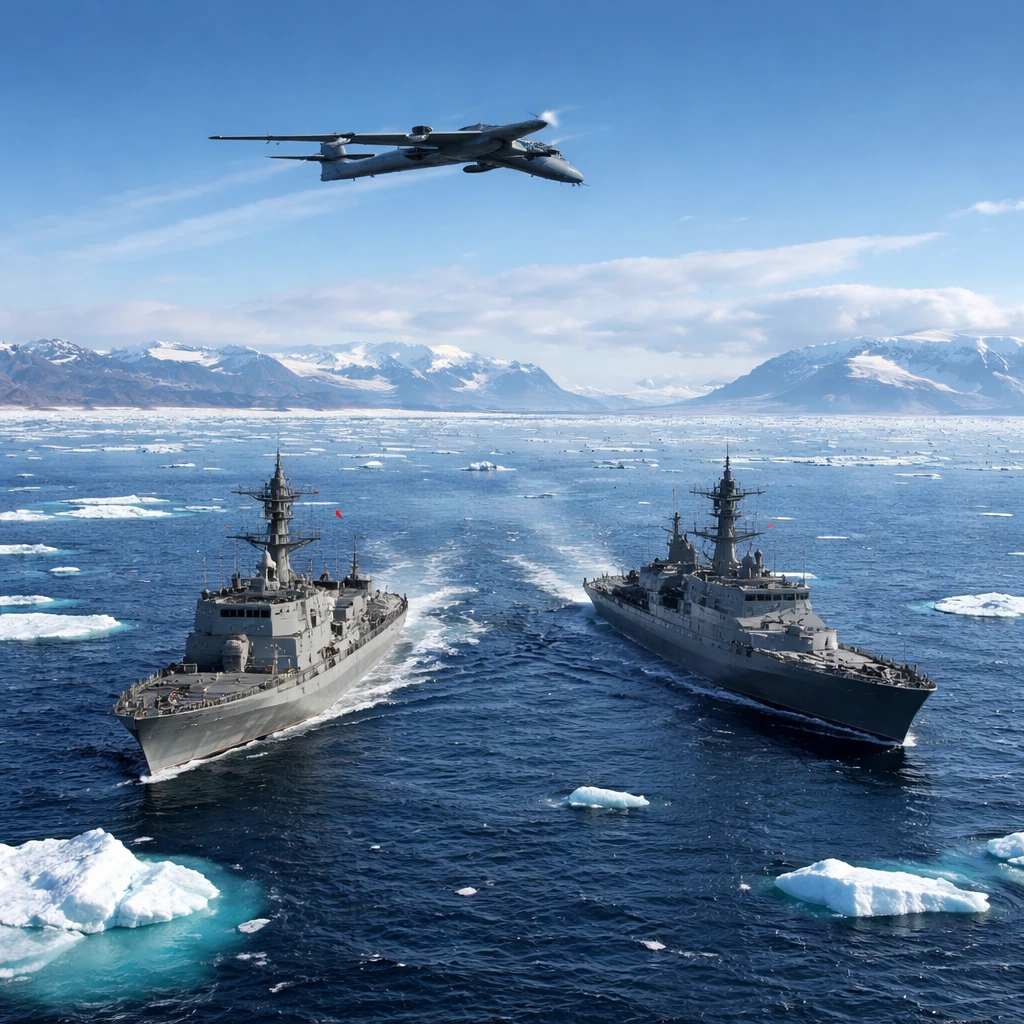
NATO’s Supreme Allied Commander Europe, General Alexus Grynkewich, has voiced concern regarding the escalating collaboration between China and Russia within the Arctic region. This partnership includes enhanced maritime and long-range bomber air patrols. While NATO evaluates methods to bolster its Arctic presence, discussions concerning an agreement over Greenland continue, with no current plans for Arctic deployments announced.

NATO Raises Alarm Over Strengthening China-Russia Collaboration in Arctic Operations

Key Points

  • China and Russia have increased joint operations in the Arctic, involving maritime patrols and long-range bomber air missions, signaling a deepening of their strategic partnership in the region.
  • NATO is actively evaluating ways to enhance its presence and readiness in the Arctic, recognizing the strategic significance and emerging security challenges posed by these developments.
  • Discussions over Greenland remain central to North Atlantic geopolitics, with NATO awaiting formal directives on this issue while the U.S. scales back tariff threats and rules out military action.

General Alexus Grynkewich, serving as NATO’s Supreme Allied Commander Europe and a U.S. Air Force general, highlighted on Thursday the expanding cooperative efforts of China and Russia in the Arctic sector. He pointed out that this cooperation has manifested increasingly through combined naval patrols and shared air domain operations involving long-range bomber flights.

Addressing the press, Grynkewich noted, "Over recent years, we've observed not only enhanced joint maritime patrols but also coordinated long-range bomber missions in airspace, reflecting a significant strategic partnership between China and Russia in the Arctic." He underscored that NATO is actively exploring approaches to fortify its operational posture and the collective capabilities of member states in the high-latitude environment of the Arctic.

This growing alliance between China and Russia has caught NATO’s attention amidst ongoing deliberations concerning a potential arrangement related to Greenland. Just a day prior, U.S. President Donald Trump relented on previous threats to impose tariffs as leverage to negotiate possession of the Danish-administered territory. He also dismissed any notion of using military action for acquisition, intimating that a resolution may be forthcoming.

Admiral Giuseppe Cavo Dragone, Chair of NATO's Military Committee, affirmed that the alliance is currently awaiting official guidance on the Greenland matter before progressing further.

Despite these developments, NATO has yet to initiate concrete plans for any Arctic-specific missions. According to Grynkewich, the alliance continues to assess strategies to reinforce its role and readiness in this strategically oriented region, reflecting its concern over evolving geopolitical dynamics in the Arctic.

Risks

  • The strengthened military cooperation between China and Russia in the Arctic could destabilize regional security, intensifying geopolitical competition and complicating NATO’s strategic planning in the area.
  • Uncertainty around the Greenland agreement creates potential diplomatic friction between NATO members and could influence alliance cohesion and response strategies in Arctic affairs.
  • Without finalized plans for Arctic missions, NATO faces challenges in promptly addressing rapid changes in the security environment fueled by China-Russia activities, which may impact defense and maritime sectors.

More from World

Journalists Killed or Abducted in Mexico Nearly Double in 2025, Report Finds May 6, 2026 Cuban leaders condemn U.S. statements on possible military intervention amid crippling fuel shortages May 6, 2026 Macron Presses Iran on Keeping Strait of Hormuz Open for Shipping May 6, 2026 Sheinbaum Faces Internal Morena Rift After U.S. Indictment of Mexican Officials May 6, 2026 France Sends Carrier Strike Group to Red Sea as Plan for Hormuz Security Advances May 6, 2026