
Hook & thesis
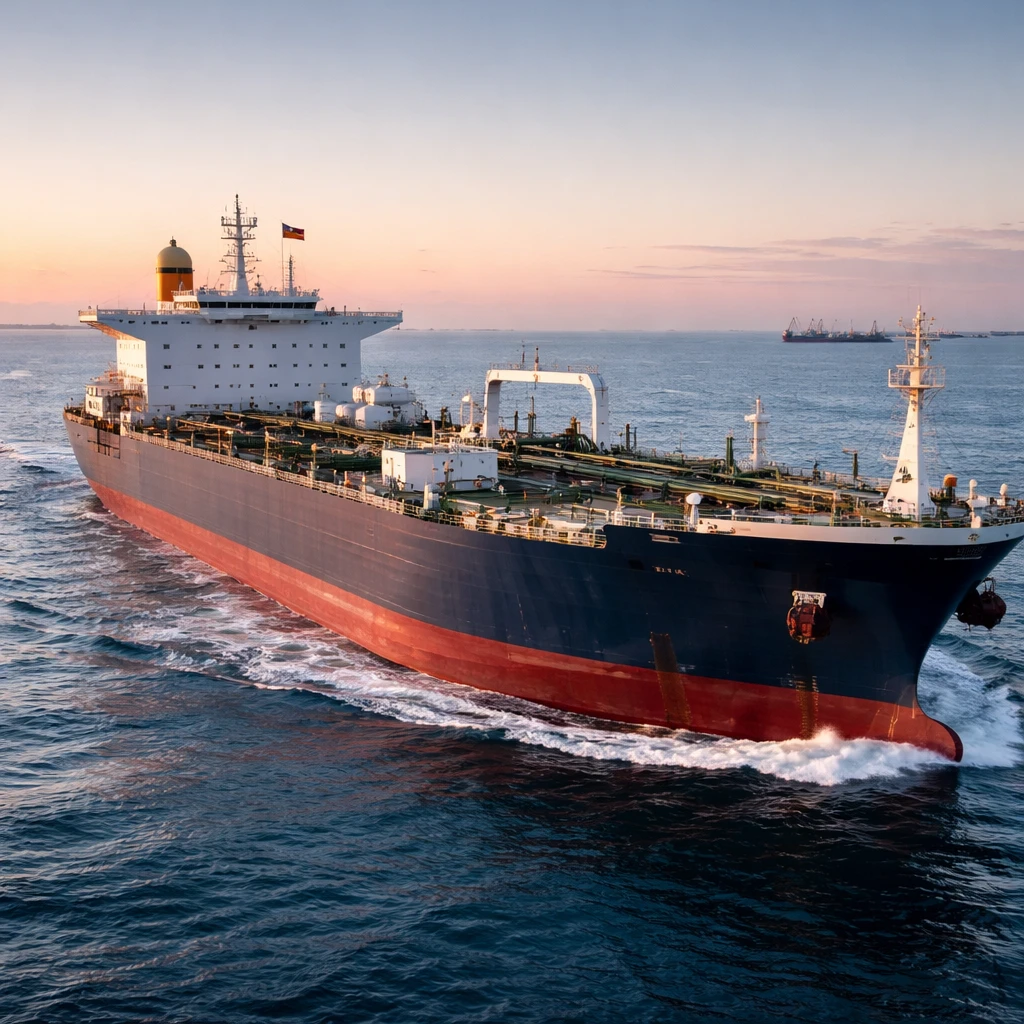
Freight rates for crude and product tankers have been unusually robust, and shipowners with flexible commercial programs and modern tonnage have been capturing outsized profits. Tsakos Energy Navigation (TNP) is one of those names that tends to perform well when the market tightens: the company operates a diversified fleet and has the optionality to fix vessels into favorable short- and medium-term charters.
We view TNP as a trade worth taking in the current cycle: enter a mid-term long to capture continued upside from strong charter rates and the possibility of further rate normalization above historical averages. This is an active, event-driven swing trade rather than a passive buy-and-hold—so strict risk control is essential.
Why the market should care - business explained
Tsakos Energy Navigation is an owner and operator of oil and product tankers. The firm's revenue is driven primarily by chartering its vessels - either on time charters, where the company receives a daily rate for a fixed period, or on voyage charters, where the ship is paid per cargo trip. In strong tanker markets, voyage rates spike and owners can capture outsized cash flow when they are either exposed to spot voyages or re-contract vessels at higher time-charter rates.
The market cares about TNP because tanker earnings can swing quickly and translate into material free cash flow and dividends in the short-to-mid term. In addition, fleet composition matters: relatively younger, fuel-efficient vessels attract premium employment and lower operating costs, while owners who can time employment windows benefit when rates are elevated.
Support for the trade - how the backdrop lines up
We are making this trade based on two straight-forward dynamics that favor owners right now:
- Supply discipline and limited immediate deliveries - the tanker orderbook has tightened relative to demand growth, limiting near-term tonnage additions and supporting rate uplifts.
- Robust seaborne crude and product flows - refiners and traders are moving cargoes more actively, and dislocations in certain regions increase voyage distances and fuel demand, which boosts voyage earnings.
TNP benefits from both points because it can push short-term fixtures into a rising rate environment and selectively lock in time-charter coverage at higher levels. That optionality is where upside materializes quickly for shareholders in tight markets.
Valuation framing
With cyclical names such as TNP, valuation is as much about timing as it is about absolute multiples. When tanker markets are weak, owners trade at depressed price-to-earnings and price-to-book multiples; when rates spike, reported earnings and dividend potential rise quickly. Given the current favorable freight cycle, the stock's implicit earnings power should re-rate versus the trough levels experienced during weak tanker markets.
Absent a current market-cap snapshot in this write-up, treat valuation qualitatively: if the market is still pricing in low-cycle cash flows, the upside from a re-rating to mid-cycle or high-cycle earnings can be substantial. That said, this is not a deep value call based on static multiples - it's a trade capturing cyclical momentum and potential cash flow acceleration.
Trade plan - precise, actionable
Trade direction: long
Risk level: medium
Entry price: $8.50
Target price: $11.00
Stop loss: $7.00
Horizon: mid term (45 trading days) - We expect the trade to play out over the next ~2 months as continued strength in freight markets and any positive re-contracting news should flow through to the stock. If the freight cycle continues to extend, consider converting to a position trade with a wider stop and reassess at the 180-day mark.
Rationale for the numbers: The entry sits below the recent run-up to give room for brief mean reversion. The target reflects a level where the market would likely price in significantly stronger quarterly earnings and improved cash returns. The stop is tight enough to limit downside if freight rates abruptly reverse or a negative corporate development appears.
Catalysts that could push TNP higher
- Continued strength in spot and short-term time-charter rates that allow TNP to capture higher voyage earnings or re-contract at elevated levels.
- Positive quarterly results showing materially higher EBITDA and free cash flow versus recent troughs - would likely prompt a re-rating toward peers in a mid-cycle environment.
- Management announcements of opportunistic dividends, special distributions, or accelerated share buybacks funded by elevated cash flow.
- Geopolitical events or seasonal trading patterns that extend voyage distances and raise charter rates (e.g., shifts in export flows or refinery maintenance schedules).
Risks and counterarguments
Below I list the principal risks that could invalidate the trade or materially reduce its expected return. Consider each carefully before entering.
- Freight-rate reversal: Tanker markets are volatile. A sudden collapse in spot rates, whether from weaker demand or a surge of new tonnage, would hit earnings fast and could push the stock below the stop.
- Macroeconomic slowdown: A broader global growth slowdown reduces crude flows, trades, and refinery throughput, directly reducing demand for tanker voyages.
- Operational or corporate surprises: Any unexpected technical issues, casualty events, or negative disclosures from management about backlog or charter coverage would weigh on sentiment.
- Fuel price dynamics and voyage economics: Sudden spikes in bunker fuel costs or unfavorable fuel-surcharge mechanics can compress voyage profits even if headline rates appear strong.
- Liquidity and equity risk: If the company issues equity or dilutive instruments to shore up balance sheet metrics, existing shareholders would be diluted and the near-term upside would be capped.
Counterargument: One reasonable counterargument is that the current rally is already priced in. If the market has fully anticipated a sustained high-rate environment, upside beyond the entry may be limited and the stock could trade sideways until fresh positive confirmations arrive. This is why we use a defined mid-term horizon and a strict stop - to avoid holding through a period of range-bound action that offers little return for risk.
What would change my mind
Signs that would make me cut the thesis include: 1) an observable and sustained drop in spot freight rates across key segments that persists for several weeks; 2) management guidance showing lower utilization or an inability to capitalize on the rate upswing; or 3) evidence of balance-sheet stress, including large dilutive capital raises.
Conversely, stronger-than-expected quarterly cash flow, a special dividend, or aggressive capital returns would make me add to the position and potentially extend the time horizon to a position trade.
Execution notes and position sizing
This is a medium-risk swing trade. Size the position so that the distance from entry to stop represents an acceptable portfolio risk, typically 1-2% of portfolio equity per trade for active traders. Use limit orders near the entry price and layer in if you can average down to the $8.00 area only if fundamentals remain intact and spot freight rates do not collapse.
Conclusion
TNP is a straightforward play on a tanker market that is currently offering favorable economics to owners. The trade proposed here is a disciplined mid-term long: enter at $8.50, target $11.00, and stop at $7.00, with a 45 trading day horizon. The thesis is simple - capture cyclical upside from improved charter rates while keeping a defined risk framework. If freight rates continue to demonstrate strength and management converts higher rates into cash returns, the target is realistic. If the freight environment reverses or corporate surprises emerge, the stop protects capital and limits downside.
Trade idea summary: Long TNP at $8.50, target $11.00, stop $7.00 - mid term (45 trading days) - medium risk.