
Hook - thesis
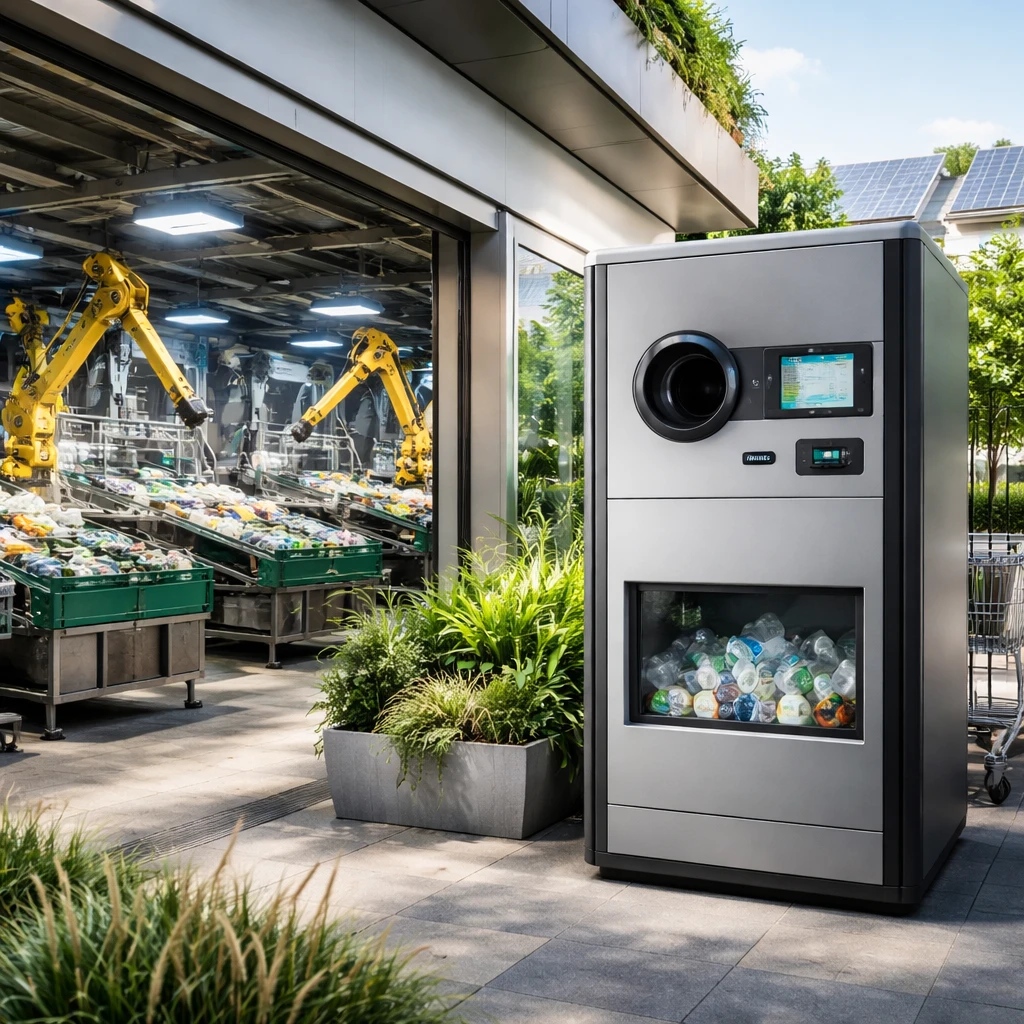
Tomra has fallen back into a valuation range that looks attractive for patient, event-driven buyers. This is not a momentum call; it's a value-oriented entry on a company whose core franchises - reverse vending machines for deposit return systems (DRS), sensor-based sorting for recycling and food-grade sorting for industry - remain strategically exposed to structural tailwinds: stricter packaging rules, higher recycling targets and a corporate push to decarbonize supply chains.
The trade laid out below assumes the market has over-discounted short-term cyclical softness. I recommend an entry at $18.50 with a tight stop at $15.00 and a primary target at $28.00 over a long-term horizon (180 trading days). The risk-reward in this trade is asymmetric: a limited downside while upside can be realized through contract rollouts, margin stabilization and renewed interest from institutional value buyers.
Why the market should care - business overview and fundamental driver
Tomra is best understood as an industrial-technology company that sells hardware-software solutions to the recycling and food-processing industries and then monetizes aftermarket services. Its installed base of machines creates a recurring revenue stream from spare parts, maintenance contracts and software subscriptions. That combination - capital equipment plus high-margin aftermarket services - is a classic industrial model that can generate durable cash flow once a critical installed base exists.
Two structural drivers matter most:
- Regulatory tailwinds for DRS and recycling - Governments in multiple jurisdictions are tightening rules around packaging and recycling targets. These policies directly increase demand for reverse vending and sorting equipment.
- Conversion of manual to automated sorting - Waste management and food processors are shifting to automated sensor-based sorting to improve yield and reduce labor intensity; Tomra is a leading vendor in that niche.
Those drivers translate into a steady backlog of machine sales and a growing aftermarket annuity stream. For investors who can accept some cyclical revenue variability tied to municipal and consumer spending, the longer-term cash generation profile is attractive.
Valuation framing
The share price decline has pushed implied expectations down to a trough-like level. Historically, companies with durable installed bases and aftermarket services trade at a premium to peers when growth and margin stability return. With sentiment currently weak, Tomra's multiple looks compressed versus past cycles. That makes the stock a candidate for mean-reversion: either operational performance needs to deteriorate materially, or multiples expand back toward the historical average as catalysts materialize.
We are not claiming a cheapness thesis solely on an absolute multiple number. Instead, the logic is twofold: (1) the stock's market-implied forecast assumes continued downward surprise in equipment orders and services revenue; and (2) a handful of identifiable, near-term catalysts could disprove that assumption and re-price the stock higher.
Catalysts
- Contract awards and DRS rollouts - New public sector DRS wins or expansions in major EU countries would be direct demand drivers for hardware and recurring service revenues.
- Quarterly results showing margin stabilization - Any sequential improvement in gross margins or service revenue mix would signal the troughing of cyclical headwinds and attract value-oriented investors.
- Aftermarket growth acceleration - A pick-up in service contract signings and recurring revenue growth would increase cash flow visibility and justify multiple expansion.
- Buybacks or capital allocation clarity - A board decision to allocate excess cash to buybacks or higher dividends would be an immediate valuation support.
Trade plan
Entry, stop and target are explicit. This is an active trade with size and time management rules:
- Entry: Buy at $18.50. If shares gap below entry price on the open, do not average down until you see a meaningful improvement in order flow or company commentary.
- Stop loss: $15.00. If the share price breaches $15 on sustained volume, it suggests either a deeper earnings miss or structural deterioration in demand; exit to preserve capital.
- Target: $28.00. This gives a clear profit objective and captures both operational recovery and potential multiple expansion. Consider trimming the position if the stock reaches $24 to $26 to lock in gains and let a smaller core position run to $28.
- Horizon: Hold for long term (180 trading days). The primary catalysts outlined above - contract rollouts and margin stabilization - typically unfold over multiple quarters, so a 180-trading-day horizon balances patience with event monitoring.
- Position sizing: Limit initial position to a size that tolerates the stop loss without violating portfolio risk rules (e.g., a 1% to 2% portfolio-dollar risk on the stop).
Why this set-up favors buyers now
Two dynamics create the opportunity. First, short-term order volatility tied to municipal capex cycles tends to overshoot fundamentals: equipment orders can be pushed out for administrative reasons even when long-term policy is unchanged. Second, the recurring aftermarket revenue acts as a floor for free cash flow, making downside limited in most realistic scenarios. Buying at a point where the market embeds low-growth, low-margin outcomes offers asymmetric upside if even one of the positive catalysts materializes.
Counterargument to the thesis
A credible counterargument is that global municipal and corporate budgets remain tight, compressing equipment replacement cycles and pushing buyers to delay capital investments. If that capital-delay scenario persists longer than anticipated, units sold could remain depressed and the aftermarket growth rate may slow. In that case, valuation compression would persist and our target would be overly optimistic. The stop at $15 is specifically intended to protect against this scenario.
Risks
- Demand risk: Prolonged weakness in public-sector capex or postponement of DRS rollouts could keep equipment orders low and delay revenue recovery.
- Execution risk: Supply-chain disruptions or operational execution problems could squeeze margins and damage customer relationships.
- Competitive pressure: Increased competition on price, especially from lower-cost providers, could erode gross margins on new sales.
- Regulatory timing risk: Although regulation is a tailwind, implementation timelines can be uncertain; delayed government rollouts blunt near-term demand.
- Currency exposure: A large portion of revenues and costs are likely denominated outside the U.S.; FX swings can compress reported margins if not hedged effectively.
- Sentiment risk: The stock could remain unloved by the market for an extended period, meaning multiples stay depressed despite improving fundamentals.
What would change my mind
I would reassess the bullish stance if any of the following occur: (1) a clear, multi-quarter decline in aftermarket service revenue; (2) material contract cancellations or a visible pipeline deterioration; (3) management guidance reset indicating longer-term structural weakness in demand; or (4) a fundamental strategic mis-step such as underinvestment in R&D that undermines competitive position. Conversely, earlier-than-expected wins on DRS deployments or sustained margin improvement would validate and potentially accelerate the thesis.
Conclusion
Tomra represents an asymmetric trade: downside is limited by recurring aftermarket cash flow while upside is unlocked by regulatory rollouts, contract wins and margin recovery. The entry at $18.50, stop at $15.00 and target at $28.00 across a 180-trading-day horizon offers a clear, disciplined plan to capture that upside while protecting capital. This is a measured contrarian buy for investors comfortable with industrial cyclicality and willing to hold through quarterly noise for multi-quarter catalysts to play out.
Trade plan summary: Long at $18.50, stop $15.00, target $28.00, long term (180 trading days), medium risk.