
Hook & thesis
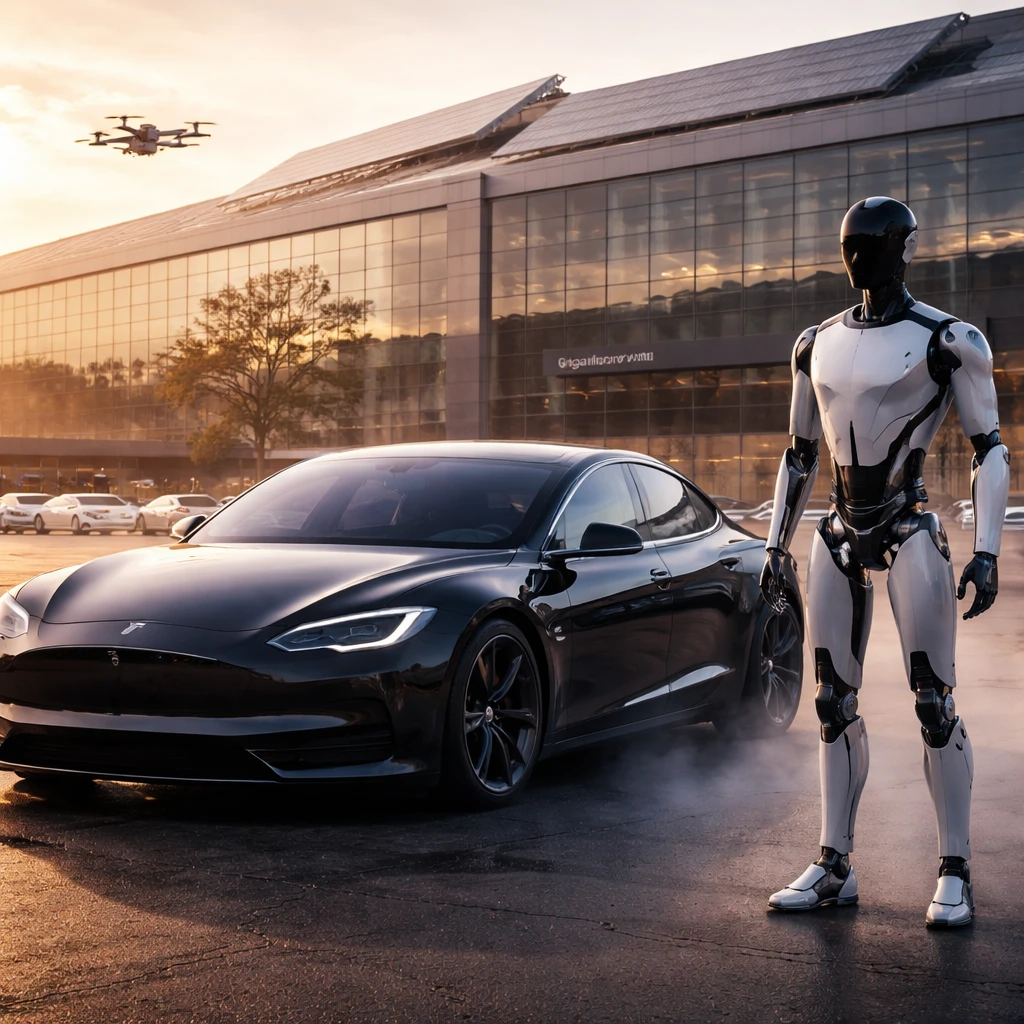
Tesla is no longer just an electric-vehicle manufacturer; it is increasingly an AI and robotics company with an automotive business attached. That shift is already visible in recent results and the company's capital plan: revenue from vehicles still matters, but the real optionality for shareholders is robotaxi economics and Optimus automation. Those businesses are still nascent and binary, which explains why the stock trades like a high-growth tech name despite auto-like unit cycles.
My trade idea: take a controlled long position to buy the optionality while capping downside. Enter near the market, target upside tied to improving execution and monetization of FSD/robotaxi, and use a clearly-defined stop to protect against prolonged cash burn or execution slippage. This is a directional, event-driven long with material execution risk.
Why the market should care
Tesla still sells cars and energy products, but two drivers now dominate the valuation debate: autonomous robotaxis (unsupervised FSD operations) and the Optimus humanoid robotics program. Management has started limited unsupervised Robotaxi operations in cities; the company reported Q1 revenue of $22.4B and free cash flow of $1.4B, but emphasized that the strategic milestone was launching unsupervised Robotaxi operations in Dallas and Houston on the back of growing FSD subscriptions.
Those products — if scaled — change Tesla's unit economics. Instead of selling a depreciating vehicle, the company could operate a fleet that generates recurring high-margin revenue per vehicle. That optionality is why the market values Tesla at around $1.41 trillion today even though traditional auto metrics look stretched.
Business snapshot and fundamentals
Tesla operates two segments: Automotive and Energy Generation & Storage. Automotive includes vehicle design, manufacturing and sales plus sales of regulatory credits; Energy includes solar and storage products. The company reported trailing free cash flow in the low billions ($6.22B shown on an aggregate basis) while committing to heavy capital spending ahead: management outlined at least $25B of capital expenditures for 2026 to build factories, expand Megapack capacity and move into semiconductor fabrication.
Valuation framing
On conventional multiples Tesla is priced for perfection. Market cap sits near $1.41T with a price-to-earnings ratio north of 370x and price-to-sales around 15x. EV/EBITDA sits above 120x. Those ratios imply either sustained hypergrowth or a material re-rating if the robotics and software revenue streams arrive.
Put simply: you are buying future, high-margin software and fleet revenue today. If robotaxis and Optimus materially contribute to revenue and margins, those multiples could compress into more reasonable ranges. If not, the stock will likely reprice lower because Tesla's core auto margins face cyclical and competitive pressures and near-term capex will depress free cash flow.
Supporting data points
- Latest quarter: revenue of $22.4B and quarter free cash flow of $1.4B (company commentary emphasized robotaxi rollout as the key takeaway).
- Market cap ~ $1.41T; shares outstanding ~ 3.75B.
- Trailing free cash flow shown at ~ $6.22B on an aggregate basis; management expects negative free cash flow in the near term because of large capex, with a return to positive FCF expected several years out.
- Operational signs: limited unsupervised robotaxi operations exist in a handful of cities (small pilot fleets), and FSD subscriptions continue to grow — management disclosed FSD subscription growth of +51% year-over-year in recent commentary.
- Technicals: the MACD histogram indicates bullish momentum and RSI near neutral (~49), so the technical backdrop is not overbought today.
- Short activity is meaningful: short interest runs in the tens of millions of shares with days-to-cover around 1, and recent short-volume shows large absolute short volume on some days — this can amplify volatility in either direction.
Catalysts to watch (near-to-medium term)
- Robotaxi scale-up: meaningful increase in unsupervised robotaxi count and city rollouts beyond initial pilots, or a quantified revenue model for Robotaxi trips and utilization.
- FSD monetization: continued subscription growth and better ARPU disclosure for autonomy services; FSD subscriber base expanding at double-digit percentages would support the bullish thesis.
- Optimus commercialization: first large-scale, paying deployments or OEM partnerships for Optimus that create a visible roadmap to revenue.
- Factory openings and chip fab progress: on-time delivery of the six planned factories and semiconductor capacity that reduces hardware upgrade costs for customers.
- Macro / funding events: capital markets moves (e.g., related activity in the Musk ecosystem such as other IPOs) that influence investor risk appetite for long-duration optionality plays.
Trade plan (actionable)
Entry: Enter at market around $376.16. This is a buy against optionality; use a staggered entry if you prefer.
Stop loss: $330.00. If the stock breaks below $330 it signals broader de-risking and that the market is repricing the long-duration optionality materially lower.
Target: $520.00. This target assumes successful progress on robotaxi deployments, continued FSD ARPU improvement, or clear commercialization milestones for Optimus within the next several quarters.
Horizon: long term (180 trading days). I expect the trade to need multiple execution milestones — regulatory approvals, fleet scale, FSD revenue growth and early Optimus commercial signals — which typically take several quarters to manifest. Reassess at each catalyst or quarterly report.
Position sizing & risk management: Given the valuation and execution risk, size the position to no more than a modest single-digit percentage of a growth allocation. Trail your stop higher as robotaxi or Optimus revenue becomes visible to lock in gains; consider taking partial profits at $430 and more at $480 to de-risk the position.
Risks and counterarguments
- Execution risk: Robotaxi and Optimus are early and binary. Limited pilots do not guarantee scale. If regulatory, safety or technical issues delay deployments, revenue expectations will be pushed out and the stock could reprice sharply lower.
- Cash burn and capex pressure: Management disclosed at least $25B of capex for 2026. Heavy capital spending can burn cash and dilute near-term free cash flow, pressuring the stock if top-line optionality does not materialize quickly.
- Valuation is already demanding: P/E around 370x and price-to-sales near 15x leaves little room for disappointment. Any slowdown in growth or widening of margins could trigger a fast multiple contraction.
- Competitive & regulatory risk: Autonomous software competition and possible regulatory constraints on unsupervised operations could limit addressable markets or mandate expensive hardware upgrades for existing vehicles.
- Focus risk: Elon Musk's involvement across multiple large ventures can create cross-company capital or attention dynamics (investor perception that capital or management bandwidth flows to other projects), which could weigh on Tesla until execution is proven.
- Counterargument: The bullish case rests on the asymmetric payoff of successful robotaxi/Optimus rollouts. If Tesla can monetize a fleet with high utilization and software ARPU, the implied future cash flows could justify today's valuation. Early pilot data and subscription growth are the only credible near-term evidence for that scenario.
What would change my mind
I would reduce or exit the long position if any of the following occur: (a) guidance or company commentary conservatively pushes robotaxi commercialization beyond a multi-year timeline without evidence of interim monetization; (b) FSD subscription growth stalls or ARPU declines materially; (c) the company reports larger-than-expected hardware upgrade costs that compress margins; or (d) a sustained fall below $330 on volume — that would indicate the market is repricing the optionality as unlikely to meet original timelines.
Conclusion
Tesla today is a high-variance investment: the upside is meaningful if robotaxis and Optimus become revenue engines, and the downside is substantial if those proofs fail to arrive amid heavy capex. This trade buys the optionality at current levels with a defined stop and long-term horizon tied to execution milestones. If you believe the company will demonstrate clear monetization from autonomy or robotics within the next several quarters, this is a tactical way to participate. If you want pure exposure to stable auto cash flow, Tesla is not that trade right now.
Key monitoring checklist
- Quarterly updates for FSD subscriber count and ARPU; look for continued double-digit subscription growth.
- Concrete Robotaxi utilization metrics and city expansion cadence.
- Progress on Optimus commercial contracts or deployments that convert demo interest into paying customers.
- Capex cadence vs. cash flow trajectory and any financing moves tied to the planned factory and chip investments.